Your skin doesn't quite feel like it used to, does it? There's that rough patch near your cheekbones. Those pores around your nose seem bigger than before. And those lingering marks from breakouts months ago? Still hanging around. Even when your skin's relatively healthy, texture problems can steal its natural glow and leave everything looking flat and tired.
That's exactly where light therapy for skin texture becomes interesting—it's a totally non-invasive method that works on cellular energy, calms inflammation, and supports collagen to actually change how your skin looks and feels. Both LED light therapy for skin and red light therapy for skin operate by sending specific wavelengths deep into your skin to encourage repair at the source. Get this: nearly 40% of people start noticing obvious texture problems by their early thirties, usually because of sun exposure or old acne marks.
And no, this isn't some overhyped beauty trend. These treatments genuinely support the cellular machinery that determines smoothness, evenness, and bounce. But here's the thing—your results hinge on picking the right wavelength, staying consistent, and keeping your expectations grounded. This is foundation-building work, not an instant transformation.
Don't expect to look in the mirror tomorrow and see completely new skin. But stick with it? You'll absolutely see gradual shifts.
Here's what typically happens: your skin feels softer before you see dramatic visual changes. Those rough, angry patches settle down as inflammation drops and your barrier starts recovering. Redness and reactivity fade quicker than the deeper structural stuff. Oh, and your pores? They'll look tighter—not because they've literally shrunk (they can't), but because the puffiness and oil congestion around them have calmed down.
In the first week or two, you'll probably notice your skin acting less irritated and reactive. Somewhere between weeks four and eight, real smoothness starts showing up, and those stubborn post-acne marks begin their fade.
The big payoff—the collagen remodeling and firmer feel—usually arrives after eight to twelve weeks of steady sessions with a laser facial. Pro tip: snap weekly progress photos in identical lighting. Use your phone's macro setting for texture-focused close-ups. Trust me, without visual evidence, you'll completely forget where you started.
The cellular explanation sounds complicated, but it's honestly pretty straightforward.
Your cells have this component called cytochrome c oxidase that literally absorbs light. That absorption kicks ATP production into higher gear—think of ATP as your cells' fuel source. More fuel means your skin cells repair damage faster and cycle through renewal more efficiently. For texture specifically, this matters because slow, sluggish cell turnover is often why skin looks rough and congested in the first place.
Red and near-infrared wavelengths actually dial down inflammatory signaling molecules. Less inflammation equals less surface puffiness and roughness.
If your skin's prone to breakouts or sensitivity, this calming mechanism can create a genuinely noticeable difference in how even everything appears.
When blood flow improves, more nutrients reach your skin while waste clears out faster. The outcome? Brighter, more uniform tone that contributes to that overall smoother vibe.
Fibroblasts—those specialized cells that manufacture collagen—wake up when exposed to particular wavelengths. More collagen and elastin mean better resilience, fewer fine lines, and way less of that crepey texture. This is where the long-game texture improvements really become obvious.
All light therapy isn't created equal. Wavelength selection actually matters.
Red light handles surface texture concerns beautifully—redness, early aging signs, and post-procedure recovery. If you're fighting dull, rough skin or constant sensitivity, start here.
Near-infrared goes deeper than red light can reach. It tackles inflammation and supports healing in the deeper dermal layers that ultimately influence surface smoothness. Particularly valuable after professional treatments.
Blue light eliminates acne-causing bacteria, which helps when active breakouts are making your texture worse. Just watch out—overdoing it can seriously dry your skin. Always pair it with barrier-protective products.
Amber light (~590 nm) supposedly helps with redness and radiance. Green light (~520–535 nm) gets marketed for tone balancing, though solid evidence is pretty thin. Consider these bonus features, not core treatments.
Acne aftermath comes in different forms, and that matters.
Red marks (post-inflammatory erythema) and brown discoloration (hyperpigmentation) aren't the same thing as indented scars. Light therapy genuinely helps marks and mild textural irregularities. For deeper pitted scars, you'll typically need more aggressive in-office interventions—professional resurfacing or a laser facial are often suggested, though light therapy can absolutely support faster, gentler recovery alongside those treatments.
Zero in on red and near-infrared wavelengths for inflammation management and repair signaling. If you're still dealing with active breakouts, add blue light carefully—keep sessions shorter and emphasize hydration support.
Stagger microneedling and light therapy—never on the same day unless your clinician specifically directs it. Use red light right after gentle exfoliation windows to support recovery, but never when your barrier's compromised.
Device quality isn't universal, and that determines everything.
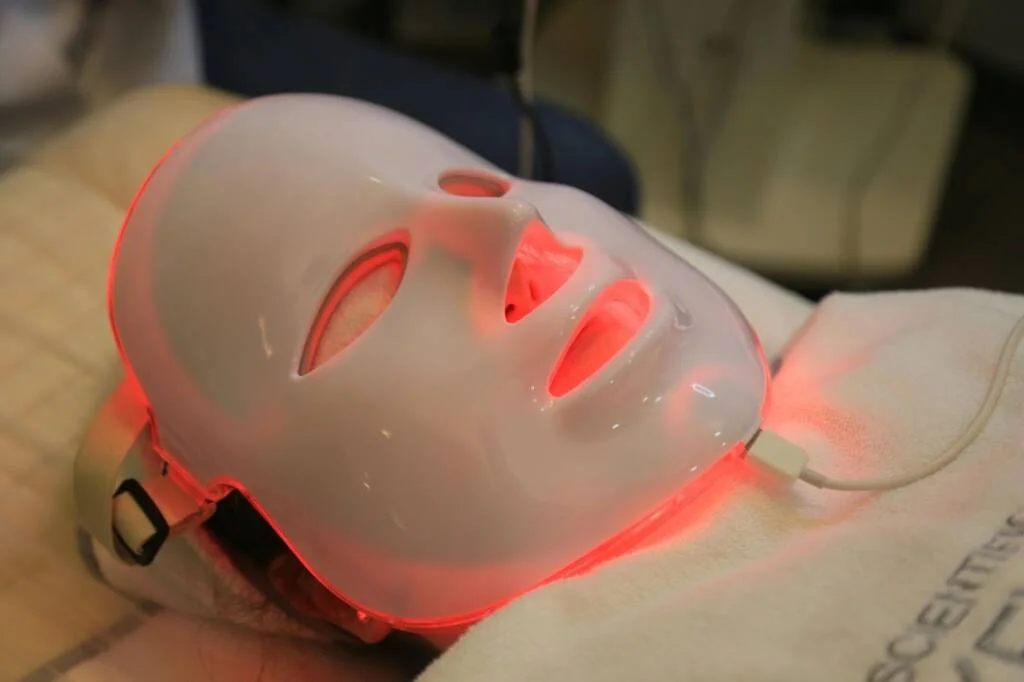
Demand transparent wavelength specifications, irradiance measurements, treatment coverage area, and FDA clearance when applicable. Run from vague miracle multi-light marketing with zero technical backup. Want a device that actually checks those boxes? Look for a full-face LED mask with transparent wavelength specs (e.g., 630–660 nm red, 810–850 nm near‑infrared, ~590 nm amber/yellow, and ~415 nm blue), adequate irradiance, and comfortable, even coverage. A solid example is Spa-Quality LED Facial Therapy at Home, which combines red + NIR for collagen support and inflammation control, optional blue for breakout-prone days, and yellow for radiance—delivered via a full-face mask for consistent, even dosing. Pair it with a barrier-first routine and use it 3–5 times weekly for 4–8 weeks, then maintain 2–3 times weekly. Consistency and correct dosing beat flashy marketing every time.
Begin with three to five sessions weekly for four to eight weeks, then transition to maintenance at two or three times per week. If your skin's sensitive, shorter sessions work better. And no, more isn't automatically better—excessive use can backfire and irritate.
Professional LED delivers significantly higher output with supervised protocols. When texture issues involve substantial scarring or advanced aging concerns, professional resurfacing might be recommended with light therapy positioned as recovery support.
Light therapy's generally safe, but there are legitimate exceptions.
Taking photosensitizing medications (isotretinoin, certain antibiotics)? Have lupus, active infections, or recent burns? Talk to a provider first. Pregnancy is typically considered low-risk, but it's still worth the conversation.
Always protect your eyes, especially with blue light exposure. If melasma's an issue for you, remember that heat can worsen it—stick with low-heat devices and monitor your response closely.
Experiencing dryness or uncomfortable tightness? Prioritize barrier repair. Temporary redness showing up? Cut session duration and space treatments further apart.
What you do around light therapy sessions matters just as much as the treatment itself.
Your skin needs to be clean and completely dry. Skip occlusive products right before treatment. If sensitivity's a concern, avoid strong acids or retinoids immediately beforehand.
Layer on a barrier-first moisturizer containing ceramides or niacinamide. Stack hydration to visibly reduce roughness.
Hyaluronic acid, peptides, niacinamide, and gentle vitamin C all work beautifully with light therapy. Exercise caution with potent retinoids or acids if irritation's an issue for you.
1. Does light therapy improve skin texture permanently or only while you keep using it?
Results require ongoing collagen maintenance and cellular health support. Maintenance sessions sustain improvements, just like any other non-invasive intervention.
2. How long does it take to see results from red light therapy for skin texture changes?
Most people observe calmer skin within one to two weeks. Visible smoothness typically appears around four to eight weeks, with substantial collagen-related changes emerging after eight to twelve weeks.
3. Which is better for uneven texture: LED light therapy for skin or a laser facial?
LED offers gentler support for surface texture and inflammation management. Lasers address deeper scarring and advanced texture concerns more aggressively, usually with more recovery time.
Light therapy won't deliver miracles, but it's absolutely a legitimate strategy for texture improvement when you use it consistently and intelligently. Select appropriate wavelengths, protect your barrier function, and document your progress. If scarring runs deep, professional treatments with light therapy as complementary support make sense. The essential ingredient? Patience. Texture transformation takes real time, but the results genuinely deliver.
 Supriyo Khan
 Supriyo Khan
 Supriyo Khan
 Supriyo Khan
Want to add a comment?