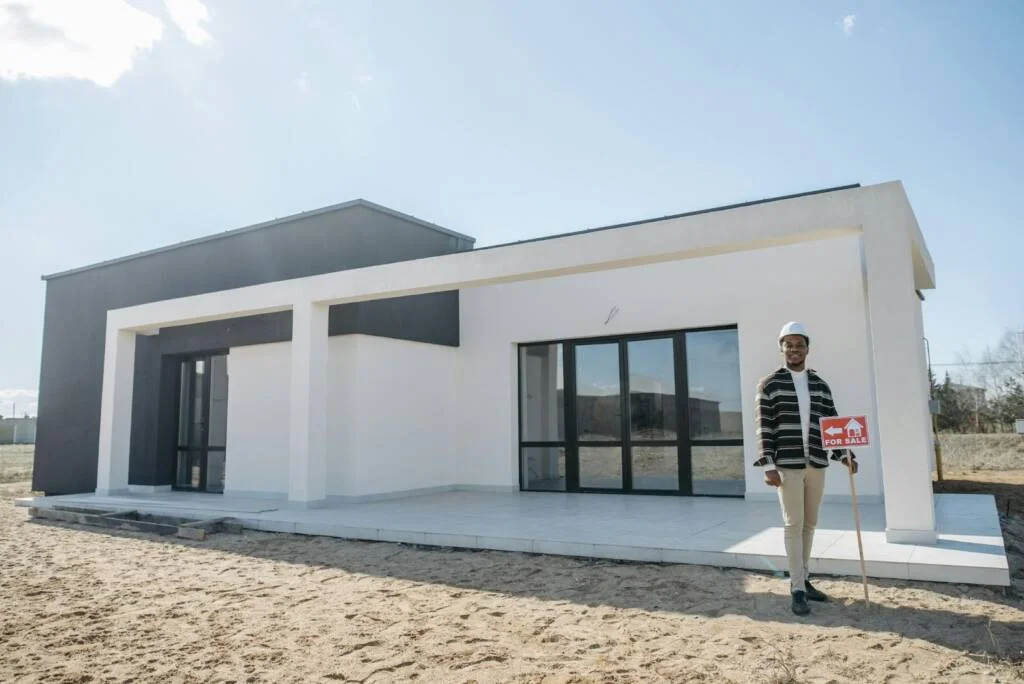
Here's something you should know: 2025's housing market has completely flipped the script. Suddenly, you're not competing with fifteen other desperate buyers on every property. There's actual inventory now. You can breathe. Take your time. Be picky about buying a new home. But, and this matters, understanding which features genuinely count will save you serious money down the road and protect your investment's value. Let's cut through the noise and identify the key features in new homes that'll still be relevant twenty years from now, not just trendy today.
Think of today's homes as sophisticated ecosystems, not just four walls and a roof. What you choose to prioritize will dictate your monthly utility expenses, how much you'll spend on upkeep, and ultimately what you can sell for later.
The smartest buyers? They ignore surface-level aesthetics in favor of features that actually perform. Construction standards have leapfrogged forward recently. Newer homes pack technologies that older properties simply cannot replicate.
Consider this: homes ranging from 1,000 to 2,000 square feet command roughly 17% more value than those under 1,000 square feet, while the 2,000-3,000 square foot range jumps about 30% in value.
Take Bothell, Washington as a perfect example. Nestled between Seattle and Everett, this city captures the best of both worlds, urban access paired with suburban tranquility, exceptional schools, and proximity to thriving tech companies.
When you're exploring options like homes for sale in bothell wa and comparable areas, you'll encounter brand-new builds competing against barely-lived-in resale properties. Your challenge? Determining which features justify premium pricing versus which ones are pure marketing smoke that won't improve your actual quality of life.
Before you fall in love with designer backsplashes, we need to discuss fundamentals. These home features to look for determine whether your investment remains solid for generations.
Everything hinges on your foundation. Literally. Seek out properties with documented soil analysis, appropriate drainage infrastructure, and waterproofing strategies that eliminate moisture problems. Advanced systems employ post-tension slabs or engineered piers when soil presents challenges. Your building envelope, the walls, roof, and windows, creates the barrier between interior comfort and exterior chaos. Premium materials resist weather assault while blocking air leakage that inflates energy bills.
Contemporary homes ought to include security system pre-wiring, whether or not cameras are installed immediately. Fortified entry points featuring solid-core doors and multi-point locks outperform builder-grade standard hardware considerably. Smart lock readiness allows future keyless upgrades without replacing entire assemblies.
Spray foam insulation beats traditional fiberglass hands-down for air sealing and thermal resistance, despite higher initial costs. What truly counts is continuous insulation eliminating thermal bridging, those frustrating cold spots where framing interrupts coverage. Request blower door test results showing how airtight the structure actually measures.
Energy-conscious features aren't merely eco-friendly gestures, they represent financially intelligent tips for buying a house that slash monthly costs immediately.
Smart thermostats are wonderful, but they can't compensate for mediocre HVAC equipment. Prioritize high SEER-rated units and furnaces with variable-speed blowers adjusting output to match real-time demand. Zone control lets you condition specific areas independently, eliminating wasted energy heating empty rooms. Heat pump technology has evolved remarkably. Modern systems perform efficiently even during harsh winters. Combined with quality air filtration, they maintain comfortable temperatures while enhancing indoor air quality.
You needn't install solar panels today. But solar-ready infrastructure saves thousands if you add them eventually. That means adequate electrical panel capacity, optimal roof orientation and angle, and conduit routes for future wiring. Some builders incorporate structural reinforcement handling panel weight, avoiding expensive roof modifications later. Battery storage lets you bank excess solar production for evening consumption or blackouts. Even without panels, whole-home battery backup delivers security during grid failures.
Low-flow fixtures have undergone dramatic improvements, they conserve water without compromising performance. Tankless water heaters supply unlimited hot water using less energy than conventional tanks, though proper sizing for peak household demand remains critical. Smart irrigation controllers modify watering based on weather predictions and soil moisture levels, reducing outdoor waste by 30-50%. Leak detection systems automatically shut off water when sensors identify unusual flow patterns, preventing catastrophic burst-pipe damage.
Technology evolves rapidly, yet the infrastructure supporting it should endure decades. That's why what to look for when buying a home includes wiring and systems enabling future enhancements.
Structured wiring establishes a central hub managing all low-voltage connections, internet, phone, cable, security. This simplifies troubleshooting and streamlines upgrades.
Fiber optic readiness prepares your home for internet speed increases that cable cannot deliver. Mesh Wi-Fi capability means strategically positioned ethernet jacks throughout, eliminating coverage gaps without depending solely on wireless repeaters. Smart home hub integration points provide dedicated circuits and mounting spots for automation controllers.
Smart lighting with circadian rhythm capability adjusts color temperature daily, encouraging healthier sleep patterns and better alertness. It transcends dimming lights via smartphone, we're talking automated systems improving wellbeing without manual intervention. Voice-controlled management functions best when integrated during construction rather than added afterward. Pre-wiring for motorized shades, smart locks, and climate systems creates cohesive operation responding to voice prompts or programmed schedules.
These heavily-used spaces demand extra scrutiny because renovating them later costs exponentially more than getting things right initially.
Counter space and workflow trump fancy appliances every time. The timeless work triangle, sink, range, and refrigerator, should enable efficient movement without excessive steps. Sufficient electrical outlets, including dedicated circuits for major appliances, prevent breaker trips during cooking. Smart appliances offering Wi-Fi connectivity let you preheat ovens remotely or receive alerts about open fridge doors. However, fundamental reliability still outweighs connectivity, the fanciest smart refrigerator becomes worthless when the compressor dies.
Here's insider knowledge most buyers miss: each full bathroom boosts home value approximately 32% compared to merely 5% for additional bedrooms, while half-bathrooms add roughly 15% value. That makes bathroom quantity and quality critical factors during your search. Adequate ventilation prevents mold and moisture damage plaguing countless bathrooms. Verify exhaust fans vent outside, not merely into attic spaces, with appropriate CFM ratings for room dimensions. Heated floors and towel warmers provide luxury while preventing condensation-collecting cold surfaces.
Life shifts constantly. Your home should adapt without demanding major renovations.
Remote work has become a permanent reality, so dedicated office space with proper outlets, ethernet access, and soundproofing makes practical sense. Natural light and ergonomic design affect productivity and comfort during marathon workdays.
Separate entrance options, accessible design elements, and potential for kitchenette addition make homes adaptable for aging parents or returning adult children. These adjustments cost significantly less during initial construction than retrofitting years later.
Begin by separating absolute requirements from wishlist items. Schedule viewings prepared with questions about insulation performance, HVAC efficiency ratings, and infrastructure capabilities. Don't allow attractive staging to distract you from evaluating systems and structures determining long-term satisfaction.
Obtain documentation including energy audits, warranty details, and maintenance histories. These documents reveal construction quality and care standards, providing confidence in your investment decision.
What's the single most important feature when buying a new home?
Foundation integrity and building envelope quality top the list because repairs cost astronomical amounts later. Everything else, appliances to finishes, can be upgraded more affordably than structural corrections.
Should I pay extra for builder upgrades or add them myself later?
Electrical, plumbing, and structural changes cost substantially less during construction. Cosmetic improvements like countertops or flooring frequently cost less through independent contractors post-closing, offering greater selection too.
How do I verify energy efficiency claims from builders?
Demand third-party certifications such as HERS ratings, Energy Star certification, or LEED documentation. Also request projected utility expenses and blower door test results demonstrating actual air tightness measurements.
The features you select today will shape daily experiences for years ahead. Concentrate on elements improving functionality, lowering costs, and adapting to evolving needs rather than trendy finishes appearing dated within five years. Modern construction delivers genuine advantages in efficiency, technology, and comfort, but only when you understand which questions to ask and which features provide authentic value. Take your time doing thorough research. Don't let enthusiasm override practical assessment of what transforms a house into your ideal home.
 Supriyo Khan
 Supriyo Khan
 Supriyo Khan
 Supriyo Khan

Want to add a comment?