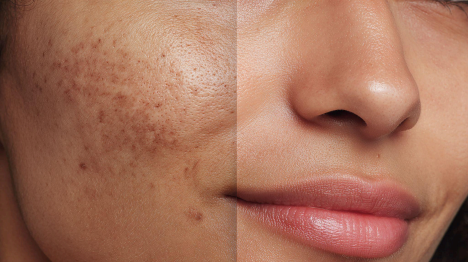
India’s Trusted Solution for Melasma, Pigmentation & Uneven Skin Tone – Melassence
In Indian skin types (Fitzpatrick III–V), melasma often behaves differently from textbook descriptions. Pigment often sits deeper, spreads unevenly, and responds unpredictably to lasers or harsh peels. Many patients experience temporary lightening followed by rebound darkening — a cycle that damages both patient confidence and epidermal barrier integrity.
Why is my pigmentation not going?
Is bleach safe for melasma?
Why did my dark patches come back after treatment?
What actually works for melasma in Indian skin?
These questions don’t come from curiosity. They come from fatigue. From trying home remedies, facials, chemical peels, creams that promise fairness, and treatments that work briefly — and then undo themselves.
Let’s unpack what melasma really is, why most approaches fail, and what modern pigmentation correction is beginning to look like.
Why Melasma Is Not “Just Pigmentation”
One of the biggest myths around melasma is that it is a surface-level problem. Something that can be scrubbed off, peeled away, or bleached into submission. In reality, melasma is a chronic acquired hypermelanosis driven by dysregulation of melanocyte activity. The pigment-producing cells (melanocytes) are not damaged — they are overactive. Once triggered by hormonal influence, ultraviolet exposure, heat, or inflammation, melanocytes demonstrate persistent hyper responsiveness.
This is why melasma behaves differently from tanning or acne marks. It doesn’t respond predictably. It fades and returns. It lightens unevenly. It worsens when the skin barrier is compromised. It can be treated with a proper Melassence Skin Treatment.
Why does melasma come back even after treatment?
The Bleach Question Everyone Asks (But Few Answer Honestly)
Many still believe that bleaching the skin will lighten melasma. And initially, it often appears to work — because bleaching agents temporarily reduce visible pigmentation.
Bleaching agents do not regulate melanogenesis; they cause superficial depigmentation while disrupting barrier function.
In Indian skin, this often leads to:
● Barrier damage
● Increased sensitivity to sunlight
● Rebound pigmentation that appears darker and more spread out
The answer usually lies not in the condition, but in the method used to treat it.
Chemical Peels, Facials, Lasers — Why Results Don’t Hold
Peels and lasers are not inherently wrong. They are tools. But when used without understanding pigment depth and triggers, they can do more harm than good.
Aggressive exfoliation removes pigment quickly, but it also sends a signal to the skin: protect yourself. Melanocytes respond by producing more melanin.
That’s why many people experience this cycle:
1. Initial brightness
2. Patchy lightening
3. Sudden darkening weeks later
Modern pigmentation science is slowly shifting away from intensity and towards control.
Instead of asking, How do we remove pigment faster?, dermatological research is now asking a better question:
How do we slow down excess melanin production while repairing the skin barrier? This shift has led to treatments that combine:
● Controlled exfoliation (not aggressive peeling)
● Melanin suppression pathways
● Barrier strengthening and hydration
● Long-term continuation through homecare
When pigmentation is treated this way, it behaves differently. It fades evenly. It relapses less. And the skin looks healthier, not thinner.
Where Melassence Fits Into This New Approach
Melassence was developed by VCare Skin Clinic within this newer framework of pigmentation correction. Rather than positioning itself as a peel or facial, it functions as a system — addressing pigment at multiple levels instead of attacking it at one.
The therapy combines an in-clinic controlled exfoliation phase with a structured at-home continuation phase. This matters because melasma does not end when the session does.
By slowing melanocyte activity while supporting epidermal recovery, the treatment aims to make pigmentation fade and remain controlled.
What the Melassence Skin Treatment Phase Looks Like
Pigmentation forms when melanocytes become overactive due to triggers like UV exposure, hormones, inflammation, or heat. Once activated, they continue producing pigment even after the trigger is removed.
Melassence intervenes at multiple stages:
● Removes existing pigmented cells gradually
● Slows down excess melanin production
● Repairs the skin barrier to reduce re-triggering
● Maintains results through regulated homecare
The in-clinic phase involves applying a professionally formulated compound designed to initiate uniform exfoliation and pigment correction. It remains on the skin for several hours, working gradually rather than forcefully.
What follows is often more important.
A night corrective phase continues melanin regulation at home, while moisturisation and sun protection protect the skin from re-triggering pigmentation.
This continuity is where many treatments fail — and where this approach differs.
Is This a “Quick Fix”?
No. And that is exactly why it works.
Most people notice visible clarity within a few weeks, but the primary goal is stability, not speed. Pigmentation softens instead of breaking apart. Tone evens out instead of patching.
And crucially, the skin barrier improves — which directly affects how melasma behaves long-term.
Who This Approach Is Best Suited For
This method is particularly relevant for:
● Recurrent melasma
● Pigmentation that worsens after peels or bleach
● Post-acne marks that don’t fade
● Uneven tone with sensitivity
The Differentiators
● No bleaching agents that compromise skin health
● No uncontrolled peeling that triggers rebound pigmentation
● Indian-skin specific formulation
● Clinic + homecare integration, not one-off sessions
Why Clinics Like VCare Adopt This Model
Clinics that manage high volumes of pigmentation cases eventually see the same pattern: aggressive treatments create short-term satisfaction and long-term problems.
With over two decades of experience and millions of client interactions, VCare’s adoption of Melassence reflects a broader shift towards predictable, biologically aligned pigmentation correction.
The Takeaway
Melasma doesn’t need stronger treatment. It needs smarter treatment.
When pigmentation is approached as a biological behaviour rather than a cosmetic flaw, results become predictable, stable, and far less frustrating.
And perhaps that is what most people are really searching for, not lighter skin, but skin that finally stops reacting.
Reference:
https://www.healthline.com/health/melasma#symptoms
Author Bio
The author of the blog is Divya Geetha. She is working as a Content Strategist in multiple companies with several projects, and she always strives for quality and effective content for individuals and professionals in the healthcare and wellness industry. And she never misses out on giving the best. Supriyo Khan
 Supriyo Khan
 Supriyo Khan
 Supriyo Khan

Want to add a comment?