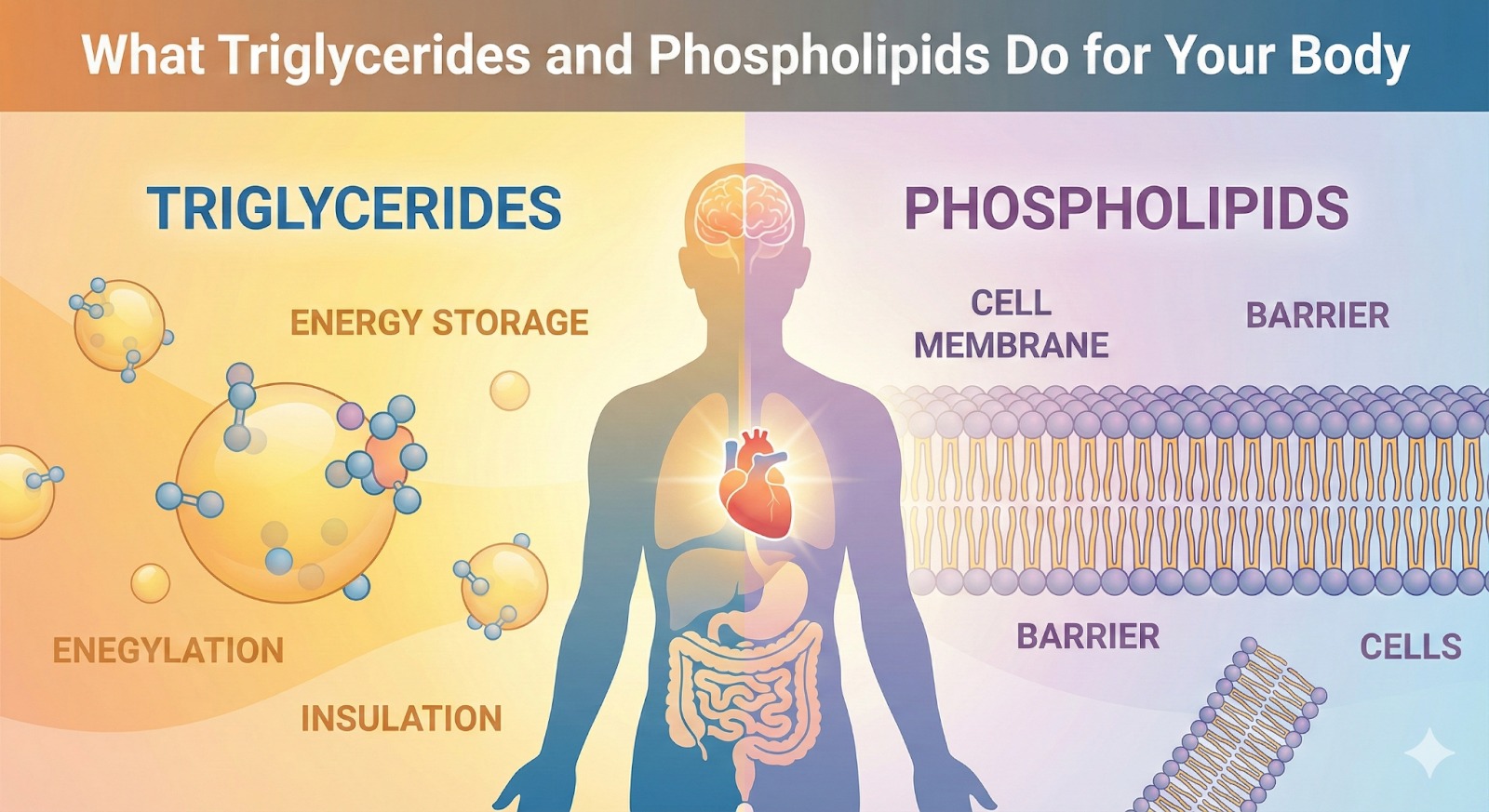
The human body is an intricate system, maintained and governed by various chemical compounds. Among these, triglycerides and phospholipids are two types of lipids that support your physiology. This is your guide to the function and importance of these two lipid types, their contributions to your body, and how a C15 supplement can help support their functions.
What Are Triglycerides?
Triglycerides are a type of fat found in your blood. When you consume excess calories, especially from fats and carbohydrates, those not immediately used by your cells for energy get converted into triglycerides. Stored in your fat cells, these triglycerides are later released to provide energy between meals.
Triglycerides, a type of fat found in the bloodstream, are not inherently harmful. In fact, they are an important source of energy for the body. However, elevated levels can lead to health issues. High concentrations of triglycerides present in the blood can heighten the risk of developing heart disease.
Consequently, sustaining a balanced diet and adhering to a healthy lifestyle become even more important in controlling triglyceride levels. Managing optimal triglyceride levels not only contributes to good heart health but also reflects a broader commitment to maintaining overall health.
Like triglycerides, phospholipids are lipids, but their role is quite different. Structurally, phospholipids consist of two fatty acid “tails” attached to a glycerol “head” that also sports a phosphate group, hence the 'phospho'. Their structure gives them a dual nature — the fatty acid tails repel water (hydrophobic), but the phosphate head attracts it (hydrophilic).
The primary role of phospholipids is to form the basic structure of all cell membranes. It's their way of creating a protective barrier around your cells, allowing beneficial substances in and keeping harmful substances out. This characteristic allows the membrane to be flexible and fluid but stable.
Additionally, phospholipids play a crucial role in regulating fat transport within the body. They emulsify dietary fats in the small intestine, which aids digestion and absorption.
Despite playing distinct roles, the relationship between triglycerides and phospholipids is deeply intertwined. Conversion occurs between these two lipid types in response to body requirements.
During periods of inadequate energy intake, triglycerides stored in fat cells break down, releasing fatty acids. These can be transformed to phospholipids when needed, particularly to ensure the integrity of cell membranes and support various metabolic processes.
Moreover, both triglycerides and phospholipids work together to transport fats, including essential dietary fats, throughout the body. Binding with proteins, they form lipoproteins that carry cholesterol, triglycerides, and other fats in the bloodstream. In this form, they are able to provide energy to the entire body, reinforcing their shared role in energy management.
Regulating your body's triglyceride and phospholipid levels is important for maintaining overall health. Here are some practical strategies, involving diet, exercise, and lifestyle modifications, designed to help manage these vital lipid levels effectively.
Adhering to a diet that prioritizes low-fat, nutrient-dense, and high-fiber foods can help control triglyceride levels. Incorporating high-quality C15 supplements may further promote balance. It's prudent to limit alcohol, caffeine, and sugar intake, as these can elevate triglyceride levels.
Engaging in regular physical activity is crucial in maintaining a healthy body weight. A stable weight helps control levels of triglycerides and phospholipids, ensuring these lipids remain within the recommended range.
Consistent health screenings form an essential part of anyone's health regimen. Regular checks can help track lipid and cholesterol levels, leading to early detection and intervention if levels start to become imbalanced.
Maintaining a healthy lifestyle involves many factors. Steering clear of harmful habits such as cigarette smoking, managing stress, getting regular sleep, and moderating alcohol intake can positively influence overall health, including balancing triglyceride and phospholipid levels.
Triglycerides and phospholipids are both very important for the body. Triglycerides, as energy reserves, and phospholipids work cohesively to maintain your body’s practical operations. They don’t get discussed often, but their importance in your body's energy balance, cellular function, and overall well-being can't be overstated.
The functions of the body, many of which happen unnoticed, rely heavily on triglycerides and phospholipids. To support these essential lipids, you’ll want to maintain a healthy diet, engage in regular physical activity, and monitor lipid levels diligently.
Remember, proper care of these lipids benefits not just your overall health. It's fundamental for the well-being of each cell in your body.
 Supriyo Khan
 Supriyo Khan
 Supriyo Khan
 Supriyo Khan

Want to add a comment?