In the modern pursuit of holistic health, we meticulously track our sleep cycles, count our macros to the gram, and monitor our cortisol levels. Yet, there remains a massive blind spot in men's wellness: the mechanical health of our sexual function.
We often operate under the assumption that sexual response is binary—it either works, or it doesn't. But for a growing number of men in 2026, the reality is a confusing gray area. They are physically healthy, their hormone levels are normal, and they can achieve an erection. Yet, during partnered intimacy, they feel... almost nothing.
This condition is widely known in online communities as death grip syndrome, but clinically, it is a form of sexual desensitization. It creates a distressing paradox where a man is functionally capable but sensationally numb. This often leads to strained relationships, accusations of a lack of attraction, and a profound hit to self-esteem.
The vital thing to understand is that this is not a permanent defect. It is a physiological adaptation. Just as a powerlifter develops calluses on their hands to protect the skin from heavy iron, your nervous system can "callus" itself against high-intensity stimulation.
The good news? The nervous system is plastic. With the right knowledge and a protocol known as "somatic retraining," sensitivity can be fully restored.
The Neuroscience of Numbness: It’s Not "All in Your Head"
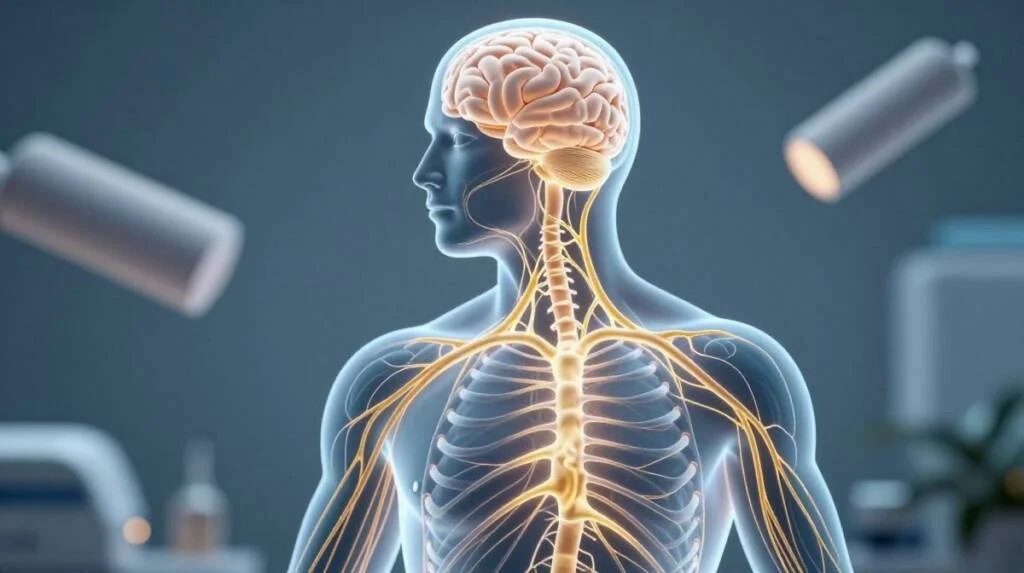
To understand why "just relaxing" doesn't fix desensitization, we must look at the biology of touch. The male anatomy is densely packed with specialized nerve endings called mechanoreceptors, each tuned to a specific frequency of touch.
Meissner’s Corpuscles: These are located near the surface and are responsible for detecting light touch, texture, and subtle friction. (Think: a feather or a partner's skin).
Pacinian Corpuscles: These are located deeper in the tissue and respond to deep pressure and high-frequency vibration.
When a man relies exclusively on a tight, dry, and fast grip for years (often accompanied by high-speed internet pornography), he effectively bombards the deep-pressure receptors while bypassing the delicate surface receptors.
Over time, the brain’s sensory cortex adapts. It raises the "threshold" required for a signal to register as pleasure. It is the auditory equivalent of listening to heavy metal at max volume for years; eventually, you lose the ability to hear a whisper. A partner’s natural anatomy—which is soft, warm, and lubricated—is a whisper. Your brain is waiting for the heavy metal.
The Psychological Loop: The "Spectatoring" Trap
Desensitization rarely stays just a physical problem; it quickly metastasizes into a psychological one.
When a man realizes he isn't feeling enough to reach climax during intercourse, he enters a state psychologists call "spectatoring." Instead of being present in the moment, he dissociates. He starts monitoring his own body like a third-party observer: "Am I close? Will I lose my erection? Is she noticing that I'm taking too long?"
This anxiety triggers the release of cortisol and adrenaline. These stress hormones are vasoconstrictors—they restrict blood flow to the extremities, which further numbs the nerve endings. It is a vicious cycle: numbness causes anxiety, and anxiety causes more numbness.
Breaking this cycle requires external validation and education. Platforms dedicated to men's wellness, such as SensualAdvisors, emphasize that acknowledging the mechanics of the issue is the first step in lowering that anxiety. When you understand that your issue is a hardware calibration problem and not a broken character, you can stop "spectatoring" and start healing.
The Somatic Retraining Protocol: A 4-Week Roadmap
Recovery is not about cold-turkey abstinence (which often leads to relapse) but about re-calibration. We need to teach the brain to lower its threshold for pleasure.
While every individual is different, a standard "step-down" protocol typically looks like this:
Phase 1: The Reset (Week 1)
The goal here is to break the habit loop. For one week, avoid the specific grip or technique that caused the desensitization. If sexual release is necessary, it must be done with a radical change in method. The focus is to starve the Pacinian corpuscles (deep pressure) of the stimulation they crave, forcing the brain to look for other signals.
Phase 2: Lubrication and Lightness (Week 2)
The primary culprit of desensitization is often dry friction. The human body is naturally lubricated internally; a dry hand is not. In this phase, you reintroduce stimulation but with a strict rule: high lubrication, zero tight grip.
This forces the body to rely on the Meissner’s corpuscles (surface texture) rather than crushing pressure. It will feel frustratingly slow at first. That frustration is the feeling of your brain searching for a neural pathway it hasn't used in years.
Phase 3: Tech-Assisted Calibration (Week 3)
This is where modern technology becomes a therapeutic asset. In the past, men had to rely solely on willpower. Today, we have tools designed to bridge the gap between a hand and a partner.
Experts recommend transitioning to tech-assisted training units or specialized sleeves. Unlike a hand, which creates uneven hotspots of pressure, these devices offer consistent, encompassing texture that mimics biological reality.
Why use a tool? It acts as "training wheels" for your nerves. A high-quality stamina training unit provides complex internal textures that stimulate the skin from all angles without requiring a tight grip.
Biofeedback: Many modern devices are designed to help men last longer, but for the desensitized man, they serve the opposite purpose: they teach the body to feel more with less effort. By focusing on the texture of the device rather than the tightness of the squeeze, you actively rewire your sensory map.
Phase 4: Integrated Intimacy (Week 4 and beyond)
Once sensitivity begins to return with the tool, reintroduce partnered intimacy. The key here is to prioritize sensation over climax. If you cannot finish, do not revert to the death grip to "get it over with." Accept the session as a sensory experience. Over time, the brain learns that this softer level of input is the new normal for arousal.
The Vital Role of Partner Communication
Perhaps the hardest part of this journey is explaining it to a partner. In a relationship, a man’s inability to finish is often misinterpreted by his partner as: "He doesn't find me attractive anymore."
Silence is the enemy here. You must frame this as a health optimization journey, not a lack of desire.
A constructive script might sound like this: "I've realized that I've developed some bad habits in how I process physical sensation, similar to how listening to loud music affects hearing. I'm working on 'retraining' my sensitivity so I can feel more connected to you. It might take some time for my body to adjust, but I'm doing this because I want our intimacy to be better."
Most partners will be incredibly supportive when they realize the issue is physiological and that you are taking proactive steps to fix it.
Conclusion: A New Baseline for Health
We are living in an era where we have more control over our biology than ever before. We fix our posture, we correct our vision, and we optimize our gut biomes. It is time we apply that same proactive mindset to sexual sensation.
Addressing desensitization is about more than just "finishing." It is about moving from a numb, disconnected experience of sexuality to one that is vibrant, sensitive, and deeply embodied.
By understanding the science of your nerve endings, utilizing the right educational resources, and employing smart tools for rehabilitation, you can reverse the damage. You can reset your baseline. The journey from numbness back to feeling is not just a physical repair; it is a restoration of your capacity for connection.
 Supriyo Khan
 Supriyo Khan
 Supriyo Khan
 Supriyo Khan
Want to add a comment?