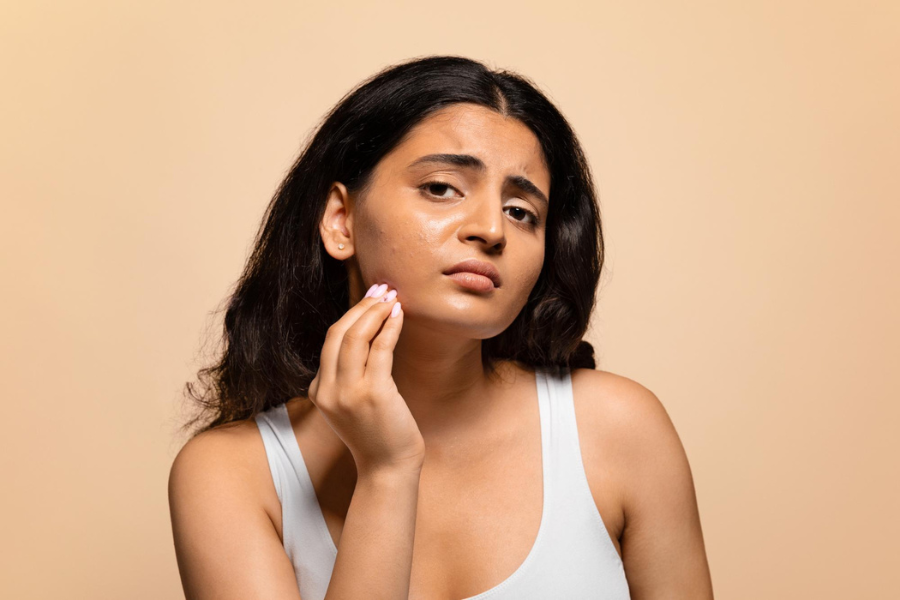
One of the most popular myths in skincare is that oily skin does not need moisturiser. However, it does lack hydration, and because of that, it often produces more oil than usual. You may often notice your T-zone shining during the day and night, irrespective of the weather. A good moisturizer helps nourish the skin, repair the barrier, and control oil production.
Oily skin tends to produce excess sebum, making it more susceptible to clogged pores, which can often cause acne breakouts. It requires a lightweight, non-comedogenic, and mattifying hydrating moisturizer to regulate oil balance.
Oily skin needs the perfect balance of hydration and oil control. With gentle cleansing, proper sebum regulation, rejuran and lightweight hydration, oily skin can look fresh, clear and balanced.
Non-comedogenic and non-greasy, without being harsh, are recommended for oily skin.
Now that we understand what oily skin truly needs, let’s break down a step-by-step routine
Use a gentle face cleanser that cleans the impurities without stripping the skin.
Apply serum (tea tree, aloe vera or hyaluronic acid).
For hydration, use a suitable gel-based moisturizer for oily skin that won’t suffocate pores.
Finish with sun protection.
Effectively choosing the right products is essential for managing oily skin. Let’s understand in detail by discussing each step of skincare, especially for oily skin.
While buying a cleanser, choose a foaming or gel-based face wash with salicylic acid. Ingredients like charcoal or clay also help to absorb the excess oil.
For the toner, choose one that works on minimizing the pores, like green tea or tea-tree oil. Avoid alcohol-containing toners, as it dries out your skin, and it ends up producing more oil.
For the serum, choose glycolic acid, niacinamide, and hyaluronic acid.
When it comes to hydration, a non-sticky, non-greasy light-weight moisturizer will help nourish with oil-balancing.
For SPF protection, choose a gel-based sunscreen that feels light on skin and does not cause a white cast.
Once a week, use a clay based mask on the skin so that oil production can be regulated.
You can also use sheet masks with salicylic acid, tea tree and lemon that control sebum.
Multani Mitti and rose water mask
Take a spoonful of multanni mitti, add rose water to make a paste. Apply it for 15 minutes. Such masks will tighten the skin and absorb excess oil.
Gramflour, and curd mask
Take two tablespoons of gram flour and curd and make a paste. It will exfoliate the skin and remove oil.
Egg white and lemon mask
Whip one spoonful of egg white with lemon; you can also add oats or gram flour to form a consistent paste. Apply and leave it for 10-15 minutes.
Lemon and honey mask
Take a tablespoon of fresh lemon juice and mix it with one spoon of honey. Mix well and apply to the face, covering the neck portion too. It fights bacteria and cleans the pores.
Tip: DIY masks should be used occasionally and avoided on inflamed or sensitive skin. So, before applying any ingredients directly on the face, perform a patch test to ensure it does not cause any irritation or itching on the skin.
Oily skin may seem like the toughest kid that is hard to discipline and always acts on its own, from acne breakouts to excessive shine and stickiness. But the good part of oily skin care is that with the right ingredients and regimen, you can reduce oil production, minimize the pores, unclog them and hydrate.
Using products that control sebum and are non-comedogenic are appreciated by oily skin. Brands are reforming and making products that suit dry skin, oily skin and combination skin. Infused with skin beneficial ingredients and dermatologically tested, Brands like Dermabay offer moisturizer for oily skin that maintains its hydration level, controls oil production, while being light on the skin.
Don’t break the consistency of the skincare routine for the desired results.
 Supriyo Khan
 Supriyo Khan
 Supriyo Khan
 Supriyo Khan

Want to add a comment?