Stretchers and parts for emergency and medical use are critical pieces of equipment across EMS, hospitals, clinics, and event medical services. Stryker stretchers and parts provide a trusted solution for organizations seeking reliability, safety, and durability. Choosing the right stretcher and maintaining its components affects patient outcomes, staff safety, regulatory compliance, and long-term operating costs. This guide breaks down stretcher types, essential components, selection criteria, safety standards, maintenance best practices, and purchasing considerations so procurement teams, medical supply resellers, and eCommerce operators can make informed decisions.
Emergency medical services rely on lightweight, maneuverable stretchers that load securely into ambulances and tolerate repeated field use. Wheeled EMS stretchers often feature collapsible frames, quick‑release mechanisms for rapid loading/unloading, and compatibility with ambulance locking systems. Typical use cases include prehospital transports, roadside extrications, and interfacility transfers. Durability and fast‑acting locks are prioritized over plush padding.
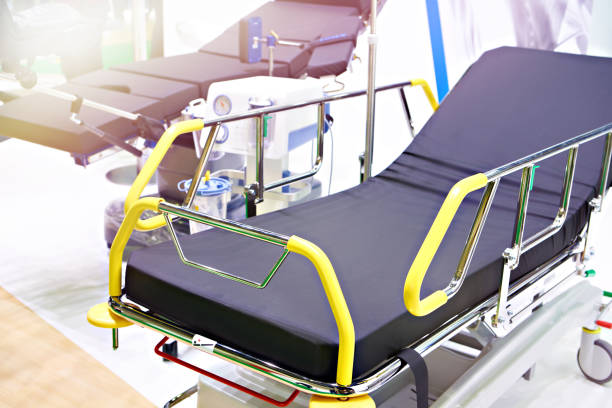
Hospital stretchers balance patient comfort and clinical flexibility. They include features like adjustable height, Trendelenburg tilt, IV pole mounts, side rails, and easy‑clean surfaces for infection control. Multi‑purpose models serve emergency departments, imaging suites, and wards, so resale or ecommerce listings should highlight modularity and accessory compatibility.
Mass‑gathering medical teams and evacuation planners use lightweight, stackable transport stretchers and evacuation sleds. These are designed for rapid patient flow, crowd environments, or moving multiple patients during a disaster. Manufacturers focus on compact storage, fast deployment, and rugged materials resistant to outdoor conditions.
Specialty stretchers address unique constraints: scoop stretchers split to slide beneath a patient to minimize movement: basket stretchers (Stokes baskets) are for technical rescues and water evacuations: stair chairs/stair stretchers enable controlled descent of non‑ambulatory patients in tight stairwells: pediatric stretchers are sized and configured to reduce anxiety and secure smaller patients safely.
Powered stretchers add hydraulic or electric lift for hands‑free height adjustment, reducing staff injury risk during transfers. Manual models are lower cost and lighter but increase ergonomic strain. Powered‑assist systems (spring‑assisted or gas strut) are a middle ground, less expensive than full electric systems while improving lift effort. For buyers, the tradeoffs are initial price, maintenance complexity, and staff safety benefits.
Mattresses and pressure‑relief pads affect comfort, pressure‑injury risk, and cleanability. Materials range from closed‑cell foam with waterproof covers to advanced viscoelastic foams. Side rails offer patient containment: quick‑release rails are preferred in emergency settings. Listings should specify fire retardancy, antimicrobial coatings, and cover seams for infection control.
Casters determine maneuverability, larger, swivel casters with sealed bearings work best on uneven surfaces. Frame materials (aluminum vs steel) influence weight, corrosion resistance, and load capacity. Wheel locks and central braking systems are critical safety features often required by standards.
Restraint systems include three‑ or four‑point straps with quick‑release buckles. Look for adjustable, radiolucent straps for imaging compatibility. Hardware, hinges, pins, and fasteners, should be corrosion‑resistant and labeled for traceability to streamline maintenance.
Powered stretchers include batteries, chargers, motor controllers, and hydraulic pumps. Battery type (lead‑acid vs lithium‑ion) affects run time and weight. Control modules should be sealed against fluid ingress and sourced from reputable suppliers to reduce downtime. Documentation for electrical safety testing is essential.
Modularity increases stretcher utility: adjustable IV poles, oxygen cylinder holders, instrument trays, and weather covers expand use cases. For ecommerce product pages, emphasize plug‑and‑play accessory interfaces and compatibility lists so buyers can easily match parts and avoid returns.
Select a stretcher rated above expected patient weights: modern bariatric standards often call for 650–900 lb capacity models. Pediatric wards need adjustable sides and smaller mattresses. Consider mattress width and overall footprint for operating room and elevator compatibility.
Ergonomics reduces staff injury and absenteeism. Prioritize powered lift or assisted‑lift models in high‑volume settings. Centralized brake systems, low‑effort steering, and adequate handle placement improve control during corridor turns and ambulance loading.
Smooth, sealed surfaces and seam‑free mattress covers speed cleaning and reduce bioburden. Choose materials compatible with facility disinfectants. Where infectious disease risk is high, quick‑remove mattress covers and bleach‑resistant components matter.
Confirm stretcher fit with ambulance locking systems, imaging tables, and elevator dimensions. Cross‑compatibility minimizes retrofit costs and ensures smooth workflows during transfers. For online sellers, include compatibility charts and dimensional diagrams to reduce post‑purchase confusion.
Buyers should check standards from bodies like the FDA (US), ISO (e.g., ISO 13485 for medical devices), ASTM, and regional health regulators. For stretchers used in vehicles, NFPA and ambulance‑specific standards may apply. Certifications demonstrate a baseline of manufacturing and quality control.
Performance testing includes load testing, tilt and center‑of‑gravity evaluations, and crash testing for ambulance use. Load ratings should include a safety margin and be documented. Crash‑tested stretchers will list test standards met and offer clearer risk profiles for EMS operators.
Traceability, serial numbers, manufacturing records, and component lot tracking, is important for recalls and warranty claims. Service records should document inspections and repairs: facilities that maintain audit trails reduce liability and ensure continuous compliance.
A practical inspection cadence is daily quick checks (brakes, straps, casters), weekly functional tests (lift operation, locking mechanisms), and monthly full inspections (frame integrity, electrical systems). A sample daily checklist: verify wheel locks, inspect mattress cover for tears, test strap buckles, and confirm battery charge on powered models.
Follow manufacturer guidance for disinfectants and contact times. Use low‑abrasion cleaners on coated frames and solvent‑compatible disinfectants for mattress covers. For polyurethane or vinyl surfaces, avoid prolonged exposure to strong oxidizers that degrade seams.
High‑wear components include casters, brakes, mattress covers, straps, and battery packs. Typical replacement intervals: casters and brakes every 2–5 years depending on use: mattress covers every 1–3 years in high‑use settings: batteries every 2–4 years for lead‑acid, longer for quality lithium‑ion systems.
Minor repairs, caster swaps, strap replacement, cover patching, can be handled in‑house with documented procedures. Major repairs to hydraulic or electrical systems should go to certified service providers to preserve warranties and ensure compliance. Facilities should keep a small inventory of fast‑moving spare parts to minimize downtime.
New stretchers provide the latest features and full warranty coverage but come with higher upfront costs. Refurbished units reduce capital expense and can be appropriate for low‑acuity settings if certified by the refurbisher. For resellers and ecommerce businesses, offering certified refurbished options with inspection reports improves buyer confidence.
Warranties and service contracts mitigate unexpected costs, especially for powered systems with batteries and controllers. Facilities should budget for preventive maintenance and keep core spare parts (casters, straps, mattresses, batteries) on hand based on usage patterns.
OEM parts generally offer best fit, traceability, and warranty protection. Aftermarket suppliers may reduce costs but require validation of materials and compatibility. Specialty suppliers provide items like radiolucent straps or pediatric mattresses. For ecommerce product pages, distinguish OEM from aftermarket offerings and include part numbers for transparency.
Total cost of ownership includes purchase price, maintenance, parts, downtime, and staff injury risk. Investing in ergonomics (powered lifts) often reduces workers' compensation claims and absenteeism, translate those savings into ROI for procurement stakeholders. For online marketers building content or product pages, include lifecycle cost calculators or downloadable spec sheets to attract decision‑makers and support linkable resources.
Selecting and supporting stretchers and their parts demands a systems view: the right model for the clinical setting, compatible and traceable parts, routine maintenance, and adherence to safety standards. For ecommerce operators and medical suppliers, clarity around specifications, certifications, compatibility, and lifecycle costs improves buyer trust and reduces returns. Teams that invest in ergonomics and preventive maintenance typically see lower long‑term operating costs and higher uptime, outcomes that matter for patient care and the bottom line.
 Supriyo Khan
 Supriyo Khan
 Supriyo Khan
 Supriyo Khan
Want to add a comment?