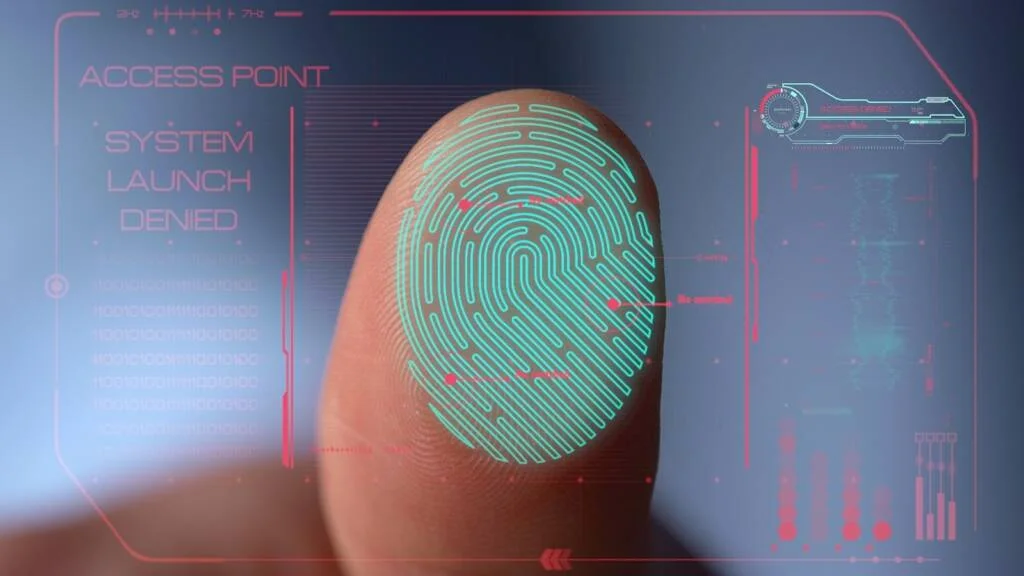
National ID verification has a profound impact on the governance, services, and security of a society.
As the population increases and digital services become an essential utility, nations are deploying biometric technology to ensure the identity of individuals. An additional layer of secure, reliable security is facilitated by the use of unique physiological or behavioural characteristics in the national ID verification process.
This guide outlines the importance of biometrics, what works, and other deployments in the civil space.
Biometrics refer to the identification of humans at the national level by using biological traits, which may include the following:
Fingerprints
Facial recognition
Iris or retina scans
Voice recognition
Palm prints
Unlike passwords and ID cards, each person possesses unique biometrics, which cannot be erased or lost. Since these characteristics do not change over time, we can say that biometrics, in general, are used at their best at the national level.
National ID schemes are designed to provide a solid identity for each citizen, but those identities are sometimes compromised through duplicate registration, imposter enrolment, and bad data.
These weaknesses can be mitigated with the use of biometrics.
Biometric search allows a registration to be checked against all other existing records during the enrolment process. If a candidate's biometric matches an existing record in the system, that becomes the system reference, and further misregistration is prevented.
Biometric verification ensures that the person possessing the ID is indeed the rightful holder. This reduces the possibility of impersonation and fraudsters gaining access to services using stolen IDs.
Governments can provide social welfare programs, health, pension, or other subsidy programs, only to the right citizens. Fakes, duplicates, and leakages can be minimized, making the system more accountable.
As the government proceeds with the rollout of digital services, remote secure authentication becomes a cornerstone of the service offering. Biometric authentication enables remote verification to be implemented and ensures that citizens can use the authentication method to access government portals and services.
A biometric ID management system is the mainstay of a national biometric initiative. It combines biometric data capture, storage, matching, identification, and authentication capabilities within a centralized environment.
The normal operating parameters of the system include:
Biometric data, such as a scan of your fingerprint or your facial image, is collected at registration. The same devices are also used to collect your basic information, such as name, date of birth, or address.
The collected biometric data is converted into mathematical templates, and then it is stored in a secure database.
This is done by comparing your biometric data with information already stored. The system prevents duplicate registrations by identifying similar or identical records.
Your biometric data is captured when you use a service, and it’s compared against the information already stored in the database. A system matches your biometric data with your data, and your identity is either verified or not.
For more technical solutions and implementations connected to national ID programs, you can read further about how biometrics technology is supporting the public sector.
Governmental programs for the issuance of biometric-based identification systems are becoming commonplace, and these identity programs consist of so much more than the mere provisioning of ID cards. Such programs are used by governments and public service organizations in numerous sectors, including:
Biometrics assist in authenticating the identity of those crossing the border at airports and land crossing points. Increased efficiencies can be realized while still ensuring security through the addition of automated e-gates.
Biometric verification assists in reducing voter fraud by ensuring that everyone has only a single vote.
Subsidies, pensions, and health care services can be more efficiently disbursed with the use of biometrics to ensure intended recipients are being activated.
Biometric identification is used to confirm a patient’s identity prior to accessing their medical records. This assists in reducing medical errors and enhancing continuity of care.
Secure identity verification allows unbanked populations to open accounts and access financial services.
While the value of biometrics is clear, realizing their potential requires planning and coordination. Governments must prioritize:
Data privacy and protection laws
Secure IT infrastructure and encryption
Accountable governance policies
Public trust and education
Strong legal structures and cybersecurity practices are crucial for building and keeping trust. And for governments hoping to maintain that trust, it’s a crucial road ahead.
Biometric authentication adds power to existing national identity systems, making accurate identification easier, stopping fraud, and facilitating secure, efficient digital services. Through clear processes and widespread enrollment, deduplication, and verification programs, biometrics are foundational to ensuring that each person is correctly and distinctly identified.
As countries replace and update their identification systems, biometrics will continue to serve this unique role in the mission to govern effectively and deliver services to all.
 Supriyo Khan
 Supriyo Khan
 Supriyo Khan
 Supriyo Khan

Want to add a comment?