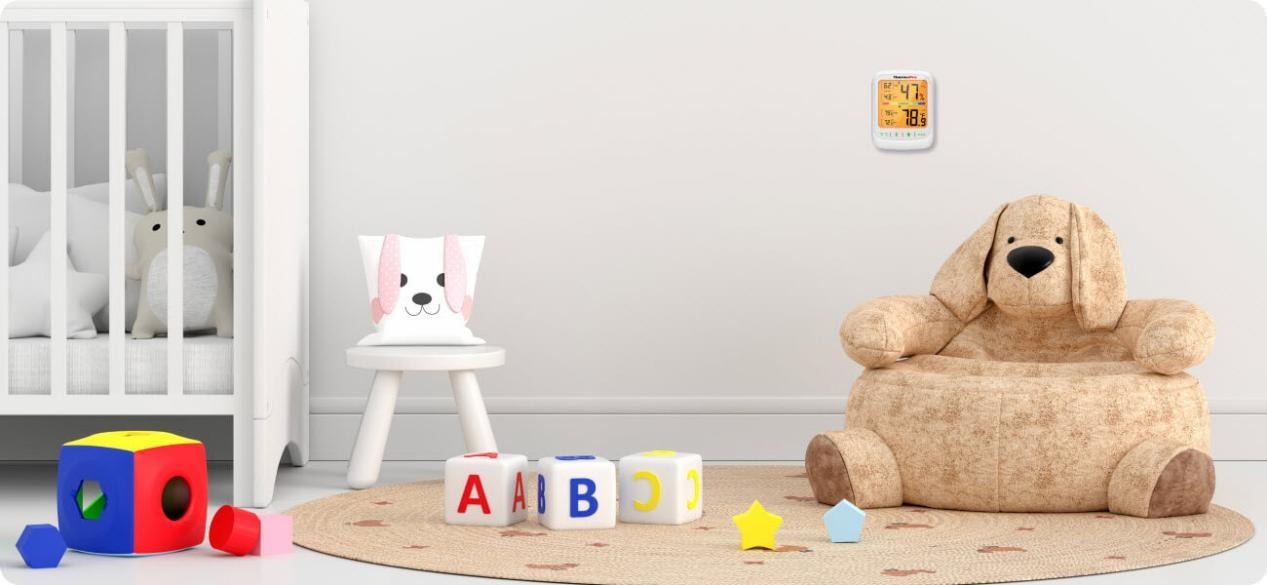
Bringing a newborn home is one of the most rewarding experiences a parent can have, but it also comes with a steep learning curve. New parents are often bombarded with advice about car seats, swaddles, and organic formulas. However, one of the most critical factors for a baby’s health and sleep quality is often overlooked: the invisible environment of the nursery.
Newborns cannot communicate their discomfort, they rely entirely on us to regulate their surroundings. During the cold, dry winters or the humid summer months, maintaining the perfect "microclimate" in a nursery isn't just about comfort, but it’s about safety.
This guide will break down why temperature and humidity are vital for your infant, the specific ranges recommended by pediatric experts, and how you can use smart thermo-hygrometer like the ThermoPro TP359 to ensure your baby breathes easily and sleeps soundly.
Newborns are significantly more sensitive to environmental changes than adults. Their bodies are still developing the ability to thermoregulate, meaning they cannot efficiently cool themselves down or warm themselves up.
The American Academy of Pediatrics (AAP) frequently emphasizes the link between room temperature and the risk of Sudden Infant Death Syndrome (SIDS). If a nursery is too hot, it can lead to deep sleep from which a baby may have difficulty waking. Overheating is a major red flag for infant safety, which is why keeping a close eye on the thermostat is a non-negotiable part of modern parenting.
In many parts of the U.S., winter means the heater is running 24/7. This strips the air of moisture, creating a low-humidity environment. Newborns breathe almost exclusively through their tiny nasal passages. Dry air causes the mucus in these passages to become thick and sticky, leading to congestion, "noisy breathing," and cracked lips. Because babies can't grab a glass of water or apply lotion, they suffer the effects of dry air much more acutely than we do.
When it comes to your baby’s room, you are looking for the "Goldilocks Zone", not too hot, not too cold, and just the right amount of moisture.
Most pediatricians recommend keeping the nursery between 68°F and 72°F. While this might feel a bit cool to some adults, it is the safest range for an infant dressed in a light onesie or a sleep sack. A cooler room encourages better, safer sleep. If you notice your baby’s chest or neck feels hot or sweaty to the touch, the room is likely too warm, regardless of what the wall thermostat says.
The ideal humidity level for a nursery is between 40% and 60%.
Below 40%: The air is too dry. This can lead to dry, itchy skin (infant eczema), a scratchy throat, and increased susceptibility to winter colds and croup.
Above 60%: The air is too damp. High humidity encourages the growth of mold, mildew, and dust mites, common triggers for childhood allergies and asthma.
Managing a nursery environment in the U.S. can be tricky because our homes vary from drafty historic houses in New England to modern, airtight apartments in Los Angeles. Here is how to master the environment:
If you live in a dry climate or use central heating, a cool-mist humidifier is a nursery essential. However, the mistake many parents make is "setting it and forgetting it." Without a way to measure the air, you might accidentally turn the nursery into a sauna. You should use a humidifier only when the air falls below 40% and ensure it is cleaned daily to prevent bacteria growth.
Keeping the nursery door slightly ajar can prevent the air from becoming stagnant. In the summer, a ceiling fan set to a low speed can help circulate air, which research suggests may further reduce the risk of SIDS. Just ensure the fan isn't blowing directly onto the baby, as this can cause rapid cooling and dry skin.
Following the "Safe to Sleep" guidelines, you should never use heavy blankets or quilts in a crib. Instead, use the room temperature as a guide for layering. If the room is at the ideal 70°F, a cotton onesie and a lightweight swaddle or sleep sack are usually sufficient.
As a new parent, you are already sleep-deprived and overwhelmed. You shouldn't have to walk into the nursery every hour (risking waking the baby!) just to check a wall thermometer. This is why the ThermoPro TP359 Bluetooth Indoor Thermometer Hygrometer is a favorite among tech-savvy parents.
It bridges the gap between "guessing" and "knowing," providing a high-tech solution to nursery safety.
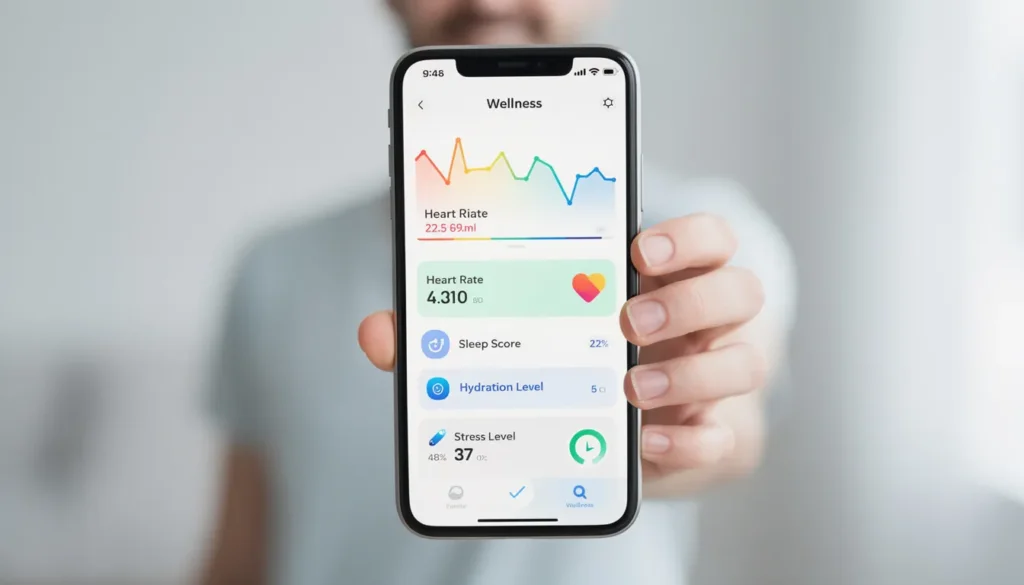
The TP359 features advanced Bluetooth technology that allows you to monitor the nursery's conditions from your smartphone via the companion app. Whether you are in the kitchen prepping bottles or in your own bed trying to catch a few winks, you can check the exact temp and humidity of the nursery with a single tap. This means no more "creeping" into the room and accidentally creaking the floorboards.
The TP359 use a premium Sensirion sensor manufactured in Switzerland. This isn't generic hardware from a no-name supplier. Sensirion is widely regarded as the gold standard in consumer-grade environmental sensing. The result is accuracy of ±0.9°F for temperature and ±2% for relative humidity .
Why does this level of precision matter for your newborn? The difference between 38% humidity and 42% humidity is the difference between "comfortable" and "congested." Two percentage points of error in a cheap sensor could have you running a humidifier when you don't need one, or skipping it when your baby desperately needs moisture.
This is the most critical feature for newborns. Through the app, you can set customizable humidity/temperature ranges. For example, you can set an alert to notify you if the temperature rises above 74°F or falls below 67°F. If the humidity drops during the night as the heater works overtime, your phone will alert you. This allows you to intervene, turning on a humidifier or adjusting the AC, before your baby ever becomes uncomfortable.
The TP359 records data and creates easy-to-read graphs. This is incredibly helpful for parents during those first few pediatrician visits. If your baby has a persistent cough or dry skin, you can show the doctor the humidity trends in the nursery. It helps identify if the home environment is a contributing factor to health issues.
Not every check requires the app. The TP359 features a large, backlit LCD screen with a three-level comfort indicator displaying DRY, COMFORT, or WET . The backlight is momentary, and it illuminates when you press the button, so you're not blasting your sleeping baby with light just to check the room conditions. The screen also displays current temperature, current humidity, and the date and time, making it a functional bedside clock that happens to also be a sophisticated environmental monitor.
The TP359 includes built-in magnets for metal surfaces, a fold-out stand for tabletops, and a wall-mount slot . You can position it exactly where you need the most accurate reading—near the crib, away from direct heat sources and drafts.
Beyond technology, here are a few "pro-tips" for managing your nursery like a veteran parent:
The "Back of the Neck" Test: Hands and feet are poor indicators of a baby’s temperature because their circulation is still developing. To check if your baby is too hot or cold, feel the back of their neck or their tummy.
Avoid the Vent: Never place the crib directly under or over a heating/cooling vent. The direct blast of air can cause rapid temperature swings and significantly dry out the baby’s skin.
Placement of the Monitor: Place your ThermoPro TP359 near the crib, but out of the baby’s reach. You want to measure the air where the baby is actually sleeping, not the air by the drafty window or the warm hallway door.
In the grand scheme of parenting, managing temperature and humidity might seem like a small detail. But for a newborn, it is the foundation of a healthy life. By keeping the nursery within the recommended 68°F-72°F and 40%-60% humidity range, you are protecting your baby’s skin, respiratory system, and overall safety.
The ThermoPro TP359 Bluetooth Indoor Hygrometer Thermometer takes the mental load off your shoulders, acting as a 24/7 silent guardian for your baby’s environment. When your baby sleeps better, you sleep better and in the world of new parenthood, there is no greater gift than that.
Is your nursery's air quality safe for tonight?
 Supriyo Khan
 Supriyo Khan
 Supriyo Khan
 Supriyo Khan

Want to add a comment?