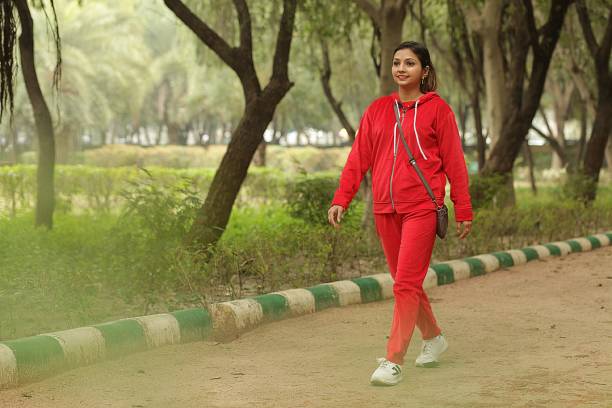
Outdoor lighting shapes behaviour before it shapes atmosphere. Human vision relies on contrast, motion, and spatial cues instead of direct brightness. This approach supports orientation by aligning low-level light with natural visual perception. This relationship explains why restrained lighting often feels calmer and more dependable after dark.
Visual Adaptation
Visual adaptation supports safe, confident movement in low-light outdoor environments. The human eye needs time to adjust as light levels drop. This gradual adjustment improves contrast sensitivity and motion detection. On the other hand, sudden brightness disrupts the process and increases visual strain.
As such, when illumination remains measured, the eye maintains a stable state. Edges, textures, and level changes become easier to recognise. Clear contrast then allows the brain to judge distance and orientation without constant correction. Peripheral vision plays a key role during outdoor movement. It responds more effectively to soft gradients than sharp glare. Ground-focused light supports this wider field of awareness. Reduced visual stress encourages steadier movement and lowers mental fatigue at night.
Perceived Safety
Safety perception does not depend on brightness but clarity. Too much light kills depth and hides surface differentiation. Uneven ground becomes harder to read despite higher light output. Lower light preserves shadow, which communicates form and distance through contrast.
Balanced illumination reduces visual fatigue. Eyes remain relaxed, allowing attention to stay on movement rather than constant adjustment. People often slow under harsh lighting yet move steadily through softer conditions. Confidence follows comprehension, not intensity.
Movement Guidance
Ground-focused light supports natural movement patterns. Routes remain visible without drawing attention to the source. When paths, steps, and edges receive consistent illumination, movement feels intuitive. Pace adjusts smoothly instead of hesitating at
uncertain points.
This principle appears in lighting systems designed around human visual behaviour, including approaches used in outdoor lights by in-lite. Controlled distribution takes precedence over visual dominance. Light supports navigation while remaining secondary to its surroundings.
Shadow Balance
Shadow contributes essential spatial information. Soft shadow reveals texture, height differences, and object placement. These cues guide the interpretation of space. Removing shadow reduces depth perception and spatial clarity.
Balanced shadow also supports continuity. Transitions between lit and unlit areas feel predictable rather than abrupt. Consistency allows users to trust their visual reading of the environment.
Effective outdoor lighting matches how people see at night. It values contrast, consistency, and spatial logic over brightness. The interaction of light with perception allows outdoor environments to remain readable, calm, and functional during the night. The approach also participates in ensuring there is a balance in the circadian rhythm by minimising unnecessary exposure to the bright artificial light at nighttime hours.
 Supriyo Khan
 Supriyo Khan
 Supriyo Khan
 Supriyo Khan

Want to add a comment?