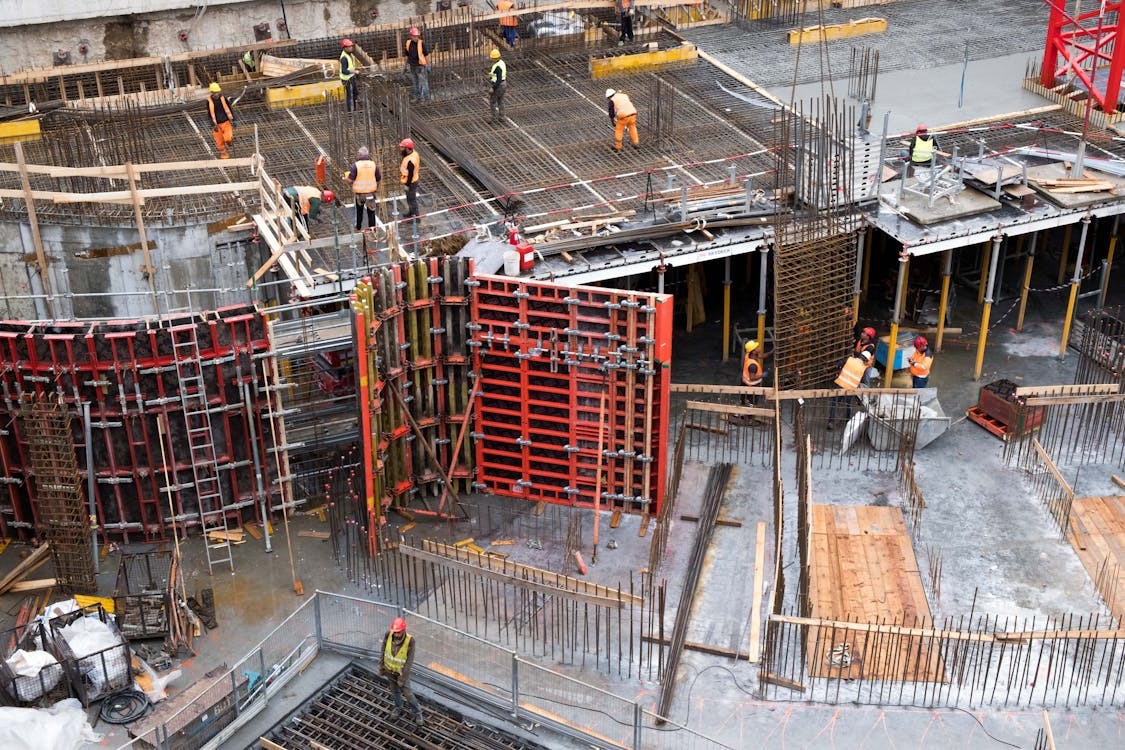
Working in construction is one of the most dangerous professions in the country.
And yet… Most workers walk onto these job sites every day without knowing what they are legally entitled to if something goes wrong.
Here is the reality:
Working in construction leads to 1 in 5 deaths among American workers. One industry. One death out of every five. And sadly the workers that comprise these statistics tend to be the last ones to know their rights when it comes to claiming injury damages recovery.
That ends right now.
Whether a worker has fallen off scaffolding, been struck by equipment, or fallen victim to a complex machinery malfunction — construction workers have rights that many people are not aware of. Taking the time to connect with the right legal services from Ravid & Associates after an accident could mean the difference between receiving adequate compensation and getting nothing at all.
What you'll learn:
The 4 Most Common Construction Site Accidents
Worker's Compensation (What It Covers and Doesn't Cover)
Third Party Claims (The Overlooked Right)
Injury Damages Recovery: What To Expect
Steps To Follow After Being Injured On The Job
Before jumping into construction accident legal rights, it helps to first understand common accidents that occur on construction sites.
According to the Occupational Safety and Health Administration, four types of accidents cause the majority of construction worker deaths each year. They label them the "Fatal Four."
Fall accidents. Falling from scaffolding, ladders, rooftops, etc.
Struck-by incidents. When an object, vehicle, or piece of heavy equipment hits a worker.
Electrocutions. Coming into contact with exposed wires/power sources.
Caught-in/between accidents. Getting trapped by machinery or between two objects.
Falls alone account for 38.4% of construction worker deaths. And with 1,032 fatalities in 2024 already for construction and extraction workers, chances are they will only continue to rise.
Much like deaths, non-fatal injuries are also at an all-time high. Approximately 150,000 construction workers suffer an injury on the job each year. Without proper legal representation or knowledge on what they can claim, most of these workers never see anything.
Workers have likely heard of worker's compensation.
Some may have even filed a worker's compensation claim in the past. But do they actually know what it covers?
When a worker becomes injured on the job, no one has to prove the employer did something wrong. A worker's comp is considered a no-fault system. The employee was injured while on-the-clock, they qualify for a claim.
Worker's compensation covers…
All income lost while out of work due to injury
Medical expenses that are directly related to the injury
Cost of rehabilitation and therapy
Permanent damage payments (In some cases)
…but it does NOT cover…
Pain and suffering.
Total lost wages (only covers about 2/3 of normal salary)
Future costs associated with injuries (i.e. lost earning capacity)
That is why many workers never recover full damages from their injury through worker's comp alone.
Here is the good stuff.
While many injured construction workers only file a worker's comp claim, there is another avenue of injury damages recovery that most people are unaware of — third-party claims.
Just because a worker is employed by a general contractor doesn't mean they are the only party responsible for worker wellbeing on the job. Consider this:
Where is the work being done? Was the property owner negligent about maintaining a safe environment?
What equipment is being used? Was the machinery defective or poorly maintained by a third-party?
Who hired the contractor? Could the employer have avoided hiring a contractor that led to unsafe working conditions?
If any of these scenarios are true, there may be grounds to file a third-party claim.
Filing a lawsuit against a party other than the employer can open up injury damages recovery such as:
Total lost wages. Past and future.
Pain and suffering.
Punitive damages.
Now that is significant.
However, just like above, third-party claims require proving negligence. That is where a qualified attorney comes in.
Having covered worker's comp, third-party claims, and some of the specifics that each can cover — what does injury damages recovery actually look like?
Consider this: a worker falls off a roof. They are laid up for a month before receiving surgery on an injured back. Here is what to think about in terms of recovery.
First things first. Go to the doctor.
If medical attention hasn't already been sought, that needs to happen immediately — and everything must be documented. Every detail about the injury, treatment, and potential recovery needs should be noted by a medical professional.
Second: How much is this injury going to cost?
Aside from the hospital bill, consider…
Was work missed? If so, how much income has the injury already caused in losses?
Will returning to work be possible? If not, how will this injury affect future earning potential?
What will recovery look like? Pain and suffering is real and should be compensated.
Too many workers cut their recovery short. Either by accepting a workers comp deal too early or not knowing a third-party claim was even an option.
Workers compensation is designed to be an easy process. Turns out it is designed so easy that workers don't always recover all they deserve.
Time is critical after being injured at work. Everything that happens can and will affect injury and damage recovery.
Here is what to do after being injured on the job:
Get medical help. (If not already done)
Report the injury. Let the employer know what happened. In writing.
Document, document, document. Take pictures, get witness info, and write down exactly what happened while it is fresh.
Don't sign anything. The employer (or more likely, an insurance company) may reach out with a quick settlement. Don't take it.
Call a lawyer. Speak with a construction accident attorney before making any major decisions. Calling an attorney should be the first step after reporting the injury to the employer.
When an attorney is contacted, they will handle everything listed above. Construction accident attorneys work on contingency which means they don't get paid unless the client does. While workers compensation claims from falls, roadway incidents, being struck by an object or equipment, overexertion, and transportation accidents cost employers around $7.87 billion every year. There is plenty of money on the line.
Taking quick action and hiring a lawyer will ensure the full amount deserved is recovered.
Getting hurt on the job can change a life in an instant.
But that is only the beginning of the story.
How the injury is handled after the fact; the claims filed, who is spoken to, and the decisions made can determine just how life looks moving forward. Knowing the rights to injury damages recovery after a construction accident can mean everything.
Don't wait to seek help. Don't sign any paperwork without speaking to a lawyer. And don't assume worker's compensation is the only option.
There are rights here. Now it is time to act on them.
 Supriyo Khan
 Supriyo Khan
 Supriyo Khan
 Supriyo Khan

Want to add a comment?