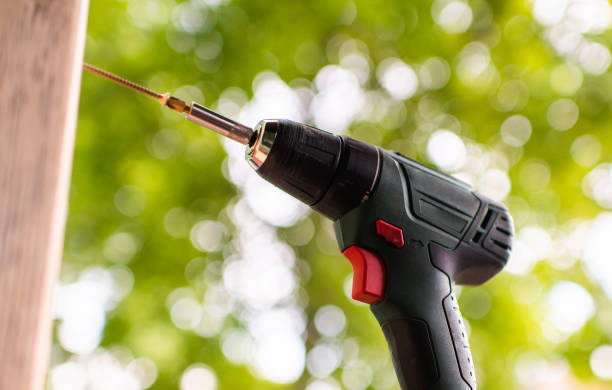
There was a time, not too long ago, when a serious project meant managing a "spaghetti factory" of orange extension cords snaking across the floor. If you were working in the attic, you were hunting for a functioning outlet. If you were at the far edge of the garden building a privacy screen, you were likely hauling a heavy generator.
The landscape has shifted. The modern workshop is no longer defined by proximity to a wall socket. High-performance cordless power tools have effectively bridged the gap between raw power and total portability, allowing DIYers and professionals alike to transition seamlessly from a basement renovation to an outdoor landscaping project without skipping a beat.
This shift isn’t just about convenience; it’s about rethinking how we approach maintenance and construction. When you aren't tethered to a cord, your workflow changes, your safety profile improves, and the speed at which you can complete a "honey-do" list accelerates.
A decade ago, battery-operated tools were often viewed as secondary useful for light drilling, perhaps, but lacking the "grunt" for heavy-duty cutting or grinding. That stigma is dead. The advent of high-density lithium-ion cells and brushless motors has leveled the playing field.
Today’s batteries provide consistent torque until the moment they run out of juice. There’s no "fade" or slowing down. Furthermore, many brands now utilize a unified battery platform, meaning the same power pack that runs your impact driver can also power your leaf blower or circular saw.
Indoor projects often present logistical nightmares. Whether you are installing cabinetry, fixing a leaky pipe under a sink, or hanging drywall in a closet, space is a premium.
In a confined indoor environment, extension cords are more than just a nuisance; they are a liability. When you’re focused on making a precise cut or balancing on a stepladder, the last thing you need is a cord snagging on a corner or tripping a family member.
Try drilling a hole in the back of a deep pantry with a corded drill. You’ll spend more time maneuvering the cable than you will on the actual task. Cordless tools allow for an "unrestricted reach" that is essential for electrical work, plumbing, and finish carpentry.
The real magic of the cordless revolution happens the moment you step outside. Traditional outdoor work usually required a choice: use manual tools and sweat for hours, or use gas-powered equipment that is loud, smelly, and requires constant maintenance.
Building a deck, a pergola, or a backyard shed used to require hundreds of feet of heavy-gauge extension cords which often led to voltage drops and motor strain. With modern battery tech, you can take a miter saw to the very edge of your property and get the same precision as if you were in a professional shop.
For many homeowners, the biggest win is the replacement of gas-powered lawn tools. Cordless chainsaws, trimmers, and blowers start instantly with the pull of a trigger. No more mixing fuel, no more clogged carburetors, and no more "shoulder-ripping" pull cords.
While cordless is king for flexibility, it’s important to understand where each shines. Here is a quick breakdown to help you decide which tool fits your specific project needs.
To get the most out of your investment, you need to treat your batteries with respect. Following these simple practices will ensure your tools are always ready when you are:
Avoid Extreme Heat: Never leave your batteries in a hot car or in direct sunlight. Heat is the number one killer of lithium-ion longevity.
Charge Before They’re Dead: Don’t run your battery until the tool completely stops. If you feel the power dipping, swap it out.
Use the Right Battery for the Job: High-draw tools like grinders and circular saws perform better with high-capacity (higher Ah) batteries.
Keep Contacts Clean: A quick wipe of the metal terminals with a dry cloth ensures a solid connection and efficient power transfer.
Store at Partial Charge: If you aren’t going to use a tool for several months, store the battery at about 50-70% charge rather than completely full or empty.
Even experienced contractors make mistakes when transitioning to a fully cordless workflow. Avoid these pitfalls:
Buying Into Too Many Platforms: Try to stick to one or two battery "ecosystems." This saves you a fortune on chargers and spare batteries.
Ignoring Brushless Options: While brushed motors are cheaper, brushless motors are more efficient, run cooler, and provide more runtime per charge.
Forgetting the Charger: It sounds simple, but many people head to a remote job site with five batteries and zero ways to recharge them. Always have a charging station designated in your truck or garage.
If you are just starting your DIY journey, the barrier to entry can feel high. The beauty of the cordless world is the "starter kit." Most manufacturers offer a "2-tool combo" (usually a drill and an impact driver) that includes a battery and charger.
This creates a foundation. Once you have that battery, you can buy "tool-only" (or "bare tool") versions of saws, sanders, and lights at a much lower price point. It allows a beginner to build a professional-grade arsenal over time without a massive upfront cost.
One often overlooked benefit of cordless tools is noise reduction. Gas engines and large corded motors are significantly louder than their modern cordless counterparts. While you should still wear ear protection, the lower decibel levels reduce fatigue and make for a much more pleasant working environment, especially in residential neighborhoods.
The flexibility offered by cordless equipment has effectively removed the "geographic limits" of DIY. Whether you are tuck-pointing a brick wall, building a treehouse for the kids, or simply hanging a gallery wall in the hallway, the ability to grab a tool and go is transformative.
By investing in a reliable platform and maintaining your batteries, you aren't just buying tools you’re buying the freedom to work wherever the project takes you.
For 95% of home and light professional applications, yes. Modern 18V, 24V, and 60V systems provide enough torque and speed to match their corded ancestors. Only in high-constant-draw industrial settings (like continuous concrete demo) do corded tools still hold a significant edge.
Runtime depends on the "Amp-hour" (Ah) rating of the battery and the tool being used. A 2.0Ah battery might last all day in a LED work light but only 15 minutes in a circular saw. For heavy work, look for 4.0Ah or 5.0Ah batteries.
Generally, no. Manufacturers design proprietary connections to keep users within their "ecosystem." While third-party adapters exist, they can sometimes void warranties or lack the safety communication chips required for heat management.
Most modern "smart" chargers are designed to shut off once the battery reaches 100%. However, for maximum safety and battery health, it is always a good practice to unplug the charger once the job is done.
 Supriyo Khan
 Supriyo Khan
 Supriyo Khan
 Supriyo Khan
Want to add a comment?