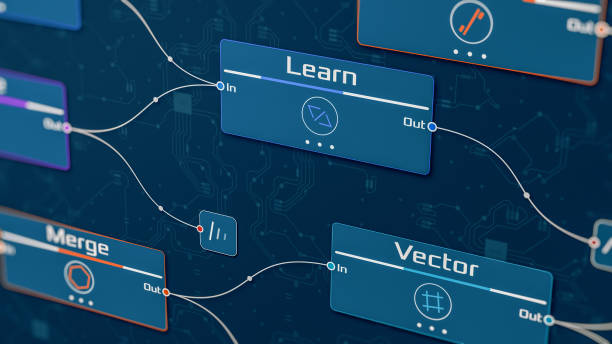
For years, I operated under the assumption that all transcription apps were essentially the same. You hit record, the software converts your speech into words, and everything gets dumped into a cloud folder. For a long time, that was perfectly fine. I was a loyal user of traditional tools, but eventually, my daily workflow began to feel incredibly heavy.
Having a perfect transcript of a meeting didn't actually save me from the administrative hangover that followed. I still had to manually reread the text, extract the action items, identify the key decisions, and draft the follow-up emails for my team. The transcripts were there, but the clarity wasn't. I realized I didn't need "better transcription"—I needed a complete workflow upgrade. Finding a reliable audio to text online platform wasn't just about capturing words anymore; it was about reclaiming my execution speed.
Tools like Otter do exactly what they promise: they capture everything that is said. But capturing a conversation and actually understanding it are two vastly different things.
While the automatic generation and speaker labeling were helpful, my old workflow constantly left me staring at a massive, unstructured wall of text. There was no automatic task extraction or executive summary. After every single client call, I would lose 20 to 40 minutes just scanning dense paragraphs to figure out who was supposed to do what. That isn't productivity; that is just shifting the burden of note-taking to a different part of the day. Modern professionals need a tool that functions as a proactive AI meeting note taker, pulling out the actual decisions from the noise of the conversation.
To fix this, I looked at what was powering the next generation of tools. Basic systems use standard Automatic Speech Recognition (ASR), which is useful but limited. Vomo.ai, the platform I ultimately switched to, uses an entirely different tier of technology.
By running on Nova-2 models—which hit up to 99% accuracy in clean audio environments—alongside Azure and OpenAI Whisper, the baseline quality shifts dramatically. These engines are trained on massive multilingual datasets, meaning they easily navigate heavy accents, bizarre technical vocabulary, and overlapping speakers. High accuracy is crucial because it eliminates the time I used to spend fixing typos. However, the flawless text wasn't the biggest game-changer for me. The real magic happened in the layer built on top of the transcript.
A raw transcript is a static archive. Vomo’s Ask AI feature, recently upgraded to the highly advanced GPT-5.2 model, transforms that static text into structured insight.
Now, instead of reading a 4,000-word document, I simply type a prompt. I can ask the AI to "summarize this meeting in five bullet points," "list the action items and assign them to the correct owners," or "draft a polite recap email for the client." In seconds, I get a clear, actionable summary. I stopped rewriting notes and started actually executing. My meetings transformed from buried archives into usable assets.
The before and after of my daily routine is hard to ignore. Previously, my administrative time per session hovered around 45 minutes of reading, scanning, and typing. Today, the process is ridiculously simple: I record the sync, the transcript generates instantly, and I use Ask AI to hand me my task list. My admin time has dropped to about five minutes per call.
Multiply those saved minutes across daily internal syncs, weekly strategy meetings, and client briefings, and the compound savings are massive. But beyond the time saved, the biggest win is the drop in team confusion. When tasks and deadlines are structured clearly the moment a call ends, priorities become obvious to everyone.
This system also fixed a massive leak in my productivity outside of formal meetings. Often, my best ideas, strategic pivots, or candidate evaluations pop into my head when I'm walking to my car or driving home.
With Vomo’s mobile app for iOS and Android, I can instantly dictate a voice memo. The system transcribes my reflections and automatically summarizes my scattered thoughts into a structured format. No more forgotten ideas, and no more messy voice notes scattered across different apps. The consistency of having my mobile thoughts structured exactly like my meeting notes improved my entire operational flow.
When I tell other founders and consultants about this setup, the same few questions always come up:
Is it actually more accurate than legacy tools? Because Vomo leverages top-tier models like Nova-2 rather than older proprietary engines, the baseline accuracy—especially for technical terms—is incredibly high.
What is the real difference between this and standard speech recognition? Standard speech recognition just types out what you say. The GPT-5.2 integration actually analyzes that text to extract meaning, priorities, and structured tasks.
Does it really extract action items automatically? Yes. You just prompt the AI to find the tasks, and it will list them out, highlight the deadlines, and even note who agreed to do what.
Switching my workflow wasn’t really about getting better transcripts. It was about driving better outcomes. Otter-style tools are great at capturing discussions, but my new AI-driven setup converts those discussions directly into action. Whether you are a manager drowning in back-to-back meetings or a creator looking to turn interviews into content instantly, upgrading from passive transcription to active knowledge management is the ultimate productivity hack.
 Supriyo Khan
 Supriyo Khan
 Supriyo Khan
 Supriyo Khan
Want to add a comment?