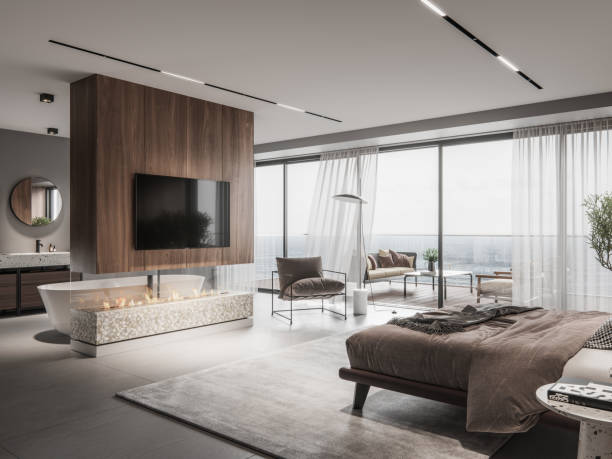
Have you ever walked through a model house and felt an inexplicable sense of belonging? That warm, fuzzy feeling that whispers ""I could live here"" before you've even checked the plumbing? You're not imagining things. There's genuine psychology at work in those perfectly staged rooms. However, when we look at Spokane investment real estate insights, we see that these emotional triggers are often exactly what drive market value and long-term buyer interest.
The Power of Sensory Completeness
When you step into a model house, your brain receives a flood of sensory information that differs dramatically from an empty property. The soft texture of throw pillows, the subtle scent of fresh flowers, the gentle play of light on carefully chosen artwork. These aren't just decorative touches. They're psychological triggers that activate your brain's ability to imagine future experiences.
Empty rooms force your brain to work overtime, filling in blanks and conjuring possibilities from nothing. But a furnished space does the heavy lifting for you. Your mind can relax and simply experience what's already there. This cognitive ease translates into emotional comfort, making you feel at home before you've signed a single document.
Research in environmental psychology shows that humans are remarkably influenced by complete environments. When we encounter a space that tells a coherent story, our brains release small amounts of dopamine. It's the same neurochemical response you get when solving a puzzle or finishing a satisfying meal. The model house presents a solved puzzle, and your brain rewards you for experiencing it.
Here's where it gets interesting. Model houses work their magic by maintaining a precise balance between the personal and the impersonal. It’s the Goldilocks Effect. The furniture and decorations are specific enough to feel real but generic enough that you don't feel like you're intruding on someone else's life.
Consider what happens when you view an occupied home. Family photos line the walls, personal trinkets crowd the shelves, and someone's actual breakfast dishes might sit in the sink. Your brain immediately recognizes this as someone else's territory. You're a visitor, possibly an intruder, definitely an outsider.
Now think about a completely empty house. It's a blank canvas, sure, but it's also cold and impersonal. The echo of your footsteps reminds you of abandonment. There's potential but no warmth.
Model houses exist in the sweet spot between these extremes. They're inhabited enough to feel warm but vacant enough to feel available. It's like staying at a beautifully appointed hotel room. Everything is there for you, but nothing is so personal that you can't imagine it belonging to you.
When you walk through display homes Ballarat or any other location, something fascinating happens in your hippocampus, the brain region responsible for memory and imagination. Studies show that remembering the past and imagining the future activate remarkably similar neural pathways.
The staged scenes in model houses provide your brain with ready-made "memories" to borrow. That cozy reading nook with the perfect lamp? Your brain can instantly project you into that chair with a book and a cup of tea. The dining table set for six? You're suddenly imagining Sunday dinners with friends you haven't even invited yet.
This process is called episodic future thinking, and it's one of the most powerful tools in a home buyer's emotional arsenal. The model house doesn't just show you where you could live. It shows you who you could become. That's intoxicating.
Perhaps the most powerful psychological element of model houses is the simplest. They give you permission to dream without judgment. You can wander through rooms imagining your future life without a real estate agent hovering or a current owner watching.
The space is simultaneously real and hypothetical. You're experiencing genuine architecture, but the life within it is pure possibility. This creates a safe space for your most optimistic visions of domestic happiness.
That feeling of "home" you experience in a model house isn't fake. It's your brain's way of evaluating whether a space can support the life you want to live.
The next time you walk through a beautifully staged property, pay attention to what makes you feel at home. Those feelings reveal what matters most to you.
 Supriyo Khan
 Supriyo Khan
 Supriyo Khan
 Supriyo Khan

Want to add a comment?