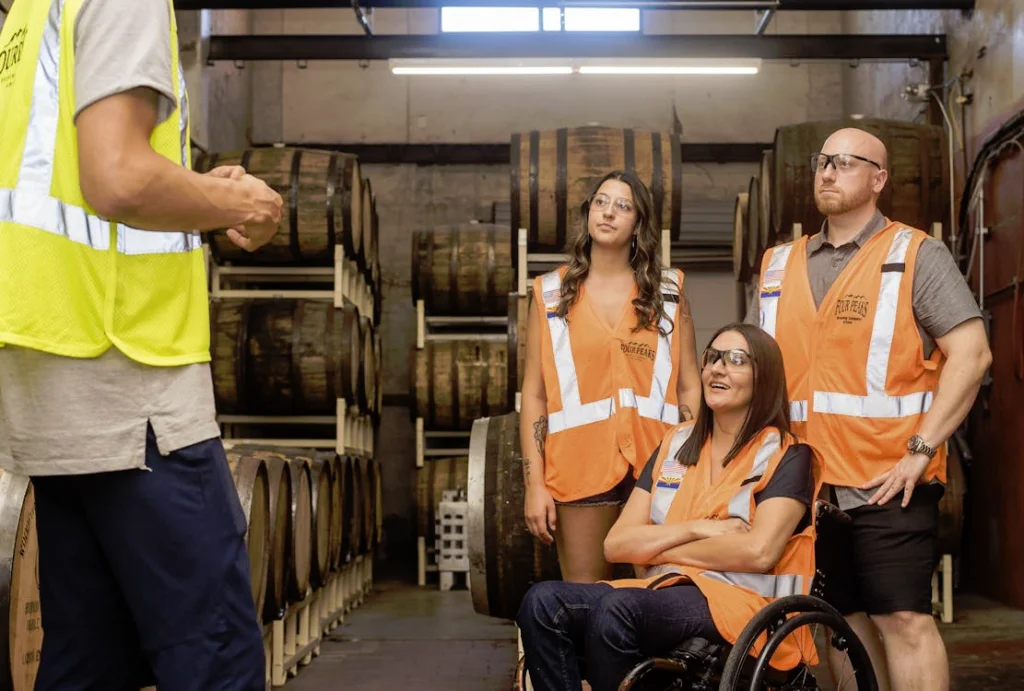
Safety literacy shapes how workers understand and respond to hazards, making it a key part of professional communication.
Clear, simple messages help teams stay aligned, reduce risk, and build a stronger safety culture. As workplaces grow more diverse, effective communication becomes essential for keeping everyone informed and protected. Here’s a closer look at this interplay.
Safety literacy is more than knowing the rules. It is the everyday ability to understand, communicate, and act on information that keeps people safe at work. As workplaces grow more diverse and fast paced, clear communication becomes a core skill rather than an optional one.
Recent discussions in the safety community highlight just how often misunderstandings lead to preventable incidents. In a study highlighted by HSE Review, researchers found that language barriers alone can create major gaps in safety outcomes, especially in high risk fields like construction.
The idea is simple. When workers understand safety messages and leaders know how to communicate them effectively, the entire workplace becomes more resilient. When those messages are unclear, incomplete, or too technical, the risk level climbs quickly.
Safety communication is not just sending out a memo or posting a sign. The tone, timing, and clarity of a message all affect how people respond to it. OH&S Online reported that employees want more practical, relatable communication when it comes to hazards and procedures. This signals a big shift in expectations. People no longer accept vague reminders. They want exact steps, real examples, and direct explanations.
A few things tend to strengthen safety communication in any workplace:
Straightforward language that avoids jargon
Real world examples that feel relevant
Short, action focused messages
As companies refine these skills, many turn to training that helps workers and managers build a shared language of safety. For instance, taking advantage of OSHA training courses makes sense, since when employees complete structured training, they not only learn the rules but also gain a clearer sense of how to communicate about hazards, follow up with coworkers, and ask better questions. This creates a stronger safety culture that relies on a shared understanding rather than assumptions.
Workplaces today are more multilingual and more digital than ever. That means new tools are emerging to keep communication clear and accessible. Companies are experimenting with translation tools that work in real time, augmented reality walkthroughs, and mobile apps that offer step by step safety prompts. These technologies aim to bridge the communication gaps that once felt impossible to overcome.
In multilingual teams, leaders often assume that short briefings or posters are enough. Yet, studies show that even small translation errors can cause confusion. When a worker misinterprets a hazard label or a machine instruction, the consequences can be serious. That is why safety literacy must include cultural awareness and confirmation that the message truly lands. Many organizations now use short verbal checkbacks, where workers echo key instructions back to a supervisor to confirm everyone is on the same page.
New technologies come with new risks. Workers often juggle unfamiliar systems while trying to stay productive. Without strong safety literacy, people may miss digital alerts or misinterpret automated warnings. Tools like augmented-reality overlays are helping to fill these gaps by visually pointing out hazards rather than relying solely on text or audio. This supports workers who process information in different ways.
At its core, safety literacy thrives when communication becomes routine rather than reactive. Instead of waiting for incidents, teams incorporate safety into their normal workflow. Leaders model this by asking questions, encouraging feedback, and checking in regularly. These habits build trust and make safety an open subject rather than something only discussed after problems occur.
A culture of safety also benefits when:
New employees receive simple onboarding information they can actually use
Teams encourage speaking up without fear
Supervisors translate complex standards into clear, practical instructions
When communication works well, safety becomes a shared responsibility. People feel confident enough to report issues, ask questions, and help coworkers. This confidence directly supports safer outcomes across departments. It’s also useful to adopt an effective approach to communication for other aspects of your operations, from improving customer experience to resolving workplace disputes, so it’s doubly worthwhile.
Safety literacy is not about memorizing rules. It is about understanding how to share information in ways that protect people. As workplaces become more complex and diverse, developing strong communication habits will be essential.
With clearer messages, improved training, and better use of technology, organizations can reduce risk and create environments where safety feels natural rather than forced. Employees are asking for this shift, and employers are slowly catching up.
If you are interested in learning more about modern approaches to workplace safety, many organizations share ongoing research and practical tips. Following these discussions can help any team stay ahead of emerging challenges and build a culture where everyone feels informed, supported, and safe.
 Supriyo Khan
 Supriyo Khan
 Supriyo Khan
 Supriyo Khan

Want to add a comment?