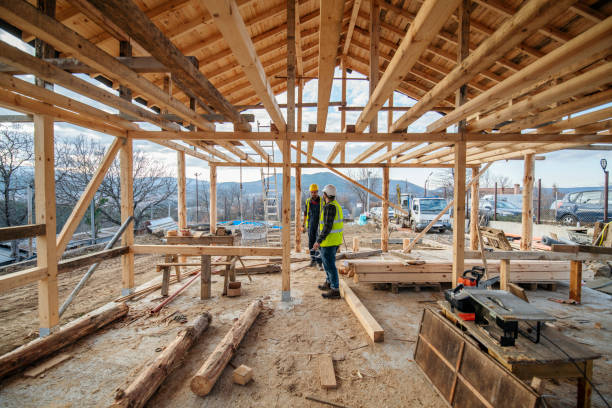
When construction crews show up to build a duplex, most people see lumber, concrete, and property lines, observes Yellow Keys Realty team. What they miss is something far more interesting: the creation of permanent neighbors. Unlike apartment buildings where tenants come and go, or single-family homes separated by wide yards, duplexes create an unusual social dynamic that quietly reshapes how people relate to one another.
Shared Walls, Shared Lives
The beauty of duplex construction lies in its forced proximity. Two families will share more than just a property line. They'll hear each other's morning routines, smell each other's cooking, and inevitably cross paths dozens of times each week. This isn't a bug in the design, it's actually a feature that creates unexpected bonds.
Studies on urban planning consistently show that people form stronger connections with neighbors they encounter regularly. The duplex format practically guarantees these encounters. You can't avoid someone who parks three feet from your front door. Over time, this proximity transforms strangers into something closer to extended family.
Professional duplex builders Sydney and elsewhere have discovered something remarkable about dual-home construction. By sharing foundation costs, utility connections, and land expenses, these projects become significantly more affordable than building two separate structures. This economic efficiency ripples outward in fascinating ways.
Young families who couldn't afford standalone homes suddenly find homeownership within reach. Retirees looking to downsize discover they can live in one unit while renting the other for supplemental income. Multi-generational families create separate spaces while maintaining closeness. Each scenario brings different people together who might never have become neighbors otherwise.
What makes duplex construction particularly interesting is how builders must balance privacy with community. Windows get strategically placed to avoid awkward sightlines. Entrances are positioned to create natural meeting points without feeling intrusive. Soundproofing becomes an act of respect.
These design choices reflect a deeper truth about human connection. We crave both independence and belonging. The best duplex designs honor this duality, creating homes that feel completely separate while acknowledging the reality of shared space.
When a duplex goes up, the surrounding neighborhood feels the effect. Property values often stabilize because duplexes add housing density without overwhelming infrastructure. Local businesses gain customers. Schools welcome new families. The social fabric strengthens simply because more people are invested in the area's success.
There's also an environmental angle worth celebrating. Duplexes use land more efficiently than sprawling single-family developments. They reduce urban sprawl, preserve green spaces, and lower per-household resource consumption. Every duplex built represents a small victory for sustainable community development.
Perhaps the most compelling aspect of duplex construction is its long-term social impact. Children growing up in duplexes learn early about consideration for others, about sharing space gracefully, about the give-and-take of close-quarter living. These aren't small lessons.
The families who become duplex neighbors often remain connected for decades. They attend each other's graduations, celebrate milestones together, and provide support during difficult times. What began as a construction project becomes a lasting human connection.
Every time a builder frames out a duplex, they're doing more than creating shelter. They're engineering relationships, fostering community, and proving that intentional proximity can enhance rather than diminish quality of life. In an era of increasing isolation and digital distance, the humble duplex stands as a quiet testament to the enduring power of neighborliness.
The next time you see a duplex under construction, look past the building materials. You're witnessing the birth of a micro-community, complete with all the complexity, connection, and possibility that human relationships bring.
 Supriyo Khan
 Supriyo Khan
 Supriyo Khan
 Supriyo Khan

Want to add a comment?