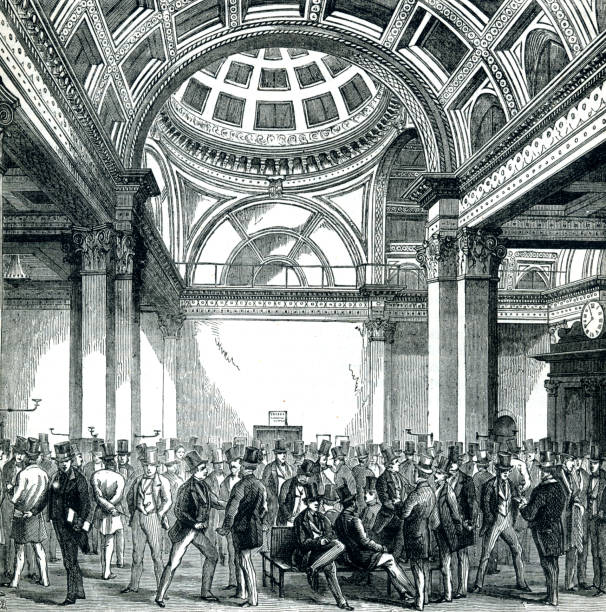
In the London of the 1600s, banking was not yet a profession. England’s financial system was chaotic, monarchs seized private assets at will, and merchants had few reliable places to store their wealth. In this climate of uncertainty, the city’s goldsmiths — originally craftsmen and metalworkers — unintentionally became the architects of early private banking. Their secure vaults and reputation for discretion transformed them into custodians of elite wealth. What began as simple storage became a sophisticated system of credit, secrecy, and financial innovation that still echoes in modern cross-border finance. England’s political instability made wealth vulnerable. Civil conflict, government debt, and the unreliability of the Royal Mint drove people to seek private alternatives. Goldsmiths, already experts in locking away precious metals, offered secure vaults independent of the Crown. Depositors received handwritten receipts for their gold — documents that soon began circulating as a form of private money. This was the birth of deposit banking. The same principle survives today in the use of dedicated entities formed through international company registration, where assets are legally separated from political or institutional risk. Goldsmiths noticed that most deposited gold never left their vaults. This allowed them to issue loans and credit against those deposits, charging interest while maintaining enough reserves to satisfy withdrawals. They introduced early banking tools such as: negotiable deposit receipts inter-city remittance systems secured lending private client ledgers These innovations laid the foundation for modern private banking, where international capital is supported by multi-currency access and robust infrastructure — the same service offered today through an offshore bank account designed for cross-border business. Goldsmith bankers kept detailed but discreet account books. In an era where political instability could destroy fortunes, privacy was not a luxury — it was protection. This principle shaped the early concept of financial confidentiality. The same idea now underlies modern asset-protection planning, where clients select jurisdictions and structures based on predictable courts, clear legal frameworks, and confidential but compliant recordkeeping. The historical evolution of such systems is frequently examined in industry analyses that trace how confidentiality shifted from secrecy toward regulated transparency. By the end of the 17th century, many goldsmiths had evolved into powerful financial houses. Their vaults became banks; their receipts became the model for banknotes; their remittance networks formed the basis of clearing systems. But their most lasting legacy was the creation of a financial philosophy built on three pillars: security of assets neutrality from political interference structured mechanisms for cross-border exchange Modern international finance operates on precisely these same foundations. Companies still rely on well-designed structures established through cross-border incorporation and supported by international banking to move capital safely across borders. Conclusion London’s goldsmiths did not set out to create banks. Yet their practices — secure vaulting, credit creation, transferable receipts, and protected client relationships — transformed global finance. Their innovations endure in the systems that govern international commerce today. Whether through dedicated corporate entities, diversified banking networks, or jurisdictional planning, the goldsmiths’ model remains remarkably modern. In any era, one truth persists: where wealth needs protection, structure and neutrality shape the path forward. Vaults in an Unstable Kingdom
The Accidental Bankers
Confidentiality and the Rise of Financial Trust
From Workshops to the Global Financial System
 Supriyo Khan
 Supriyo Khan
 Supriyo Khan
 Supriyo Khan

Want to add a comment?