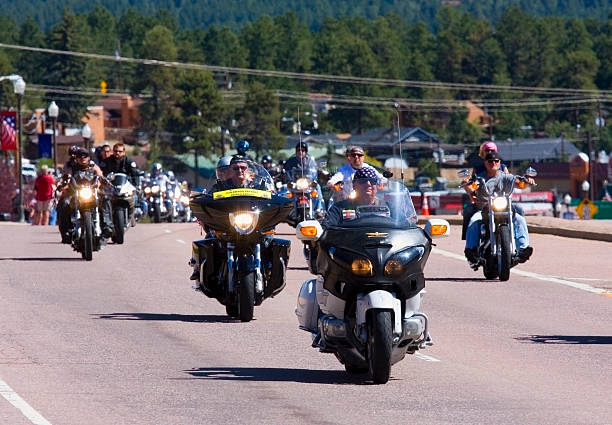
Colorado is one of the most popular states for motorcycle riding in the country. The combination of mountain routes, wide-open plains highways, and a riding season that stretches from spring through late fall draws riders from across the region. But Colorado's road environment also creates specific hazards that are less common in flatter, more urbanized states, and when crashes happen on these roads, the legal process that follows has characteristics shaped directly by where and how the crash occurred.
Injured Colorado riders navigating a personal injury claim need attorneys who understand not just general motorcycle accident law but the specific dynamics of riding and crashing in the Colorado environment.
Motorcycle crashes in Colorado frequently involve factors that are less common in other states:
Elevation and weather transitions: Mountain roads can transition from clear to icy conditions within miles, and crashes involving road surface conditions may create liability against the government entity responsible for maintenance
Wildlife: Animal strikes on rural and mountain roads are a genuine hazard for motorcyclists and can produce single-vehicle crashes where the liability analysis is complex
Sand and gravel on curves: Road maintenance practices, particularly sand applied for winter traction and not fully swept in spring, creates loose surface conditions on mountain curves that can cause riders to lose traction
Construction zones: Colorado's ongoing road construction creates lane changes, uneven pavement transitions, and reduced markings that are particularly hazardous for motorcycles
Tourist drivers unfamiliar with mountain roads: Visitors who are not accustomed to two-lane mountain driving frequently make turning and passing errors that create dangerous situations for motorcycles
Each of these hazard types points toward potentially different liable parties and requires different evidence to establish. A crash caused by sand left on a mountain road by a county maintenance crew involves a government liability claim with specific procedural requirements distinct from a standard two-vehicle crash claim.
Colorado requires motorcycle operators and passengers under age 18 to wear helmets. Adult riders in Colorado are not legally required to wear helmets, which means that for riders over 18, helmet use is a choice that can affect both the severity of injuries and, potentially, the legal claim.
In crashes where an adult rider was not wearing a helmet and suffered head injuries, defense counsel may argue that the rider's own choice contributed to the severity of their injuries, invoking Colorado's comparative fault framework to reduce the damages. This argument is not automatically successful, and the response to it requires specific legal and medical preparation, but it is a real consideration in Colorado motorcycle claims involving unhelmeted riders.
Insurance adjusters handling motorcycle claims in Colorado apply the same assumptions about rider behavior that are used against riders nationwide: that the motorcyclist was speeding, weaving, or taking risks that contributed to the crash. Colorado's mountain and canyon roads provide additional material for this narrative, as adjusters may argue that any rider on a challenging mountain road was inherently engaged in risky behavior.
The National Highway Traffic Safety Administration's motorcycle safety data consistently documents that a significant proportion of fatal motorcycle crashes are caused by other vehicle operators, particularly through failure to yield in left-turn scenarios. This data counters the generalized narrative about rider risk and supports the argument that the crash was caused by the other driver's negligence rather than anything the rider did.
When a Colorado motorcycle crash is caused or contributed to by a road condition, a claim against the responsible government entity may be available alongside or instead of a claim against another driver. These claims involve specific requirements under the Colorado Governmental Immunity Act, including a notice of claim that must typically be filed within 182 days of the crash.
Missing this notice deadline eliminates the government entity claim entirely, regardless of the strength of the underlying negligence case. This compressed timeline is one of the strongest reasons for injured riders to consult with experienced motorcycle injury attorneys immediately after a crash where road conditions may have played a role.
The evidence that supports a strong motorcycle injury claim in Colorado includes the crash scene documentation, the police report and any citations issued, photographs of the road surface and any visible hazards, medical records from evaluation and treatment, expert accident reconstruction where the crash mechanics are disputed, and a thorough account of the rider's pre-crash driving history and safety practices.
Colorado riders who are injured in crashes deserve the same quality of legal advocacy available to any other vehicle occupant. The bias that follows a motorcycle claim through the insurance process is real, but it is not insurmountable with the right preparation and the right support from the beginning.
 Supriyo Khan
 Supriyo Khan
 Supriyo Khan
 Supriyo Khan

Want to add a comment?