Table of Contents
The Importance of Helmet Use
Wearing Appropriate Protective Gear
Practicing Defensive Riding
Being Aware of Road Conditions
Avoiding Alcohol and Drugs
Continuous Training and Education
Enhancing Visibility
Regular Motorcycle Maintenance
Riding a motorcycle is a uniquely thrilling experience, offering a sense of freedom and connection with the road that few other forms of transportation provide. However, this sense of adventure comes with its own set of risks and responsibilities. Whether you're a new rider or a seasoned enthusiast, understanding the hazards and adopting proactive safety habits is essential. Preparedness and vigilance are crucial for reducing the likelihood of an accident, and in the unfortunate event that something does go wrong, having a trusted motorcycle accident attorney on your side can make a significant difference.
Each time you start your engine, you are exposed to unique challenges on the road. These challenges require careful attention, defensive riding techniques, proper gear, and ongoing education to navigate safely. An informed and cautious approach helps protect not only your own safety but also the safety of those who share the road with you.
To help riders of all skill levels understand the essential safety precautions, this article details the most important motorcycle safety risks and the best ways to protect yourself against them.
The Importance of Helmet Use
Your helmet is your most vital piece of safety equipment. According to the National Highway Traffic Safety Administration (NHTSA), helmets are estimated to be 37% effective in preventing fatal injuries to motorcycle operators and 41% effective for motorcycle passengers. Always opt for a helmet that meets the U.S. Department of Transportation (DOT) standards, and replace your helmet periodically to ensure maximum protection.
It is important never to compromise on helmet quality: a DOT sticker on the back is the most commonly recognized certification in the United States. A properly fitted helmet fully covers your head, sits flat on your skull, and has a strong chin strap to keep it secure in the event of an impact.
Wearing Appropriate Protective Gear
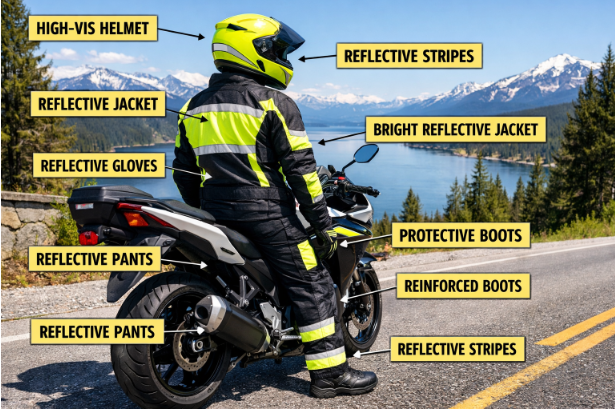
Beyond helmets, protective gear helps prevent or minimize injuries to other parts of your body. Jackets and pants made of leather or abrasion-resistant materials act as a barrier if you slide on pavement. Gloves protect your palms and fingers, maintaining grip and control, while durable boots shield your ankles and feet from both impact and burns.
Wearing brightly colored clothing or clothing with reflective elements can make you more visible to other drivers, particularly in low-light conditions. Opting for gear specifically designed for motorcycle riding, rather than basic street clothes, dramatically increases your protection in an incident and enhances your comfort on long rides.
Practicing Defensive Riding
A defensive approach to riding can help you avoid situations that commonly result in collisions. Maintaining a safe following distance allows you more time to respond if a vehicle ahead stops suddenly. Pay extra attention at intersections, where a significant number of motorcycle-vehicle collisions occur.
It is safest to assume that other drivers may not see you, especially in areas with heavy or unpredictable traffic. Stay out of blind spots, signal all turns in advance, and keep an eye on the behavior of nearby motorists to anticipate potential hazards.
Being Aware of Road Conditions
Changes in road surface or weather can present instant dangers for motorcycle riders. Wet or icy pavement, loose gravel, potholes, and oil slicks all compromise traction and can cause loss of control. Adjust your riding technique and speed to match current conditions, slowing down as necessary and scanning the road ahead for obstacles. Cautious navigation is especially important when visibility is limited, such as in fog, rain, and nighttime riding, all of which require heightened awareness.
Avoiding Alcohol and Drugs
Operating a motorcycle demands full concentration, fast reflexes, and excellent coordination. Alcohol and drug use impairs all of these critical faculties. According to the NHTSA, 41% of motorcycle riders who died in single-vehicle crashes in 2023 were under the influence of alcohol. To protect yourself and others, never ride under the influence. Choose a designated driver, use alternate transportation, or simply park your bike if you are not sober.
Continuous Training and Education
Rider training and safety courses are valuable resources for both novice and veteran riders. Many states offer state-sponsored motorcycle safety programs, which can teach advanced riding skills, emergency maneuvers, and accident avoidance techniques. Ongoing education not only helps you stay sharp but can also make you eligible for insurance discounts and licensing incentives. The Motorcycle Safety Foundation (MSF) provides widely recognized training courses across the United States.
Enhancing Visibility
A leading cause of motorcycle accidents is simply being unseen by motorists, especially in conditions of glare, darkness, or heavy traffic. Increase your visibility by keeping your headlight on at all times, wearing reflective or bright-colored clothing, and positioning your motorcycle so you remain easily seen by other drivers. Avoid lingering in blind spots, and use hand signals in addition to your bike’s signals whenever possible for added emphasis.
Regular Motorcycle Maintenance
Mechanical failure can turn an otherwise safe ride into a dangerous situation. Conduct regular inspections of your motorcycle, including tire pressure, tread depth, brake performance, fluid levels, and the functionality of all lights and indicators. Address any maintenance concerns promptly, and follow the manufacturer's recommended service schedule. A bike in optimal condition responds more predictably and helps you avoid breakdowns on the road.
Understanding these motorcycle safety risks and taking consistent steps to mitigate them is essential for every rider. Defensive riding, proper gear, ongoing training, and proactive maintenance all play a part in keeping you safe while enjoying the freedom of two wheels. Prioritize safety on every ride, and you can maximize enjoyment while minimizing danger, not just to yourself but to everyone sharing the road.
 Supriyo Khan
 Supriyo Khan
 Supriyo Khan
 Supriyo Khan

Want to add a comment?