Agriculture has changed dramatically over the last few decades. Farmers no longer rely only on traditional tools and manual labor to manage crops. Modern farming now depends heavily on technology to improve productivity, reduce waste, and protect crop health. One area that has seen major improvement is crop spraying technology.
In the past, farmers used simple hand-operated tools that required a great deal of time and physical effort. Today, advanced spraying systems help farmers cover larger fields with better precision and less chemical waste. Modern equipment has become more efficient, reliable, and environmentally responsible. Many agricultural businesses now work closely with a trusted backpack sprayer manufacturer to access durable and high-performance spraying equipment designed for different farming conditions.
Crop spraying started with very basic methods. Farmers used watering cans, hand pumps, and manual sprayers to apply pesticides and fertilizers. These tools worked for small farms, but they were slow and inconsistent. Large fields required significant labor, and uneven spraying often reduced crop protection effectiveness.
Manual spraying also created several challenges:
Uneven chemical distribution
Higher chemical waste
Increased labor costs
Greater physical strain on workers
Limited spraying range
As farming expanded and food demand increased, growers needed faster and more reliable solutions.
The agricultural industry began moving toward mechanical sprayers during the twentieth century. Pump-based systems improved spraying speed and allowed farmers to treat larger areas more efficiently.
Mechanical sprayers introduced several important improvements:
Farmers could now control spray pressure more accurately. This helped create finer droplets and better crop coverage.
Mechanical systems reduced the amount of time required to spray fields. Farmers could complete tasks faster during critical growing periods.
Instead of relying entirely on manual pumping, powered systems made spraying less physically demanding.
These improvements helped increase agricultural productivity while lowering operational challenges.
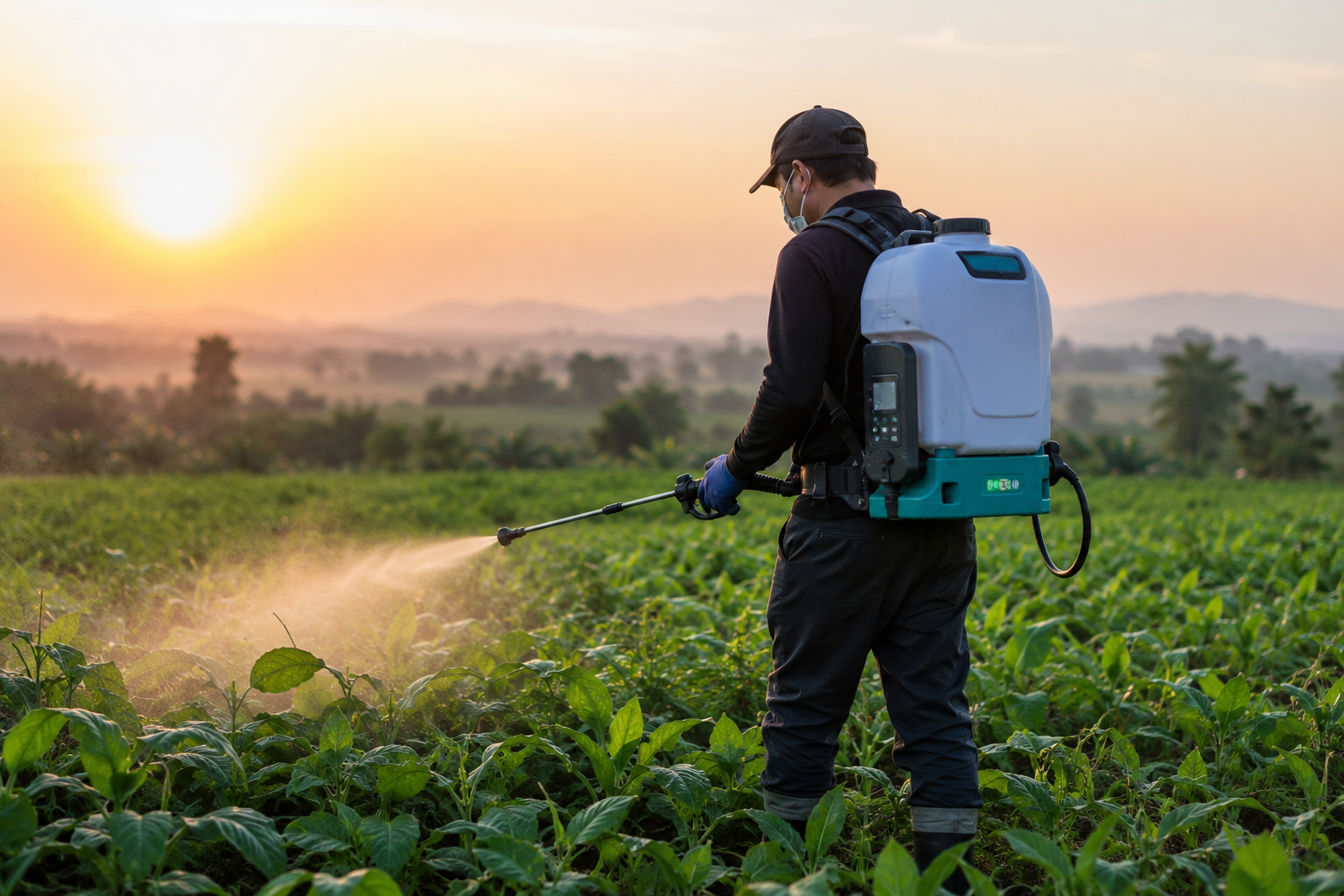
Backpack sprayers became highly popular because they offered mobility, flexibility, and ease of use. Farmers working in orchards, greenhouses, vegetable farms, and uneven terrain found them especially useful.
Modern backpack sprayers are designed to improve comfort and spraying accuracy. Adjustable straps, lightweight materials, and ergonomic designs allow users to work for longer periods with less fatigue.
Battery-powered backpack sprayers have also become increasingly common. These systems reduce manual pumping and provide consistent spray pressure throughout operation.
Some advantages of backpack sprayers include:
Workers can move freely between crops without dealing with large equipment.
Operators can target specific plants and reduce unnecessary chemical use.
Backpack sprayers are affordable for both small-scale and medium-sized farms.
They can be used for pesticides, herbicides, fertilizers, disinfectants, and even irrigation support.
As agriculture continues to modernize, backpack sprayers remain an essential tool for many growers worldwide.
Modern agriculture now focuses heavily on precision farming. Instead of applying chemicals evenly across an entire field, farmers aim to use the exact amount needed in specific areas.
Precision spraying technology uses data, sensors, and automation to improve decision-making.
GPS systems help machines follow accurate routes across fields. This reduces overlap and prevents missed sections.
Some advanced sprayers can detect weed growth, crop health, and moisture levels. These systems apply chemicals only where necessary.
Precision technology helps farmers lower pesticide use while maintaining crop protection.
Targeted spraying reduces runoff and minimizes environmental impact.
This shift is important because modern agriculture must balance productivity with sustainability.
Agricultural drones represent one of the biggest recent innovations in crop spraying. These unmanned aerial vehicles can quickly cover large areas while collecting valuable field data.
Drone sprayers are especially useful for:
Hard-to-reach terrain
Rice fields
Vineyards
Mountain farms
Wet or muddy fields
Drones improve efficiency by reducing manual labor and allowing rapid application during short weather windows.
Some benefits of drone spraying include:
Drones can spray large areas in a fraction of the time required by traditional methods.
Farm workers avoid direct contact with chemicals during application.
Drone systems use advanced mapping and flight control for precise spraying.
Many drones collect crop health information while spraying.
Although drone technology is still developing in some regions, its adoption continues to grow rapidly.
Environmental concerns have encouraged manufacturers to develop cleaner and more energy-efficient spraying systems. Electric and battery-powered sprayers are becoming increasingly popular because they reduce fuel dependence and noise pollution.
Modern battery sprayers offer:
Longer operating times
Stable spray pressure
Lower maintenance requirements
Reduced operating noise
Improved portability
Lithium battery technology has made portable spraying equipment more practical for daily farm use.
Many farmers now prefer electric sprayers because they combine efficiency with easier maintenance compared to fuel-powered systems.
Safety has become a major priority in agricultural equipment design. Earlier spraying systems exposed workers to chemicals more frequently due to leaks, poor seals, and manual handling.
Modern sprayers now include several safety improvements:
Better sealing technology reduces accidental chemical exposure.
Farmers can control spray patterns more effectively and reduce drift.
Improved carrying systems reduce physical stress during long work sessions.
Consistent pressure helps prevent over-application and uneven spraying.
These improvements help protect both workers and crops.
The future of crop spraying technology will likely focus on sustainability, automation, and data-driven farming.
Researchers and manufacturers are currently developing:
AI-powered spraying systems
Fully autonomous field sprayers
Ultra-low chemical application systems
Smart robotic sprayers
Real-time crop analysis tools
These innovations aim to improve food production while reducing environmental impact.
Climate change, rising production costs, and growing food demand are pushing agriculture toward smarter farming practices. Efficient spraying technology will continue to play a major role in helping farmers maintain healthy crops and stable yields.
Crop spraying technology has evolved from simple manual tools to highly advanced precision systems. Modern farmers now have access to equipment that improves efficiency, reduces waste, protects workers, and supports sustainable agriculture.
From traditional backpack sprayers to AI-driven drones, each stage of innovation has helped agriculture become more productive and reliable. As farming continues to adapt to global challenges, spraying technology will remain a critical part of modern crop management.
 Supriyo Khan
 Supriyo Khan
 Supriyo Khan
 Supriyo Khan

Want to add a comment?