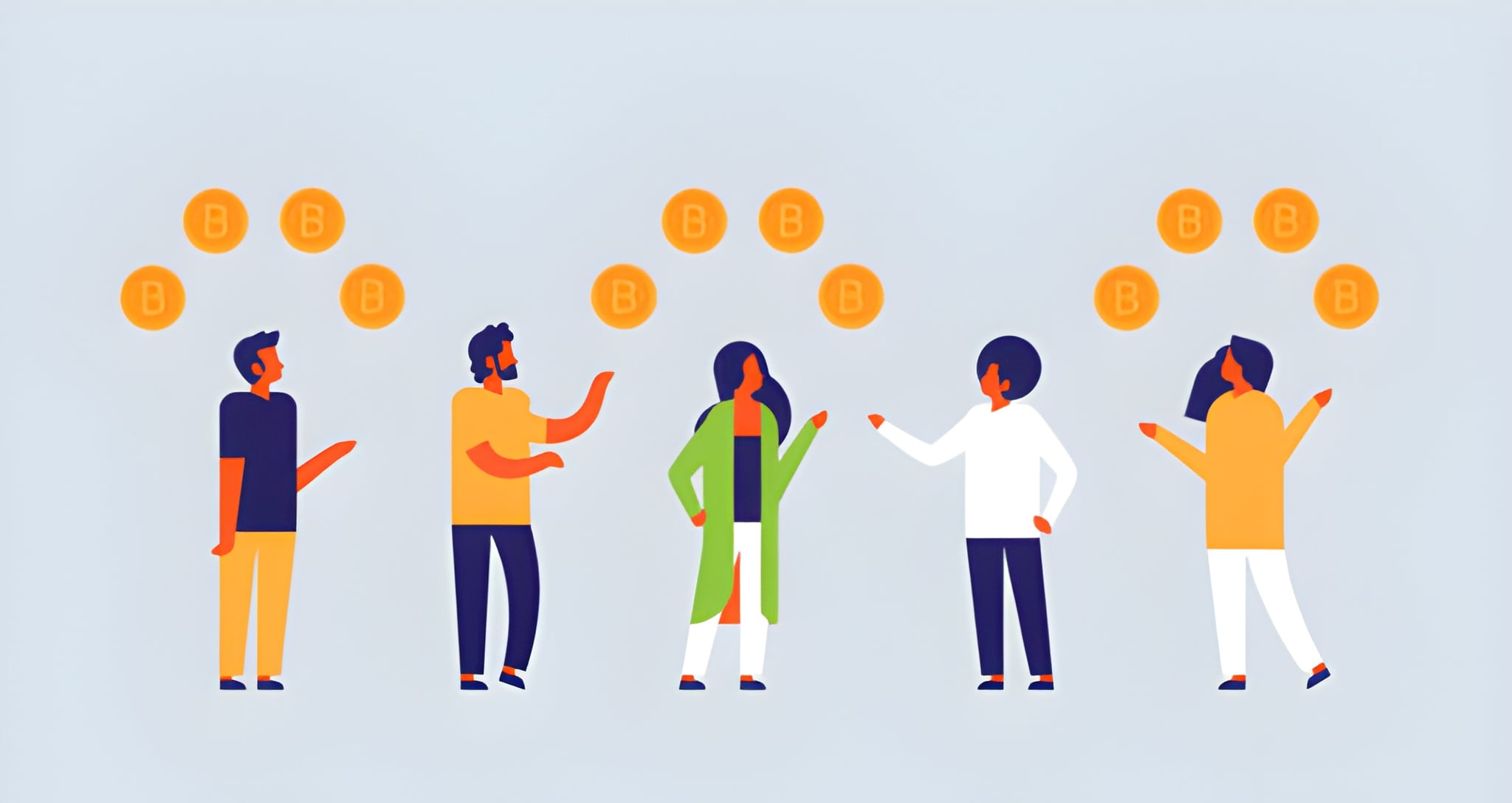
At some point, many of us have been excited about Bitcoin, you've done your research, and you genuinely believe it's worth understanding. Then Thanksgiving dinner rolls around, and suddenly you're "that person" at the table trying to explain blockchain while everyone's eyes glaze over. The good news is that you can share your enthusiasm without coming across like you're recruiting for a cult. It just takes a lighter touch and a lot more listening.
Avoid the Hype, Focus on Value
Nobody wants to hear about "getting rich quick" or "revolutionary disruption" over coffee. Instead, focus on practical use cases and what makes the technology interesting beyond price speculation. Talk about how Bitcoin operates as a decentralized network, how it allows borderless transactions, or how some people use it as a hedge against inflation. According to research, about 16% of Americans have invested in, traded, or used cryptocurrency as of 2023, showing it's becoming more mainstream but still far from universal. Keep conversations grounded in real-world applications instead of moonshot predictions. If someone's skeptical, acknowledge legitimate concerns about volatility and regulatory uncertainty instead of dismissing them.
Share Personal Experience, Not Advice
There's a massive difference between saying "You should buy Bitcoin" and "Here's what I learned when I started exploring it." The first sounds pushy; the second invites conversation. Share your own journey, what confused you initially, mistakes you made, and resources that helped you understand it better. Talk about why you personally find it interesting without prescribing that others should feel the same way. Let people ask follow-up questions naturally rather than downloading everything you know in one sitting. When friends express genuine curiosity, they'll engage on their own terms instead of feeling pressured into nodding along.
Offer Safe Entry Points, Not Pressure
If someone expresses interest in learning more hands-on, suggest low-risk ways to explore without committing significant money. Mention that finding a Bitcoin ATM or crypto ATM near them offers a straightforward way to purchase small amounts and experiment with the technology firsthand. According to Statista, there were over 38,000 cryptocurrency ATMs globally by late 2023, making physical access increasingly convenient. Starting with $20 or $50 removes the intimidation factor while providing tangible learning. You can also recommend reputable educational resources, podcasts, or beginner-friendly platforms that explain concepts clearly. The goal is showing paths forward, not pushing people down them.
Respect Curiosity and Move On If Needed
Not everyone will be interested, and that's perfectly fine. Some people heard about Bitcoin in 2017, watched it crash, and decided it wasn't for them. Others simply don't care about financial technology. Respect those boundaries. Offer information when asked, but don't make every conversation circle back to crypto. Healthy relationships matter more than orange-pilling your entire social circle.
Talking about Bitcoin with friends and family works best when approached as sharing something you find interesting and not converting nonbelievers. Focus on substance over hype, personal stories over advice, accessible entry points over pressure, and always respect when people aren't interested. That's how genuine conversations happen and, occasionally, how curiosity gets sparked.
 Supriyo Khan
 Supriyo Khan
 Supriyo Khan
 Supriyo Khan

Want to add a comment?