Home / Lifestyle / how-to-keep-a-tampa-lawn-healthy-through-heat-heavy-rain-and-dry-spells
How To Keep A Tampa Lawn Healthy Through Heat, Heavy Rain, And Dry Spells
Sep 02, 2026

How To Keep A Tampa Lawn Healthy Through Heat, Heavy Rain, And Dry Spells

Supriyo Khan-author-image Supriyo Khan
17 views

Key Takeaways

  • Tampa lawns need different care during drought, extreme heat, and rainy periods.

  • Healthy turf depends on soil, drainage, irrigation coverage, grass selection, and mowing habits.

  • Checking a sprinkler system can prevent wasted water and misdiagnosed lawn problems.

  • New sod needs careful preparation and an adjusted establishment plan.

Tampa lawns can go from dusty and stressed to waterlogged in a short time. Heat, humidity, compacted soil, sudden storms, and uneven irrigation often create a patchy lawn even when homeowners are trying to do the right things.

For projects involving turf replacement and watering repairs, re-sod and landscaping Tampa FL services from Elite Eagle Landscaping can help address both sides of the problem. The Tampa Bay company handles sod installation, irrigation repair, and new irrigation systems, with experience evaluating dry spots, drainage concerns, and uneven coverage for properties in Tampa, Riverview, Brandon, South Tampa, and nearby communities.

Why Tampa Lawns Face Unique Stress

A brief rain shower does not always restore a lawn. Water may run off compacted soil, collect in low areas, or miss root zones beneath dense turf. At the same time, high humidity can keep grass blades wet long enough to encourage fungal issues. A lawn can contain both dry patches and soggy patches at once when sprinkler heads are blocked, soil is uneven, or drainage paths are restricted.

Watering rules also matter. Homeowners should review the City of Tampa's current watering guidance and irrigation restrictions before changing an irrigation timer, especially during drought conditions or after installing new sod.

Build A Lawn Care Plan Around The Weather

A fixed irrigation schedule rarely works year-round. Adjust lawn care based on recent rainfall, temperature, shade, soil moisture, grass type, and local watering requirements.

During Hot, Dry Weather

  • Watch for folded blades, dull blue-gray color, dry soil, and footprints that remain visible.

  • Check moisture below the surface before irrigating. A green lawn may still have dry roots, while a brown area may have another cause.

  • Water deeply within approved hours when needed, rather than relying on frequent shallow cycles.

  • Use mulch around trees and landscape beds to reduce evaporation and protect exposed soil.

During Heavy Rain

  • Pause irrigation when rainfall has already soaked the root zone.

  • Look for standing water, yellowing grass, runoff, mushrooms, and soil washing away.

  • Clear gutters, drains, swales, and downspout outlets so water can move away from turf.

  • Keep mowers and heavy equipment off saturated ground to avoid ruts and compaction.

Check Irrigation Before Blaming The Grass

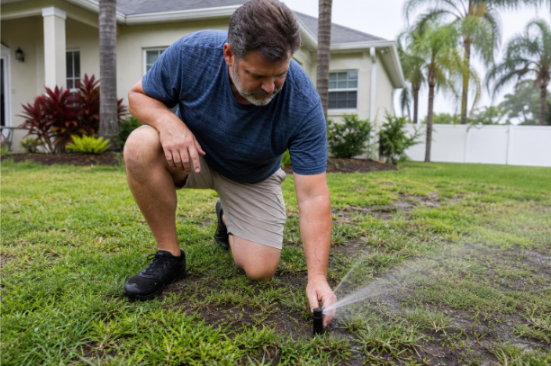
Broken or poorly aimed sprinklers can resemble disease, insect damage, or failed sod. Run each irrigation zone briefly and inspect the system while it operates. Look for clogged nozzles, leaking valves, tilted heads, broken pipes, and sprays hitting pavement instead of grass. Check whether each zone provides even coverage, confirm that the rain sensor works, and review the controller after power outages or storms.

Choose Grass For The Yard, Not Just The Look

No single grass type is right for every Tampa property. Consider sunlight, traffic, drainage, pets, children, and the amount of maintenance the household can realistically provide.

  • St. Augustine: Often a practical choice for yards with full sun to partial shade. It can look lush, but it requires adequate watering and may be vulnerable to pests and diseases when stressed.

  • Zoysia: Creates a dense, refined lawn and can handle moderate foot traffic. It may establish more slowly and benefits from regular mowing with a sharp blade.

  • Bahia: Fits lower-input areas and open, sunny spaces. It has a more natural appearance and commonly produces noticeable seed heads.

Prepare The Soil Before Re-Sodding

New sod cannot solve a deep drainage issue or compacted soil on its own. Remove weak turf and debris, correct obvious low spots, loosen compacted areas where appropriate, and make sure irrigation problems are fixed before installation. Level, lightly prepared soil helps sod make full contact with the ground, which supports more even rooting.

Avoid laying sod directly over hard soil, active leaks, or areas that repeatedly hold water after storms. Correcting the cause first helps prevent the same thin, brown, or yellow patches from returning.

Follow A Care Schedule After New Sod

The first few weeks are critical, but the exact schedule depends on weather, soil, sod variety, and current restrictions. Keep the soil evenly moist during early rooting, paying close attention to the edges and seams, as they dry first. Limit heavy foot traffic, wait until roots are holding firmly before normal mowing, and use a sharp mower blade set high enough to avoid scalping.

After the establishment period, reset the irrigation controller rather than leaving it on a frequent new-sod schedule. Normal watering limits still apply once the grass has rooted.

Use Soil And Drainage To Reduce Water Waste

Compacted soil limits root growth and directs water to the surface rather than into the lawn. Adding organic matter where suitable, correcting low spots, and redirecting downspouts can improve moisture balance. After irrigation or a storm, observe how long water remains on the lawn. Persistent pooling points to a grading, soil, or drainage issue that deserves attention.

Know When Brown Grass Is Not A Water Problem

  • Dry, folded blades: Heat or drought stress may be the cause.

  • Yellow grass beside wet soil: Drainage or root problems are more likely.

  • Small spreading patches: Disease or insect activity may be involved.

  • Torn grass near walkways: Mower damage, pets, or traffic may be responsible.

  • Uneven green stripes: Sprinkler coverage may need correction.

Seasonal Lawn Tasks

Late Winter And Spring

Inspect irrigation, repair leaks, replace damaged heads, identify thin areas, and review watering rules before the hottest weather arrives.

Summer

Mow regularly without cutting too short, skip irrigation after sufficient rain, and watch for fungal symptoms during humid, wet stretches. Avoid fertilizer practices that could contribute to runoff.

Fall And Winter

Reduce irrigation as growth slows, remove leaves that block sunlight, inspect turf after storms or cold snaps, and plan soil or sod repairs before the next active growing season.

Common Questions Tampa Homeowners Ask

How Often Should A Tampa Lawn Be Watered?

It depends on rainfall, soil, season, turf type, and current local restrictions. Check the lawn and the current rules instead of relying on an old-timer setting.

Should Irrigation Run After It Rains?

Usually not if rain has adequately soaked the root zone. A working rain sensor helps prevent unnecessary watering.

What Is The Best Grass For A Shady Tampa Yard?

St. Augustine is often considered for partial shade, but the amount of direct light, soil drainage, and maintenance plan still determine whether it is a good fit.

When Should A Homeowner Call A Professional?

Seek help when multiple irrigation zones fail, water pools after every storm, grass declines despite proper care, or a lawn replacement requires grading, drainage correction, or extensive soil preparation.

Conclusion

A healthy Tampa lawn is built around local conditions, not a one-size-fits-all routine. Match the grass to the yard, inspect irrigation regularly, improve soil and drainage where needed, and respond to weather before small problems become expensive repairs.


Comments

Want to add a comment?