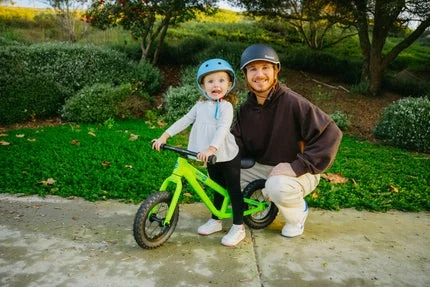
A kids pedal bike is a child-sized bicycle with pedals, a drivetrain (usually a chain), and brakes designed for smaller riders. The goal is simple: your child can start, stop, and steer without wrestling the bike. That’s what separates a truly usable children’s pedal bike from one that looks cute but feels hard to ride. The biggest comparison is pedal bike vs balance bike. A balance bike has no pedals and teaches balance first. A pedal bike for kids adds pedaling and braking, which are easier to learn once balance is already there. Many kids try their first pedal bike around ages 4–6, but readiness depends more on coordination and confidence than age alone. Age can point you in the right direction, but it shouldn’t be the final deciding factor. Typical starting ranges look like this: 12-inch: about ages 2–4 14-inch: about ages 3–5 16-inch: about ages 4–7 (often the most common first “real” size) 18-inch: about ages 5–8 (helpful for in-between fits, depending on brand geometry) If your child is between sizes, resist the urge to “buy bigger.” A too-large kids bike often slows learning because starts and stops feel scary. Height matters more than age, and inseam matters even more than height because it tells you whether your child can touch the ground safely. To measure inseam at home: have your child stand barefoot against a wall, place a book between their legs (like a saddle), and measure from the top of the book down to the floor. Then check the bike’s minimum seat height. A good beginner fit usually means: Seat height: your child can sit and place the balls of their feet on the ground. Standover clearance: when standing over the top tube, there’s a little space so quick stops don’t hurt. When a child pedal bike fits, kids relax their shoulders, look ahead, and ride longer without getting frustrated. Toddler Balance bikes usually teach faster because kids learn the core skill—balancing—without also managing pedaling. If your child can glide with feet up for a few seconds and steer smoothly, switching to a kids pedal bike is often surprisingly quick. Skipping training wheels makes sense when your child already has balance, can follow simple instructions, and isn’t afraid of a small wobble. If your child is nervous, it doesn’t mean they “can’t ride”—it often means the bike is too big, too heavy, or the learning setup is too stressful. Training wheels can help a cautious beginner feel stable, but they can also delay real balance. Because the bike never needs to lean, kids don’t practice the tiny corrections that make independent riding click. If you use training wheels, keep them temporary. A strong alternative is a “balance-first” approach: lower the seat, remove pedals for a short period, and let your child push and glide like a balance bike—then reinstall the pedals once they’re steady. This method often turns a slow learning curve into a quick transition. Weight is a bigger deal than most parents expect. A heavy bike is harder to start, harder to steer, and harder to recover when it tips. Many kids do better on a lighter children’s pedal bike, because it feels easier to control from the first ride. Aluminum frames are often lighter than steel. Whatever the material, focus on how the bike feels for your child: can they push it, turn it, and pick it up without struggling? Smaller bikes often use coaster brakes (pedal backward to stop). They’re simple, but some kids find them awkward on hills or during quick stops. Hand brakes teach a long-term skill, but only if the levers fit small hands. Check brake reach: your child should be able to squeeze the lever without shifting their whole grip. If they can’t brake confidently, they won’t ride confidently. For most beginners, single-speed is best: lighter, simpler, and fewer things to think about. Multi-speed bikes are helpful later for longer rides or hilly neighborhoods, but they add complexity. Also look for a chain guard. It keeps clothing cleaner, reduces pinches, and makes the bike feel more kid-friendly. Kids grow fast, so adjustability matters. A bike with a decent range of seat height adjustment can last longer without forcing a bad fit. Handlebar height can help too, but the seat range is usually the key. Comfort is also about posture. A more upright position is often better for early riders because it improves control and visibility. Tire choice matters as well: slightly wider tires feel steadier and smoother over cracks, bumps, and park paths—great for a first pedal bike for kids. A helmet that fits correctly is non-negotiable. It should sit level, low on the forehead (about two fingers above the eyebrows), with snug straps that don’t slide around. If it moves when your child shakes their head, adjust it. For brand-new riders, elbow and knee pads can reduce fear—especially during the first week. Just as important is where they practice: flat, open spaces away from traffic (quiet cul-de-sacs, empty lots, smooth park paths). A calm environment makes learning feel like play instead of pressure. The biggest mistake is buying a bike “to grow into.” Oversizing makes starts and stops harder, and it can convince a child they’re failing when the real issue is fit. Another common mistake is choosing based on looks instead of function—especially ignoring weight and brake quality. A good rule: if your child can’t comfortably control the bike at walking speed, they won’t feel safe going faster. Most kids outgrow a size in about 1–3 years, depending on growth spurts and how close the fit was at purchase. Signs it’s time to size up include knees coming up too high while pedaling, the seat being maxed out, or your child feeling cramped and tiring quickly. The upside is resale and hand-me-down value. A well-kept kids bike often sells easily, which makes upgrading less painful. Some kids take to a new bike right away. Others do the slow lap-by-lap thing—half excited, half unsure—especially if the bike feels awkward or “too much” at the start. The Letrigo CUB is the kind of kids pedal bike that helps those first rides go smoother. Think: a weekend at the park, a quiet cul-de-sac after dinner, or a quick family ride where you don’t want to spend the first ten minutes adjusting posture and convincing your kid to try again. It has an easy, confidence-building feel—stable on straight lines, predictable in turns, and comfortable enough that kids don’t rush to hop off after five minutes. That matters more than people think, because when a kids pedal bike feels natural, kids practice without realizing they’re “practicing.” It turns into “one more loop” around the basketball court, “can we ride to the corner?” or “watch me start by myself.” And for parents, that’s the win: fewer shaky starts, fewer frustrated stops, and more real riding time that actually looks like fun. Choosing the right kids pedal bike comes down to fit first, then weight, brakes, and comfort. Start with height and inseam, avoid sizing up “for later,” and prioritize easy control over flashy features. When the children’s pedal bike fits your child today, learning is faster, rides are longer, and confidence shows up naturally.Choose the Right Size (The Most Important Factor)
Kids Pedal Bike Size Chart by Age
Sizing by Height and Inseam
Toddler Balance Bike vs Pedal Bike: Which Should Kids Start With?
Training Wheels: Yes or No?
Key Features to Look for in a Kids Pedal Bike
Weight and Frame Material
Brakes and Safety
Gearing and Drivetrain
Comfort and Adjustability
Safety Essentials Parents Shouldn’t Skip
Common Mistakes Parents Make When Buying a Kids Pedal Bike
How Long Will a Kids Pedal Bike Last?
Letrigo CUB: A Kids Bike Option Worth Considering
Final thoughts
 Supriyo Khan
 Supriyo Khan
 Supriyo Khan
 Supriyo Khan

Want to add a comment?