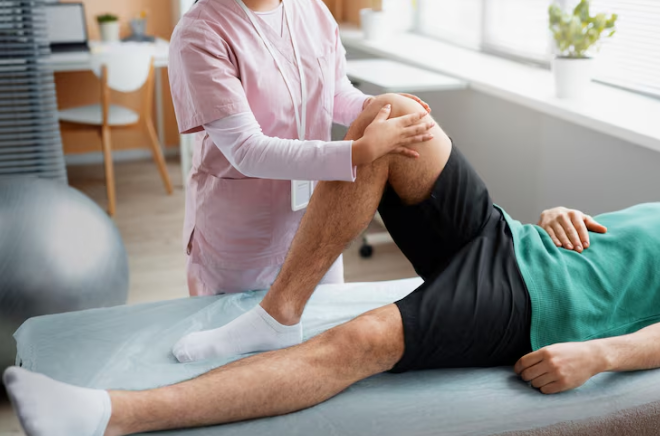
Orthopedic injuries can disrupt work, exercise, and daily routines. They may involve bones, joints, ligaments, tendons, or muscles. Acute care addresses the immediate problem, but restoring comfortable movement often requires structured rehabilitation. A personalized plan for physical therapy recovery after injury can help rebuild mobility, strength, balance, and independence while respecting medical precautions and tissue-healing needs.
The body can repair damaged tissue, but healing alone does not guarantee normal movement. Pain, swelling, immobilization, and reduced activity may contribute to stiffness, weakness, and compensatory movement patterns.
Carefully progressed movement helps limit these problems without placing unnecessary stress on healing tissue.
An orthopedic evaluation after an injury can clarify the diagnosis, identify precautions, and set appropriate goals. A physical therapist then assesses the injury and related movement patterns before creating a plan that may include exercise, functional training, manual techniques, and education. This structured rehabilitation after orthopedic injury is adjusted as symptoms and function change.
A comprehensive rehabilitation plan delivers clinical benefits that extend beyond simply exercising an injured limb.
Early treatment may focus on protecting the injury and managing pain or swelling. Depending on the diagnosis and medical guidance, a therapist may use positioning, gentle movement, exercise, education, or cold therapy. The goal is to improve comfort enough for safe participation in rehabilitation, not to force movement or replace necessary medical care.
Immobilization and reduced activity can limit joint and soft-tissue mobility. Appropriate stretching, active or assisted movement, and joint mobilization may gradually improve the range of motion needed for walking, reaching, dressing, and other daily tasks.
Muscles often lose strength and endurance when activity is restricted. Rehabilitation may progress from low-load or isometric exercise to resistance training and functional weight-bearing tasks, based on symptoms, healing status, and clinician guidance.
After an injury, people may limp, guard the area, or shift load to another limb. A therapist can identify these compensations and use gait, balance, and movement training to reduce unnecessary stress and improve control. No program eliminates all reinjury risk, but addressing modifiable deficits may help lower it.
Rehabilitation usually progresses according to tissue healing, symptoms, function, and medical precautions, not a fixed calendar. The sequence varies with the injury, treatment, age, health, and personal goals, but commonly includes the phases below.
Regaining mobility after injury involves flexibility, strength, balance, coordination, and confidence. Pain or inactivity can change how a person senses and controls movement. Therapists assess these deficits and select exercises that match the patient’s current abilities and goals.
Therapists address mobility through three complementary mechanisms:
Joint Mobilization: When appropriate, gentle hands-on techniques may help address stiffness and improve comfortable movement.
Proprioceptive and Balance Training: Exercises such as supported single-leg stance or controlled surface changes can challenge balance and joint awareness safely.
Gait Retraining: Walking practice may address limping, step length, foot placement, and weight transfer.
Different orthopedic conditions require distinct rehabilitation strategies. Physical therapists tailor treatment protocols to match the biological demands of specific tissues.
After a fracture is stable and weight-bearing is cleared by the treating clinician, rehabilitation may restore motion in nearby joints, rebuild muscles weakened by immobilization, and gradually increase loading. Progression depends on the fracture site, treatment, imaging or clinical findings, and individual response.
Joint sprains and ligament tears vary widely in severity. Rehabilitation often targets range of motion, strength, balance, and movement control, whether care is nonsurgical or follows reconstruction. Exercises and return-to-activity criteria should reflect the specific ligament and medical precautions.
Tendon and muscle programs use carefully dosed loading. Isometric, concentric, eccentric, or functional exercises may be selected according to the tissue involved, stage of recovery, symptoms, and activity goals. Progression is gradual because too much load too soon can aggravate symptoms.
Recovery is collaborative. The therapist provides assessment, guidance, and progression, while the patient reports symptoms and follows the agreed plan as consistently as circumstances allow. Visit frequency and home exercise dosage vary by diagnosis, healing status, access, and goals.
To maximize the benefits of physical therapy:
Follow the Home Exercise Plan: Complete only the exercises prescribed, using the recommended frequency, repetitions, and resistance. Ask for clarification if instructions are unclear.
Communicate Symptoms Honestly: Report new or worsening swelling, numbness, instability, or sharp pain so the care team can reassess the plan.
Support Recovery Habits: Adequate sleep, hydration, and balanced nutrition support general health during rehabilitation. Follow any condition-specific advice from qualified clinicians.
Be Patient with Progress: Recovery is rarely linear. Avoid advancing activity solely because pain has improved; use the criteria set by the care team.
Orthopedic recovery is gradual and individualized. Appropriate rehabilitation can address pain, mobility, strength, balance, and activity-specific demands while respecting healing tissue and medical restrictions.
Progress should reflect symptoms, function, and clinical guidance rather than a fixed timeline. The same applies whenreturning to sports or work after an orthopedic injury: readiness depends on activity demands and the individual’s measured capacity. Coordination among the patient, physical therapist, and orthopedic team can support a safer return to daily life.
 Supriyo Khan
 Supriyo Khan
 Supriyo Khan
 Supriyo Khan
Want to add a comment?