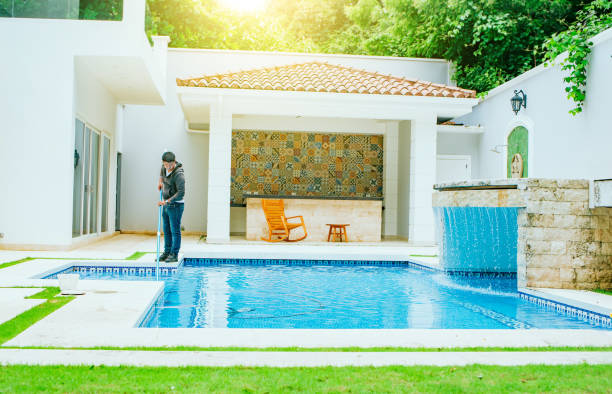
· Protect the pool structure from water damage.
· Improve slip resistance for safer swimming.
· Maintain a clean, fresh appearance by covering stains or discoloration.
Without regular recoating, pools can develop cracks, peeling, or rough textures that make swimming uncomfortable and maintenance more challenging.
The frequency of pool recoating isn’t a one-size-fits-all answer. Several factors influence how often your pool needs a new coat:
Different pool finishes have varying lifespans:
· Plaster: Traditional plaster surfaces generally need recoating every 7–10 years. Over time, plaster may chip or become rough.
· Aggregate or Pebble Finishes: These finishes are more durable and often last 10–15 years before recoating is required.
· Fiberglass Pools: Fiberglass typically lasts 15–20 years, but periodic recoating of gel coats can enhance longevity.
· Epoxy Coatings: Epoxy finishes may need recoating every 5–8 years, depending on usage and chemical exposure.
Pools that are heavily used will show wear faster. High traffic increases the risk of scratches, staining, and surface erosion. Experts recommend annual inspections for frequently used pools to determine whether recoating is necessary.
The chemical composition of your pool water plays a significant role in surface degradation. Pools with unstable pH or high chlorine levels may require recoating sooner. Studies have shown that maintaining a pH between 7.2 and 7.8 can extend the life of your pool surface by 15–20%.
Outdoor pools are more exposed to UV rays, rain, and debris. Sunlight can fade or weaken coatings over time. Pools in areas with extreme weather fluctuations may need recoating more often than indoor pools or those in temperate climates.
Even if your pool hasn’t reached the typical recoating timeframe, certain signs indicate it’s time to refresh the surface:
· Fading or Discoloration: Loss of color is one of the first indicators.
· Peeling or Flaking: This is common with epoxy or painted surfaces.
· Rough Texture: Rough or gritty surfaces are uncomfortable for swimmers and may lead to skin irritation.
· Cracks or Chips: Structural damage should be addressed immediately to prevent water leaks.
Industry experts suggest a proactive approach to pool recoating:
1. Schedule Inspections Every 1–2 Years: Regular professional inspections can identify early signs of wear.
2. Follow Manufacturer Guidelines: Pool finishes often come with specific maintenance and recoating timelines.
3. Consider Partial Recoating: In some cases, recoating only damaged areas can extend the life of the pool surface and reduce costs.
4. Plan Around Off-Season: Many pool contractors recommend recoating during fall or winter to avoid interference with swimming season and allow proper curing.
Timely pool recoating offers multiple advantages:
· Enhanced Safety: Smooth, well-coated surfaces reduce slips and abrasions.
· Improved Aesthetics: Fresh coatings restore the pool’s original color and shine.
· Increased Longevity: Protects the pool structure from erosion, chemical damage, and leaks.
· Cost Savings: Prevents expensive structural repairs by addressing minor issues early.
According to a 2023 survey by the Pool & Hot Tub Alliance, 62% of homeowners who performed regular recoating reported fewer maintenance issues and longer pool lifespan compared to those who waited until significant damage occurred.
While some homeowners attempt DIY recoating, experts advise hiring professionals for best results. Pool recoating requires specialized equipment, chemical handling, and precise surface preparation. Professional application ensures even coverage, proper curing, and longer-lasting results.
So, how often should you recoat your pool? While the answer depends on the pool type, usage, maintenance, and environmental factors, a general guideline is every 5–15 years, with regular inspections in between. Timely pool recoating not only preserves the beauty of your pool but also enhances safety and reduces long-term maintenance costs.
Investing in a professional recoating today can save you thousands of dollars tomorrow, ensuring your pool remains a refreshing retreat for years to come.
 Supriyo Khan
 Supriyo Khan
 Supriyo Khan
 Supriyo Khan

Want to add a comment?