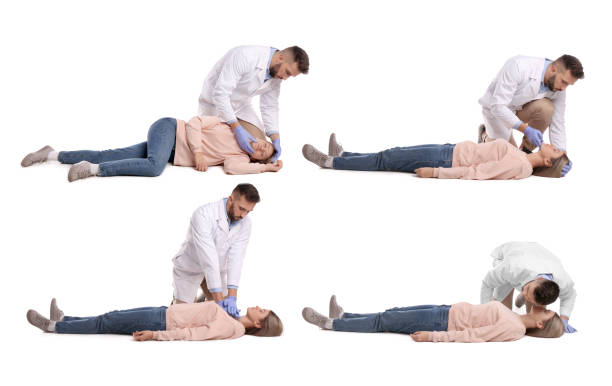
When someone collapses from sudden cardiac arrest, their heart stops pumping oxygen-rich blood to their brain and vital organs. In these critical moments, the immediate response of a bystander can mean the difference between life and death. For the general public, the recommended form of intervention is often Chest-Compression-Only CPR, also known as Hands-Only CPR. A common and crucial question arises: If rescue breaths aren't given, how does the victim get the oxygen they desperately need? The answer lies in understanding the elegant, life-sustaining physiology already at work inside the victim's own body, and it underscores why widespread CPR And First Aid Training is so vital.
For decades, conventional CPR training for the public involved a cycle of 30 chest compressions followed by 2 rescue breaths. However, in 2008, the American Heart Association began strongly advocating for Chest-Compression-Only CPR for untrained bystanders or those unsure of their skills. This shift was driven by a key insight: the biggest barrier to action was often bystander hesitation, frequently due to reluctance or fear about performing mouth-to-mouth breathing. Research confirmed that continuous, high-quality chest compressions alone were superior to no action at all, and in many cases, just as effective as conventional CPR in the first few minutes of an adult cardiac arrest.
But the science behind this is not intuitive. We know oxygen is essential for life, so how can compressions alone suffice?
The fundamental concept is this: During a sudden cardiac arrest, the victim's blood is not instantly devoid of oxygen. When the heart stops, circulation ceases, but the oxygen already dissolved in the blood doesn't immediately disappear. It remains in the bloodstream, trapped and unusable because it is not moving.
Think of it like a delivery truck that has broken down. The cargo (oxygen) is still loaded in the truck (the blood), but without the engine running (the heart), the truck can't make its deliveries to the neighborhoods (the brain and organs). Chest compressions manually restart that delivery route.
The "Bellows" Effect of the Chest: Our lungs are not just passive balloons. The chest wall acts like a bellows. During forceful chest compressions, the pressure changes within the thoracic cavity cause passive gas exchange in the lungs. As you push down on the sternum, you increase pressure, which can cause a small amount of air to be expelled. More importantly, when you allow the chest to recoil completely between compressions, you create negative pressure that draws a small amount of fresh air back into the lungs. This passive ventilation, while minimal, does contribute to some ongoing gas exchange.
Primarily, You Are Circulating Existing Oxygen: The core mechanism is simpler. High-quality chest compressions (pushing hard and fast at a rate of 100-120 per minute) manually take over the heart's pumping function. Each compression squeezes the heart between the sternum and spine, forcing the oxygenated blood that is already in the heart chambers out to the brain and coronary arteries. The complete chest recoil allows the heart to refill with more of that oxygenated blood from the veins, ready for the next compression.
In essence, Chest-Compression-Only CPR does not introduce new oxygen; it circulates the oxygen already present in the victim's system. This circulating oxygen is enough to keep vital organs, especially the brain, alive for several critical minutes until professional help arrives with advanced equipment like a defibrillator and bag-valve masks.
This leads to the most critical point: Time. The victim is running on a rapidly depleting oxygen reserve. From the moment the heart stops, the clock is ticking. Brain tissue begins to die within 4-6 minutes without oxygenated blood flow. Every second that compressions are delayed, the precious oxygen in the blood is being metabolized by cells and is not being replenished effectively without new air entering the lungs.
This is why the first action in any emergency is to call 911 to get advanced help on the way, and the second is to start compressions immediately. Starting compressions within the first two minutes can dramatically improve survival odds. The goal of bystander CPR is not to fully resuscitate the victim but to perform a vital "holding action"—to keep a minimal supply of oxygenated blood flowing to the brain and heart muscle, preserving them until the underlying electrical problem (often ventricular fibrillation) can be treated with a defibrillator.
Chest-Compression-Only CPR is highly effective for adult victims of sudden cardiac arrest, where the cause is typically a primary heart issue. However, the "oxygen in the blood" principle has important limits, and this is where comprehensive CPR And First Aid Training provides essential, nuanced knowledge.
For certain victims, rescue breaths are indispensable from the very beginning. These exceptions include:
Children and Infants: Pediatric arrests are rarely caused by a primary heart issue. More often, they result from a respiratory failure leading to cardiac arrest (e.g., drowning, choking, asthma, SIDS). In these cases, the child has likely been without adequate oxygen before their heart stopped, meaning their blood oxygen reserves are already critically low. For them, combining compressions with rescue breaths is essential to provide the oxygen their systems desperately need.
Drowning Victims: Similar to pediatric cases, the root cause is lack of oxygen from submersion. Providing rescue breaths is a critical first priority to re-oxygenate the blood.
Drug Overdoses/Respiratory Arrests: When the arrest is triggered by the respiratory system failing first, the same principle applies.
A high-quality CPR And First Aid Training course teaches this critical distinction. It empowers a rescuer to assess the likely cause of the arrest and make an informed decision about the best method to use, ultimately making them a more effective and adaptable first responder.
Understanding the why behind Chest-Compression-Only CPR is powerful, but it is no substitute for hands-on practice. This is the core value of formal training. In a certified course, you learn:
The Correct Technique: How to position your hands, use your body weight to achieve the proper depth (at least 2 inches for adults), and maintain the 100-120 beats per minute rate. Proper technique is what makes compressions effective at circulating blood.
The Confidence to Act: Training breaks down the barrier of fear and hesitation. Practicing on a manikin turns abstract knowledge into muscle memory, enabling you to act automatically under extreme stress.
The Full Protocol: A comprehensive course covers all scenarios—adult, child, and infant CPR; the use of an AED (Automated External Defibrillator); and how and when to integrate rescue breaths. It turns a bystander into a truly prepared responder.
The science of Chest-Compression-Only CPR reveals a profound and empowering truth: in a sudden cardiac arrest, a bystander's hands can literally become the victim's heartbeat and circulation. You are not providing new oxygen, but you are performing the absolutely essential work of delivering the oxygen that remains to the places it is needed most.
This knowledge should liberate us from hesitation. The action required is clear, physical, and immediate. By calling 911 and pushing hard and fast in the center of the chest, any person can sustain a life. To move from understanding this concept to being ready to execute it flawlessly, seek out certification. Enroll in a CPR And First Aid Training course. Equip yourself not just with knowledge, but with the competence and confidence to be the decisive factor in someone's worst moment, effectively bridging the gap between life and death until professional help can take over.
 Supriyo Khan
 Supriyo Khan
 Supriyo Khan
 Supriyo Khan

Want to add a comment?