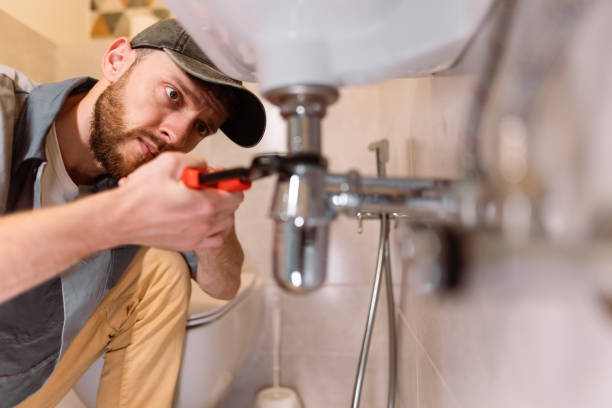
The plumbing skills are acquired after putting time into practice, observation, and learning. Individuals joining this career usually want to improve at a faster rate in order to deal with actual work with much confidence. The systematic exercises are utilized to enhance the technique and increase precision and safety consciousness. Hands-on experience can also be developed regularly to be familiar with tools, materials, and frequent installation procedures so that learners can progressively develop confidence.
Specialized training is used to promote attention to detail. The repetition will assist in the detection of errors in the initial stages and enhance accuracy with time. Good practice leads to the development of strong habits, which are likely to be translated to the quality of work. The approach ensures that the individuals grow to become reliable professionals in the course of being competent in any plumbing activity.
1. Mastering Precision through Pipe Fitting
The improvement in the skill can start with the learning of simple methods of pipe fitting. Novice seek advice on reliable websites, and some websites, such as How to Become a Plumber will provide orderly advice, which will help one to learn consistently. Frequent drill fittings assist in the development of precision, increase the accuracy of alignment, and become confident in their installation works. Practice makes the work flow more fluent and guarantees the reliability of outcomes in the professional environment.
FAQ: Improving Pipe Fitting Accuracy
What is the significance of the practice of pipe fitting?
It enhances accuracy, safety consciousness, and installation effectiveness among future practitioners.
Is it simple to train beginners to fit pipes?
Yes, drills of simple guided practice can be used to work on accuracy and gain confidence over time.
2. Developing Mastery in Proper Tool Handling
Handling the tools is part of plumbing that should be handled properly. The use of tools enhances control and minimizes errors at work. Familiarity and safety awareness can be improved with the help of short, focused drills. It emphasizes that proper grip and tool selection are vital for workplace safety.
Technical capability is reinforced by knowledge on how to use the tools and facilitates the ease of workflow when carrying out the installation process.
Consistent grip training enhances mastery and assists in sustaining a constant performance of tool position accuracy.
Knowledge of equipment eliminates reluctance and promotes faster action when dealing with installation work.
Safe handling awareness keeps accidental damage at bay and builds confidence during normal plumbing activities.
Practise helps in creating coordination that enables effective execution of tasks in diverse working environments.
3. Strengthening Diagnostic Skills for Leak Detection
Early detection of leaks is a good plumbing technique. Practical exercises related to the simulation of the leaks allow the learners to increase their observation skills. Diagnostic accuracy is enhanced by the identification of minor symptoms, such as the presence of moistness or a change in pressure.
Regular drills make one responsive. Students gain increased confidence regarding the ability to find problems and implement remedial actions effectively. Social media usually focuses on the development of diagnostic skills as a fundamental element of professional education.
FAQ: Troubleshooting and Leak Diagnostics
What can be done to enhance leak detection skills within a short period of time?
Diagnostic awareness can be strengthened using regular observation drills and simulated scenarios.
Do new hires have a hard time detecting leaks?
The practice under supervision makes it easier and builds confidence progressively.
4. Building Efficiency in Drain Clearing and Maintenance
Drain-clearing exercises train learners on one of the most frequent plumbing jobs. Organized training aids in the creation of proper cleaning methods and the enhancement of safety awareness. Resources from How to Become a Plumber often highlight these tasks as essential daily operations.
Intensive practice is useful in the development of efficiency and reliability. Knowledge of the causes of blockage enhances long-term maintenance ability.
Simulated blocking practice improves the knowledge of the most frequent patterns of obstructions to drainage and methods of their removal.
The cleaning exercises that are developed as routine accelerate the process without compromising the handling of elements of the plumbing systems.
Pressure control practice helps in proper ventilation without causing harm to pipes and fittings attached to them.
Observation exercises enhance hypothesis building on symptoms of drainage obstruction that are not evident.
5. Advancing Technical Logic with System Assembly
The drills in system assembly enhance the knowledge of plumbing structure and the integration of components. Exercise in assembly sequences enhances workflow planning and technicality. Repeated practice assists students in practicing tasks efficiently and, at the same time, observes the right safety procedures.
Problem-solving skills are also facilitated through learning in the form of structured drills. When people come together in systems many times, they gain even greater awareness of functionality. In fact, learning materials tend to outline assembly practice as one of the major instructional milestones on the path to professional preparedness.
FAQ: The Importance of Assembly Drills
The question of whether system assembly practice is beneficial to beginners or not is answered.
Yes, it is true that drilling assembly in the same way enhances technical clarity and confidence slowly.
What is the advantage of assembly practice?
It enhances precision, effectiveness, and general comprehension of plumbing systems.
Achieving Long-Term Skill Consistency
Repetitive training is a long-term guarantee of the development of plumbing. Discipline is promoted through structured drills, and proper techniques are entrenched. Through repetition, efficiency, and accuracy are developed, and these are imperative in the success of a professional.
The process of acquiring skills, it tends to emphasize the idea of constant practice as a feature of developing the skills. Consistency will ensure that the learners remain ready to meet diverse professional demands and enhance their technical confidence over time. The instructions found with How to Become a Plumber also facilitate the organization of development and real preparation.
FAQ: The Value of Regular Practice
What is the importance of consistent practice?
Frequent exercises enhance precision and uphold professionalism in plumbing works.
What was the frequency of practice sessions?
Regular short practices tend to be more effective than regular and long practices.
Final Steps for Career Readiness and Future Success
Hands-on exercises train them to be in the field of plumbing. Skill-oriented training enhances efficiency, safety awareness, and technical understanding. Learning is also a continuous process that enhances professional credibility as it promotes career growth. It focuses on training opportunities and systematic skills improvement in education. Regular exercises enable the participants to be smoothly transferred between the educational processes and the occupation, providing them with the reliability of the working conditions and better career perspectives. After the organized exercises and the tips provided by How to Become a Plumber, it becomes possible to help learners advance in the regular steps and develop a solid technical foundation and long-term professional viability.
 Supriyo Khan
 Supriyo Khan
 Supriyo Khan
 Supriyo Khan

Want to add a comment?