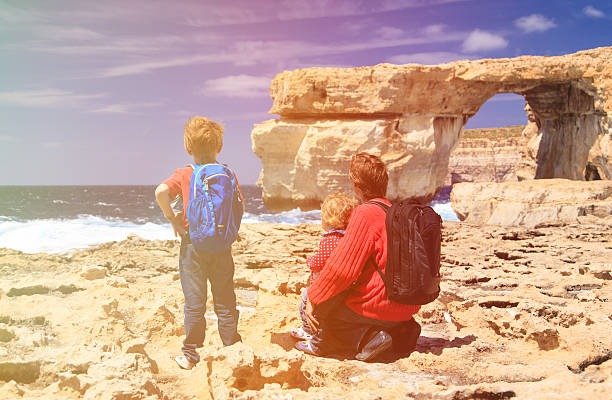
Gozo is what Malta was probably like thirty years ago before the development really kicked in. Quieter, greener, less built up. It’s only a 25-minute ferry from Malta but it feels different the moment you arrive. The pace is slower, the landscape is more dramatic, and a lot of the best experiences are the kind where you’re not following crowds to an Instagram spot, you’re just out there in the landscape or in a village bakery or standing on a cliff with almost no one around.
Most people do Gozo as a day trip from Malta. That’s doable but you’re rushing. If you can stay a night or two, better. Here are eleven things worth doing while you’re there.
1. Explore the Cittadella at Sunset
The Cittadella is the old fortified city in Victoria (which locals still call Rabat). It sits on top of a hill in the center of the island and you can see it from pretty much everywhere. The fortifications date back to medieval times, though there’s been something up there since the Bronze Age.
Go late afternoon when the day-trippers have left. Walk the ramparts, the views are 360 degrees over the whole island. There are a few small museums inside if you’re interested (the old prison is kind of fascinating, all the graffiti carved into the walls by prisoners over the centuries) but honestly just wandering around as the light gets golden is enough. The cathedral is there too, worth a look inside.
It’s free to walk around, which is nice. Sunset from the bastions is one of those moments where you understand why people keep coming back to Gozo.
2. Walk the Coastal Cliffs
Gozo’s southern cliffs are the real thing. Ta’ Ċenċ Cliffs drop about 150 meters straight into the sea, Sanap Cliffs in Munxar are almost as high. The rock is this pale limestone, the water below is that Mediterranean blue-green that doesn’t look real in photos.
You can drive to within walking distance of both. There are paths along the cliff edge, not always official trails but worn in by people walking. It’s not dangerous if you’re sensible but the drops are sheer so don’t get too close to the edge. The views go on forever, you can see Malta in the distance, Comino closer, and just miles of open sea.
Best times are early morning or late afternoon. Middle of summer it’s hot and exposed. Spring is ideal, wildflowers everywhere, cooler temperatures.
3. Swim in a Secluded Bay
Gozo has beaches but it also has these little bays tucked into the cliffs that feel more private. Mġarr ix-Xini is one, a narrow inlet surrounded by cliffs, pebbly shore, crystal-clear water. It’s where Angelina Jolie and Brad Pitt filmed “By the Sea” which gives you an idea of how photogenic it is.
There’s no sand and no facilities, just rocks to jump off and deep water for swimming. Gets busy in peak summer but otherwise pretty quiet. You can kayak from here along the coast, there are rentals at the bay.
Xlendi Bay is bigger, more developed, has restaurants along the waterfront. Still nice for swimming though, and the cliffs around it are dramatic. You can walk up to Xlendi Tower for views or follow the coastal path.
Both are good if you want to swim without the beach resort vibe.
4. Watch Salt Harvesting at the Pans
The salt pans at Xwejni have been worked by the same families for over 350 years. They’re these shallow square pools carved into the rock along the coast. Seawater gets pumped in, the sun evaporates it, salt crystals form. In summer you can still see people out there scraping up the salt, stacking it.
It’s not a big tourist attraction, more just something you stop and look at. The geometry of all those squares cut into the rock is striking, especially when they’re full of water reflecting the sky. Best light is late afternoon, the salt glows.
You can buy Gozo salt in shops around the island. It’s coarser than regular salt, has that slight mineral taste from the seawater.
5. Take a Boat Through the Inland Sea Tunnel
Dwejra Bay on Gozo’s west coast is where the Azure Window was before it collapsed. The Inland Sea is still there though, this circular lagoon about 60 meters across, surrounded by cliffs, connected to the open Mediterranean by an 80-meter tunnel through the rock.
Local guys run small boat trips through the tunnel and along the coast. Takes maybe 20 minutes, costs around €4. You go through the tunnel (it’s dark, the boat engine echoes off the rock, then you come out into open water and the cliffs are towering above you. They’ll take you past caves and the Blue Hole where divers go.
Weather-dependent, if the sea’s rough they don’t run. But when it’s calm it’s worth doing. The whole Dwejra area has this strange lunar landscape feel, very different from the rest of Gozo.
6. Stand Inside a 5,600-Year-Old Temple
The Ġgantija Temples near Xagħra are older than Stonehenge, older than the pyramids. They date to around 3600 BCE. The stones are massive, some of them weigh several tons, and nobody really knows how they moved them or exactly what the rituals were.
The name comes from the Maltese word for giant. Local legend said giants built them, which makes sense when you see the scale.
There’s a small museum at the entrance with artifacts and context. Then you walk through the actual temple complex, two main structures side by side. You can see the altars, the carved decorations, the layout of the rooms. It’s not huge but it’s genuinely impressive how intact it is after all that time.
Costs about €10, includes entry to an old windmill nearby that’s been turned into a museum. Takes an hour, maybe a bit more if you’re really into it.
7. Drive a Quad Through Gozo’s Valleys and Back Roads
One of the best ways to actually see Gozo beyond the main sites is to rent a quad and just go. The island is small enough that you won’t get lost, the roads wind through valleys and farmland and along the coast, and a lot of the best views are places you’d never find on a bus route.
Yippee Malta does quad tours where you’re driving yourself but following a guide who knows all the back roads. You’ll hit viewpoints where you can see the whole island, farm tracks through the interior where it’s just fields and old stone walls, coastal paths with the cliffs dropping away. You can stop wherever looks good, you’re not stuck to a fixed route.
The Gozo quad tour gives you that freedom to explore without having to figure out where you’re going or worry about parking. You cover more ground than you would walking but it’s still hands-on, you’re outside in the landscape. It’s particularly good if you want to see the parts of Gozo that feel less developed, the valleys and the rural areas that tour coaches don’t reach.
Tours usually include stops at the main sites too (salt pans, Dwejra, Ramla Bay, the Cittadella) but the real value is getting into the spaces between those spots, seeing Gozo as a whole rather than just the postcard locations.
8. Eat Ftira at a Village Bakery
Ftira Għawdxija is Gozo’s version of flatbread, it’s on the UNESCO Intangible Cultural Heritage list which tells you how seriously they take it. It’s a round sourdough bread with a hole in the middle, chewy crust, soft inside. You eat it filled with tomatoes, capers, olives, tuna, ġbejniet (Gozo’s sheep cheese), whatever you want really.
The best places to get it are the village bakeries. Maxokk Bakery in Nadur is famous for it, Mekren’s Bakery also in Nadur. They’re not fancy, just local bakeries where people queue up for their daily bread. You order your ftira, they slice it open and fill it while you wait.
Costs a few euros, tastes better than anything you’ll get at a tourist restaurant. Eat it sitting on a wall somewhere watching Gozitan life go by.
The bread itself is also sold on its own if you just want to try it plain. Texture is the thing, that chew from the sourdough.
9. Hike to Wied il-Mielaħ Window
After the Azure Window collapsed, this became the new rock arch that people go to see. It’s on the northwest coast, harder to reach than Dwejra was, which means fewer people. The arch is smaller but it’s still impressive, this tabletop rock formation with the sea crashing underneath.
Getting there involves either a hike from the nearest road or driving down a rough track that’s borderline impassable in a regular car. It’s remote, feels a bit adventurous. The coastline around there is wild, none of the development you see in other parts of the island.
Not essential if you’re short on time but good if you want something less touristy. The hike itself along the coast is worth it even if the arch isn’t that dramatic.
10. Kayak Along the Coast
Seeing Gozo from the water gives you a completely different perspective. The cliffs and caves and rock formations that you look at from above suddenly become things you’re paddling through. The water is clear enough that you can see fish and rock formations below you.
There are kayak tours that go from Hondoq Bay to Comino, passing along Gozo’s eastern coast. You stop in quiet coves to swim and snorkel, you paddle through caves, you can cliff jump if you want. Some tours go via the Blue Lagoon but avoid the busy parts.
It’s not difficult, the pace is relaxed, you don’t need to be an experienced kayaker. But you do need to be comfortable in water and able to swim. A few hours on the water, beautiful coastline, good way to spend a morning.
11. Catch Sunrise or Sunset from Ta’ Pinu
Ta’ Pinu Basilica sits in the countryside outside the village of Għarb, surrounded by fields and farmland. It’s a pilgrimage site, the story is that a local woman heard the Virgin Mary’s voice there in the 1880s and was healed. The church that’s there now was built in the early 20th century, big domed basilica in a neo-Romanesque style.
It’s impressive from the outside, beautiful inside (lots of marble, mosaics, very ornate) but the setting is what makes it worth visiting. It’s out in the open with views across Gozo’s interior, the light at sunrise or sunset is incredible, that golden glow over the fields and stone walls.
A lot of people visit during the day as part of a tour but if you go early morning or late afternoon when it’s quiet, it’s a peaceful spot. There are walking trails around the area too if you want to explore the countryside.
Getting Around and Practical Stuff
Gozo is small, about 14km across at the widest point. You can drive from one end to the other in 30 minutes. Buses run from Victoria to most of the main villages and sites, they’re cheap (€2 or so) but infrequent. If you’re relying on buses, you’ll spend time waiting.
Renting a car gives you flexibility but parking can be tight in the more popular spots in summer. Quads, scooters, bikes are all available to rent. Or you can do guided tours and let someone else handle the logistics.
The ferry from Malta runs frequently, every 45 minutes or so, 25-minute crossing. You pay on the way back. There’s also a faster passenger ferry from Valletta direct to Gozo if you don’t want to go via Ċirkewwa.
Best times to visit are spring (April-May) and autumn (September-October) when it’s not too hot and not too crowded. Summer is busiest, temperatures in the 30s, everywhere gets packed. Winter is quiet and mild but some activities don’t run.
Gozo rewards taking your time. You can hit the main sites in a day but you’ll miss the feel of the place, that slower pace and the landscape and the sense that you’re somewhere that hasn’t been completely smoothed over for tourism. Stay a couple nights if you can.
 Supriyo Khan
 Supriyo Khan
 Supriyo Khan
 Supriyo Khan

Want to add a comment?