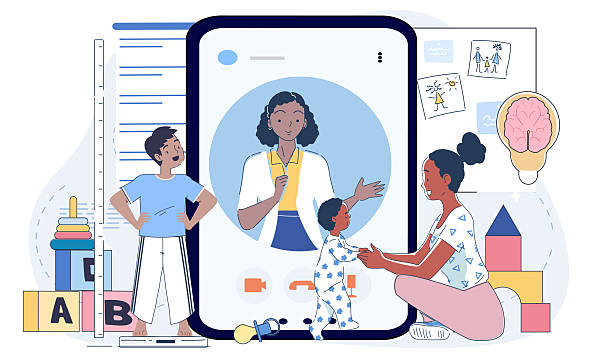
Digitization has opened up new vistas in the field of healthcare and therapeutic services. The introduction of telehealth-based Applied Behavior Analysis services is one of the recent revolutionizing changes that have taken place in this area. Long considered to be one of the most effective approaches, ABA therapy was devised to help children develop necessary life skills, communication abilities, and positive behaviors. With telehealth bringing this right to the comfort of one's homes, access, flexibility, and comfort have reached another dimension altogether for families. Telehealth ABA services provide kids with smooth, technology-driven avenues for personalized support from the comfort of their home. Be it families far out in the countryside, their busy schedules, or just personal preferences for comfort and privacy at home, telehealth ABA provides the same quality guidance one gets from face-to-face sessions. A strong model through which clinical expertise can be linked with digital tools and parent engagement to empower kids toward success is found herein. Telehealth ABA is a modality of behavior therapy provided via secure video conferencing platforms. The approach would still be based on the same principle as in-person ABA: identifying target behaviors, teaching new skills, reducing challenging ones, and keeping data on progress. In its place, however, the therapist is not physically present but guides sessions remotely, often by directly coaching the caregivers or engaging the child in different activities virtually. Convenience and efficiency have increased the popularity of the method. Services that once had to be done by physically going to clinics, taking time off from work, or juggling many other obligations now are only a few clicks away. If you're looking for ABA therapy in Maryland, we're here to provide your child with trusted, effective, and personalized support. Indeed, one of the most important benefits that telehealth can bring into ABA is increased accessibility. For example, family households located in rural locations, unserved communities, or those with few qualified professionals to practice ABA can be assured of quality care without necessarily having to change location or enter lengthy waiting lists. Telehealth overcomes barriers that allow children to initiate their services earlier, identified as an important determinant of realizing developmental gains. Traditional sessions limit parent participation because of either the time or logistic burdens. By contrast, in Telehealth ABA, it is remarkably easy for caregivers to join sessions, observe a number of strategies, and take part in active behavior plans. In the process, the parents become co-teachers who learn to implement ABA at home during the day. It really helps with providing consistency and greatly enhances the effects of the intervention. Children often do better in familiar environments where they are comfortable-usually their home. Telehealth ABA takes advantage of this and can reduce anxieties that some children may experience in clinic settings. Being in the natural environment allows the therapist to observe real-life routines, such as mealtimes, playtimes, or transitions, thus creating even more real and functional intervention plans. With Telehealth ABA, the time requirement flexibly fits into busy family schedules, disruption is minimized, and travel time is reduced accordingly. In this way, it's easier to juggle work, school, and daily activities with parents without sacrificing consistency in the therapy services provided. The virtual format allows sessions to be scheduled around family routines, which can in turn make it easier to stay committed to the course of therapy. In this regard, telehealth has become a feasible platform for ABA service delivery. Digital tools that therapists can employ but are not limited to include interactive programs that maintain structure in the session and keep things engaging, and behavior-tracking systems. This supports the idea that, for most goals, telehealth ABA is as effective as in-person support, especially when caregivers are active participants in treatment. It is usually much cheaper for the families in comparison with travel or missing work for in-person sessions. Long-term therapy may also be possible because some providers have less expensive virtual plans. Most often, telehealth-based ABA includes direct therapy, parent training, and ongoing communication. The general workflow might look something like the following: The BCBA will meet with the family to review the concerns, strengths, goals, and behaviors. Assessments may be completed through interviews, observations, and standardized tools. After the assessment, the BCBA would work out an individualized treatment plan for the particular needs of the patient and would enumerate the goals to be achieved, such as improved language, routines in daily living, improved attention, among others, or reduction in problematic behaviors. Activities, games, visual aids, and modeling comprise therapists' live video sessions; these may include direct interaction, when appropriate given a child's age and need, or activities that are led by a caregiver but guided by the therapist. Core components of ABA telehealth involve parent training, whereby the caregivers are trained in the reinforcement of proper behavior, use of prompting strategies, development of routines, and application of behavioral strategies in daily living. The therapist electronically records this data for every session. The data allows for progress monitoring, where patterns can be refined to fine-tune those strategies which continue to keep the child improving. Even in the virtual format, children are able to learn a wide range of important skills, including the following: Communication and language development Following directions Skills for daily living, such as brushing teeth, cleaning up, or getting dressed Social engagement and play skills Attention and concentration Decrease problem behaviors Academic readiness skills Emotional regulation techniques Examples include virtual games, visual schedules, reward charts, songs, and hands-on activities that can be put into place at home to make learning fun and effective during a telehealth ABA session. Some of the most effectual uses of telehealth ABA are: Children who fare well with digital interaction. Families that require flexible scheduling. Parents seeking coaching on how to implement ABA strategies in daily routines. Families living in very remote or underserved areas. Children require intervention directly in immediate home environments. Families require accessible, affordable therapy opportunities. At the same time, some children will indeed require infrequent on-site support, and for others, telehealth remains a great stand-alone or hybrid solution. Telehealth ABA is not a flash in the pan; it's a continuing motion into the future of available, family-centered behavioral support. Because of its unparalleled ability to meld evidence-based therapy with home comfort and digital convenience, telehealth ABA supports children in building skills which are meaningful and supportive of long-term growth. Families become more involved, children become more relaxed, and therapists can conduct highly structured sessions applicable to the natural environment. That provides a sound basis for advancement, self-sufficiency, and confidence. Telehealth-based ABA services position children for success by meeting them where they are-both literally and developmentally. Given its flexibility, accessibility, and proven effectiveness, telehealth ABA has been the solution families have come to trust to receive consistent, high-quality support. It was telehealth ABA that rose to meet the need and made sure that children received the support they needed. As demand for remote services increases, telehealth ABA will only continue to play a crucial role in supporting children to realize their full potential.Understanding Telehealth ABA Services
Why Telehealth-Based ABA Services Are Transforming Lives
1. Increasing Accessibility to Every Family
2. More parental involvement
3. A comfortable, familiar environment
4. Flexibility and Convenience
5. High-quality, evidence-based sessions
6. Affordable for All Families
How Telehealth ABA Works
1. Initial Consultation and Assessment
2. Individualized treatment plan
3. Online Therapy Sessions
4. Ongoing parent training
5. Monitor Data and Make Adjustments
Skills Children Can Learn through Telehealth ABA
Who Benefits Most from Telehealth ABA Services?
The Future of ABA Therapy: Digital-and Family-Centered
Conclusion
 Supriyo Khan
 Supriyo Khan
 Supriyo Khan
 Supriyo Khan

Want to add a comment?