Table of Contents
Understanding B2B and B2C Marketing
Key Differences in Strategies
Convergence of B2B and B2C Tactics
Leveraging Digital Platforms
Importance of Personalization
Building Long-Term Relationships
Data-Driven Decision Making
Conclusion
Developing marketing strategies that truly connect with your target audience starts with an in-depth understanding of the differences between Business-to-Business (B2B) and Business-to-Consumer (B2C) approaches. Each model has unique goals, buyer behaviors, and expectations, making it essential for marketers to tailor their tactics accordingly. From establishing trust in long-term partnerships to sparking emotional responses that drive quick decisions, mastering these distinctions is vital for success.
Today’s data-driven environment allows organizations to leverage analytics for B2B companies to gain insights into market trends and consumer preferences, enabling brands to innovate and stay competitive. By weaving together B2B and B2C strategies, businesses not only maximize their reach but also create more personalized customer experiences that drive deeper engagement and loyalty.
Understanding B2B and B2C Marketing
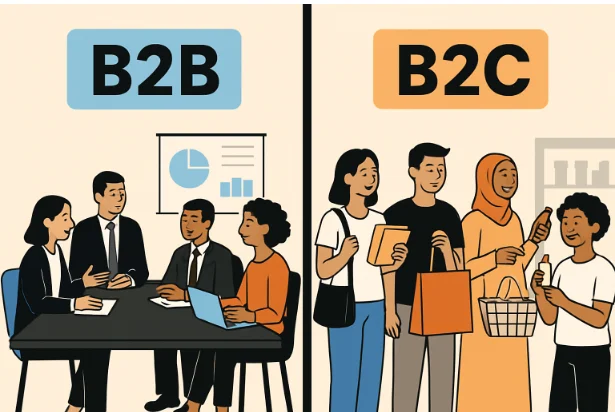
B2B marketing is characterized by complex decision-making processes that often involve multiple stakeholders within organizations. These buyers demand detailed information, product validation, and evidence of return on investment (ROI). By contrast, B2C marketing targets individual consumers or households, focusing on immediate needs and emotional responses to drive purchases. Engaging storytelling, convenience, and aspirational messaging are hallmarks of B2C efforts, leading to faster, more impulsive purchase decisions than the measured pace of B2B deals.
For both models, aligning marketing objectives to the specific expectations and psychology of the target audience is non-negotiable. While an enterprise software provider may prioritize efficiency and integration, a lifestyle brand may entice with imagery, identity, and social proof.
Key Differences in Strategies
Decision-Making Process: In B2B, sales cycles are lengthy due to approval hierarchies and risk assessments. Buyers often conduct thorough research, request proposals, and analyze long-term impacts before committing. Conversely, B2C marketing shortens the customer journey, with buyers frequently deciding based on personal desire or convenience.
Content Complexity: B2B content tends to be technical, featuring case studies, whitepapers, and ROI calculators designed to support rational decision-making. B2C content is delivered in easily digestible formats, such as short videos, reviews, and social media posts, tapping into emotions and visions of lifestyle improvement.
Communication Channels: B2B marketers often dominate LinkedIn, industry webinars, and trade publications. In contrast, B2C brands leverage platforms such as Instagram, TikTok, and Facebook, where consumers are receptive to visual storytelling and peer recommendations.
Convergence of B2B and B2C Tactics
The line between B2B and B2C marketing is blurring. Modern B2B buyers expect consumer-like experiences, including intuitive interfaces and personalized messaging. Consequently, B2B marketers are infusing their campaigns with emotional appeals, social proof, and storytelling to enhance engagement. At the same time, B2C brands are leveraging educational content, FAQs, and in-depth product breakdowns, especially for high-involvement goods, to empower buyers and build credibility.
Leveraging Digital Platforms
Digital transformation continues to reshape the marketing landscape for both B2B and B2C companies. B2B organizations are strengthening their online presence through robust company websites, professional networks, and value-driven content. They deploy targeted email campaigns, nurture leads through webinars, and use account-based marketing (ABM) for highly customized outreach. B2C brands are equally proactive, leveraging digital ads, influencer collaborations, shoppable posts, and interactive content such as quizzes or AR experiences to drive consumer interest and action.
Importance of Personalization
Personalization is no longer a differentiator; it is an expectation across all markets. By harnessing customer data and advanced analytics, brands can offer tailor-made experiences, from personalized email recommendations to dynamic website content that adapts based on user behavior. For B2B, this might mean addressing each prospect's unique pain points. For B2C, it’s about delivering relevant offers at the perfect moment. According to Forbes, hyper-personalization increases customer satisfaction and cultivates brand loyalty by making each interaction feel bespoke.
Building Long-Term Relationships
While cultivating long-term partnerships has always been key in B2B marketing, B2C marketers are increasingly recognizing the lifetime value of a customer. Initiatives such as loyalty programs, exclusive sneak peeks, retention campaigns, and personalized communications are on the rise. B2B relationships are built on consistent support, tailored solutions, and mutual growth opportunities. B2C brands, meanwhile, aim to foster a sense of belonging and reward recurring engagement, turning one-time buyers into brand advocates.
Data-Driven Decision Making
No marketing strategy can be truly effective without data support. By measuring everything from lead sources and conversion rates in B2B to campaign engagement and purchase frequency in B2C, businesses unlock actionable insights to refine their approaches. Market intelligence and continuous A/B testing allow companies to adapt swiftly to changing preferences and optimize ROI. As outlined by McKinsey, applying advanced analytics not only uncovers opportunities but also mitigates risk and justifies budget allocations at every step.
Conclusion
Marketing has never been more dynamic or customer-centric. Mastering the balance between B2B and B2C methodologies is crucial for businesses looking to grow market share and enhance customer connection. By drawing from the strengths of both approaches and committing to an ongoing process of innovation and personalization, marketers can create flexible, high-performance campaigns that delight audiences and drive long-term results.
 Supriyo Khan
 Supriyo Khan
 Supriyo Khan
 Supriyo Khan

Want to add a comment?