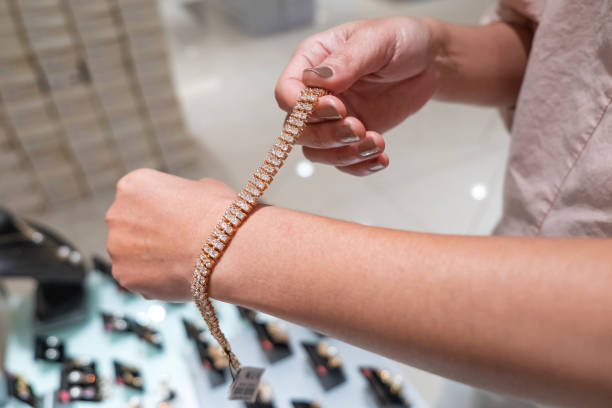
In the world of jewelry, trends don’t just shift — they evolve. And in 2025, one of the most exciting evolutions in the bling game is the growing conversation around two iconic pieces: Cuban link chain and tennis bracelet. Once occupying very different style lanes, these jewelry staples are now finding themselves at the center of the same spotlight.
For decades, tennis bracelets symbolized refined luxury — delicate, clean, and traditionally elegant. Cuban link chains, on the other hand, have been the bold hallmark of hip-hop culture and streetwear fashion. But as jewelry becomes more expressive, gender-fluid, and personality-driven, the lines between these two styles are starting to blur.
So the question is: Are Cuban link chains becoming the new tennis bracelets? Or are we witnessing a fusion of two style worlds that were never meant to compete, but to coexist?
Let’s dive into the evolution of bling — and what it says about how we wear jewelry today.
Tennis Bracelets: A Legacy of Elegance
The tennis bracelet has long been a symbol of minimal luxury. Originating in the 1980s after tennis star Chris Evert’s diamond bracelet fell off during a match, the name stuck — and so did the look. Thin rows of precisely cut stones (typically diamonds or moissanite), laid out in perfect symmetry, became the go-to accessory for formal events, weddings, and red-carpet appearances.
For years, the bracelet was considered a “feminine” piece, often reserved for brides, fashion editors, or classic dressers. Its minimal design and precise sparkle made it ideal for elegant occasions and daily wear for those who preferred understated glam.
But as the jewelry market evolved, so did the bracelet’s identity.
The Rise of Cuban Link Chains: Loud, Proud, and Unmissable
By contrast, Cuban link chains took a much louder path to the top. Originating in Miami’s hip-hop scene in the 1970s and 80s, these thick, interlocking chains became symbols of dominance, self-made success, and personal power. Artists like Jay-Z, DJ Khaled, and Slick Rick helped make Cuban chains synonymous with status.
Originally seen as masculine and culturally specific, these chains have now reached mainstream appeal, worn by everyone from fashion influencers to Hollywood celebrities. In 2025, it’s not uncommon to see a Cuban link paired with a designer blazer, a silk dress, or even layered over sportswear. The chain that once screamed street culture now also whispers luxury — and that’s the evolution.
From Separate Worlds to Shared Wardrobes
So how did we get here? A few key shifts in culture and fashion brought these two styles onto the same playing field:
1. Fashion Is Now Genderless
The jewelry world is embracing unisex design. Pieces that were once labeled “masculine” or “feminine” have shed those tags. A thick Cuban chain can drape over a silk dress. A tennis bracelet can sparkle next to a tattooed wrist. Both pieces have become tools for style expression, not definitions of gender.
2. Streetwear and Luxury Are Intertwined
Once opposites, streetwear and high fashion now fuel each other. Designers blend tracksuits with diamond chokers. Runways feature sneakers and moissanite. This fusion has allowed bold pieces like Cuban links to enter formal spaces and dainty pieces like tennis bracelets to thrive in casual wear.
3. Layering Changed the Rules
Layering has become a major styling trend — and it's erasing the need to choose between styles. People are pairing Cuban chains and tennis bracelets together, creating high-contrast, texture-rich looks that tell a complete style story. The result? Both pieces are now part of the same visual language.
The Bling Evolution in Numbers
The cultural shift is reflected in the market, too:
The global jewelry industry is projected to surpass $340 billion by 2027.
Sales of moissanite and lab-grown stones — often used in both styles — are growing at 25–30% annually.
Google search interest in “Cuban link chains” and “tennis bracelet styling” has doubled over the past three years.
Social media influencers are now styling both in the same post, showcasing their versatility and trend-blending power.
Clearly, this isn’t about replacement — it’s about expansion.
Cuban Link Chains vs. Tennis Bracelets: Today’s Style Function
If you’re wondering which one fits your look, the answer might be both. But here’s how they tend to function in modern wardrobes:
Cuban Link Chain
Visual Impact: High
Mood: Bold, powerful, unapologetic
Pairs With: Streetwear, oversized fashion, minimalist fits for contrast
Best For: Statement layering, pendant pairing, trend-forward looks
Tennis Bracelet
Visual Impact: Moderate
Mood: Clean, precise, polished
Pairs With: Everything from suits to sweats
Best For: Everyday glam, subtle shine, watch stacking
In today’s fashion culture, one doesn’t replace the other — they complement each other, and together they offer more depth, versatility, and individuality than ever before.
Are Cuban Link Chains the “New” Tennis Bracelets?
Not exactly. Instead, we’re seeing the two evolve in parallel, feeding off the same cultural movements and design innovations. Cuban links aren’t replacing tennis bracelets — they’re expanding what it means to wear statement jewelry.
Where once you had to pick a lane — minimalist or bold, street or formal — today, you can have it all. You can wear a Cuban link to a wedding. You can stack tennis bracelets for a night out. The fashion rules have loosened, and the results are stunning.
Final Thoughts: Choose Power, Choose Precision — Or Choose Both
As jewelry continues to evolve with culture, technology, and design, personal expression remains the ultimate trend. Whether you prefer the structured sparkle of a tennis bracelet or the bold edge of a Cuban link chain, the goal is to wear your confidence.
So no, Cuban link chains aren’t replacing tennis bracelets — they’re joining forces. And together, they’re shaping the future of what luxury, style, and self-expression truly look like.
 Supriyo Khan
 Supriyo Khan
 Supriyo Khan
 Supriyo Khan

Want to add a comment?