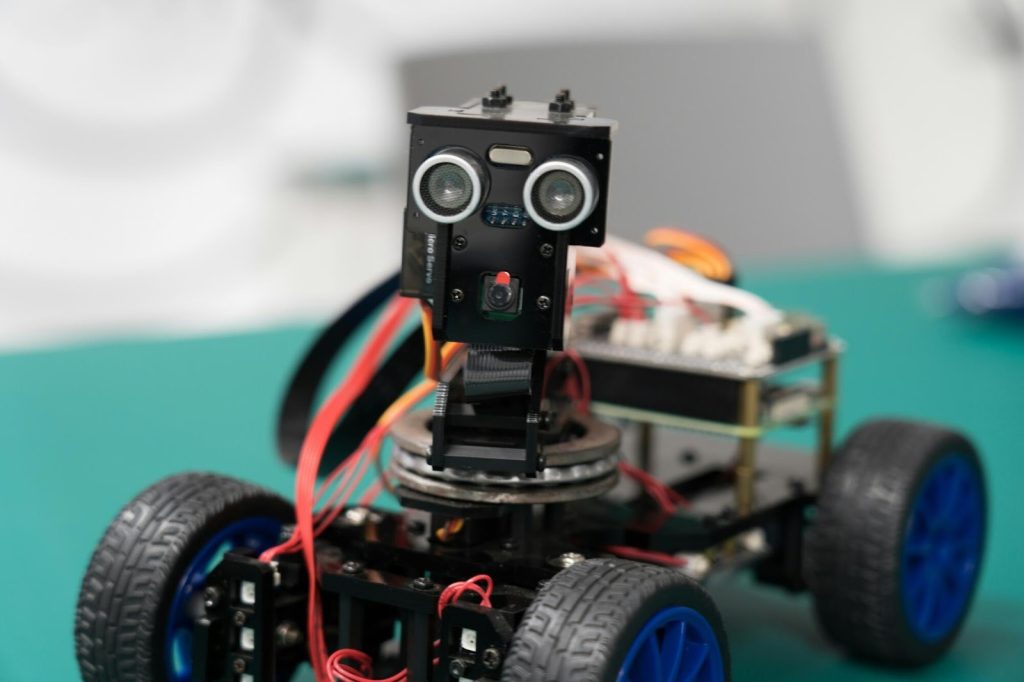
What draws a young mind toward building its first robot? How does simple hardware spark deep interest in hands-on learning?
What role does steady practice play in shaping skill and character? Robotics kits give clear paths for gaining real-world understanding.
These tools help learners grow through calm effort and thoughtful steps. They also strengthen teamwork in ways that last. By reading this guide, readers gain a practical plan for choosing and using robotics kits that inspire confident growth in STEM.
To choose the right robotics kit, you should first know how old the learner is and what they need. Large pieces that snap together safely are good for little kids.
Kits with coding blocks, sensors, and small problem-solving tasks help older students learn faster. Some sets are mostly about structure, while others are a mix of structure and easy software. To help students make steady progress, teachers often choose kits that come with lessons already planned out.
Families like kits that let kids grow in a lot of different ways. Clear choices keep things from getting confusing and wasting time. If you pick the right kit, learning will go smoothly and be fun.
Robotics kits are made for people who are just starting, like me, or more experienced. In small steps, beginner kits teach simple ways to move and control things.
The more advanced kits have parts that are harder to code and are more complicated. With more advanced kits, you can add logic, sensors, and detailed tasks that help you form good habits. This is done so that everyone on the team can contribute.
Learners naturally gain confidence as they make progress at a slow and steady rate. In order to avoid confusion, moving too quickly is not recommended. Getting the right kit for your skill level is important for long-term success.
You can learn about mechanics through simple building projects that come with most robotics kits. By using gears, wheels, and levers over and over again, you get good at them. We can learn about motion and why parts need to be carefully put together by building small machines.
Students get a solid sense of structure by learning how the pieces fit together. Lifting, turning, or rolling are simple things that teach us more about balance and force. Teams often look at different designs to see which one works best for them.
Testing out small changes teaches you to be patient and follow through. A solid understanding of mechanics is the foundation for further study.
When a robot follows clear instructions, it's easier to code. There are a lot of kits that use block-based systems that help kids learn right away. Robots move, stop, or react by following simple steps.
Sensors give us ideas about how machines can react to things like sound, light, and distance. Coding teaches you to be organized, plan, and think carefully.
When coding steps are clear and calm, teams can talk to each other better. Giving kids tasks to do one at a time helps them stay on task. Coding stops being a challenge and turns into a useful tool.
Robotics kits are a great way to teach kids how to work together and share responsibility. As a team, you learn how to split up tasks like testing, building, wiring, and building. Each member feels like they have a purpose and are valuable when they know what their role is.
A calm conversation helps keep things clear and avoids mistakes. Kits made for groups help people work together and respect each other. When teams work together to solve small problems, they need to be patient.
Meetings to plan help everyone stay on track. These habits help with later schoolwork and projects in the real world, where working together is very important.
Competitions offer young innovators a chance to test their skills in an exciting but orderly way. Events encourage teams to build sturdy, dependable robots. Clear rules keep contests fair and steady.
Practice sessions teach teams to refine both structure and code. Judges often reward teamwork and respect as much as technical skill. Simple kits help first-time teams enter without stress.
A helpful example appears when early builders explore an FTC starter bot as a beginning step. These events guide learners toward discipline, preparation, and healthy competition.
Robotics kits allow children to express ideas through shape, form, and motion. Learners try different frames, arms, and layouts to create useful solutions. Teams often sketch designs before building to clarify their plans.
Comparing choices helps students understand multiple approaches. Creative exploration grows stronger when tools are simple and reliable. New ideas often arise from small changes and quiet thinking.
Kits that welcome customization help imagination grow. Gentle guidance keeps creativity grounded while still allowing fresh solutions.
Safety stands at the center of all robotics work. Learners must handle tools and parts with patient care. Adults should check wiring, motors, and batteries before testing.
Clean work areas help prevent accidents and missing parts. Clear instructions keep each task steady and predictable. Kits that meet strong safety standards give families confidence.
Teams learn to respect boundaries while still exploring freely. Good habits learned early carry forward into later engineering tasks. Safety builds discipline that supports every stage of learning.
Robotics kits are a great way to get started in school or a career. Math, physics, and engineering are all naturally linked to building skills. Coding tasks are related to learning computer science and how to solve problems.
Teams that practice regularly gain confidence for larger, more technical challenges. Advanced kits lead learners toward tools used in real industries. Teachers and parents observe growth not only in skill but in character.
Long-term progress develops through calm persistence. These early steps form stable foundations for future innovators.
Kids learn by building robots with their own hands, practicing regularly, and being given clear instructions. Using these tools, kids can confidently move from easy steps to a deeper understanding.
By working together on projects, you can improve your discipline, communication, and sense of purpose. Creative thinking happens when students build strong foundations for new ideas.
Real-life skills can be practiced in contests and group challenges. Each building encourages interest in STEM subjects. Without good robotics kits, progress is slow and pointless.
Did you like this guide? Great! Please browse our website for more!
 Supriyo Khan
 Supriyo Khan
 Supriyo Khan
 Supriyo Khan

Want to add a comment?