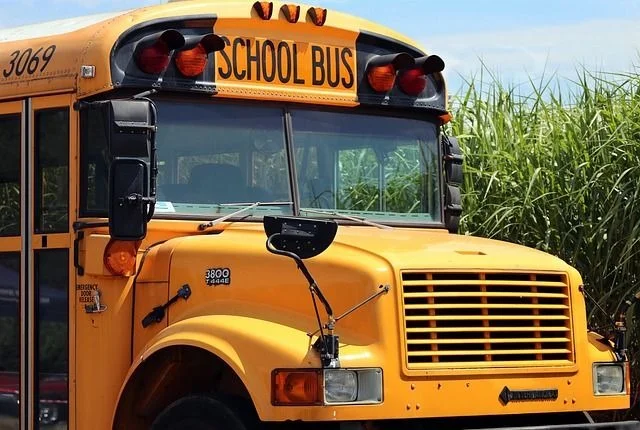
When parents hear about a school bus rollover, like the recent ones in Texas and Oklahoma, many wonder why buses don’t have seat belts. The reality is that while school buses are among the safest ways for children to travel, most do not come with seat belts. Only a handful of states require them, and the laws are far from consistent. The debate resurfaced again because of the School Bus Safety Act currently before Congress.
School buses are designed with strong frames and high-backed seats to protect children in most crashes. This design, called “compartmentalization,” has been the federal standard for decades. While effective in many collisions, it does little in rollovers or side impacts. That is where seat belts matter.
Advocates say three-point belts, like those in cars, prevent children from being thrown around during serious crashes and improve behavior by keeping them seated. Critics argue that retrofitting costs thousands of dollars per bus and could strain budgets.
Only nine states currently require seat belts on buses. Among them are some of the most populous:
California requires three-point seat belts on all new school buses purchased after 2005, making it one of the strictest states for school bus safety.
Texas passed a seat belt law in 2017 for new buses. However, some school districts lack the necessary funding to upgrade their fleet, meaning many buses have still not been equipped with them.
Florida requires seat belts, but older buses without them remain in service, and enforcement is uneven.
New York requires lap belts, but school boards decide if students must wear them. This means rules vary widely.
New Jersey updated its law in 2018 to require lap and shoulder belts in all buses, making it one of the strongest laws in the country.
Other states with requirements include Arkansas, Louisiana, Nevada, and Connecticut.
The School Bus Safety Act of 2025 would set a new national standard. If passed, it would require all new school buses to include three-point belts, along with other safety features like fire suppression systems and automatic braking.
For now, whether a child rides a bus with seat belts depends on where they live. Even in states with seat belt laws, older buses may not be equipped.
It is also important to note that most school bus injuries happen not inside the bus but when children are getting on or off. Illegal passing by other drivers is a major danger nationwide. Seat belts add protection, but the broader safety picture also must include strict enforcement of traffic laws and safe practices at bus stops.
When serious accidents do happen, parents often feel overwhelmed and unsure of what to do next. “If your child suffers serious injuries in a school bus accident, it is crucial to contact an experienced school bus accident attorney right away,” says attorney J.J. Dominguez of The Dominguez Firm. “They can protect your child’s rights and help you pursue the justice and compensation you deserve.”
The conversation surrounding school bus seat belts is sure to continue. California and New Jersey have already enacted regulations, and federal lawmakers are considering nationwide standards. Parents and communities continue to push for safer buses, and with recent high-profile crashes drawing attention, the issue is firmly on the national agenda.
 Supriyo Khan
 Supriyo Khan
 Supriyo Khan
 Supriyo Khan

Want to add a comment?