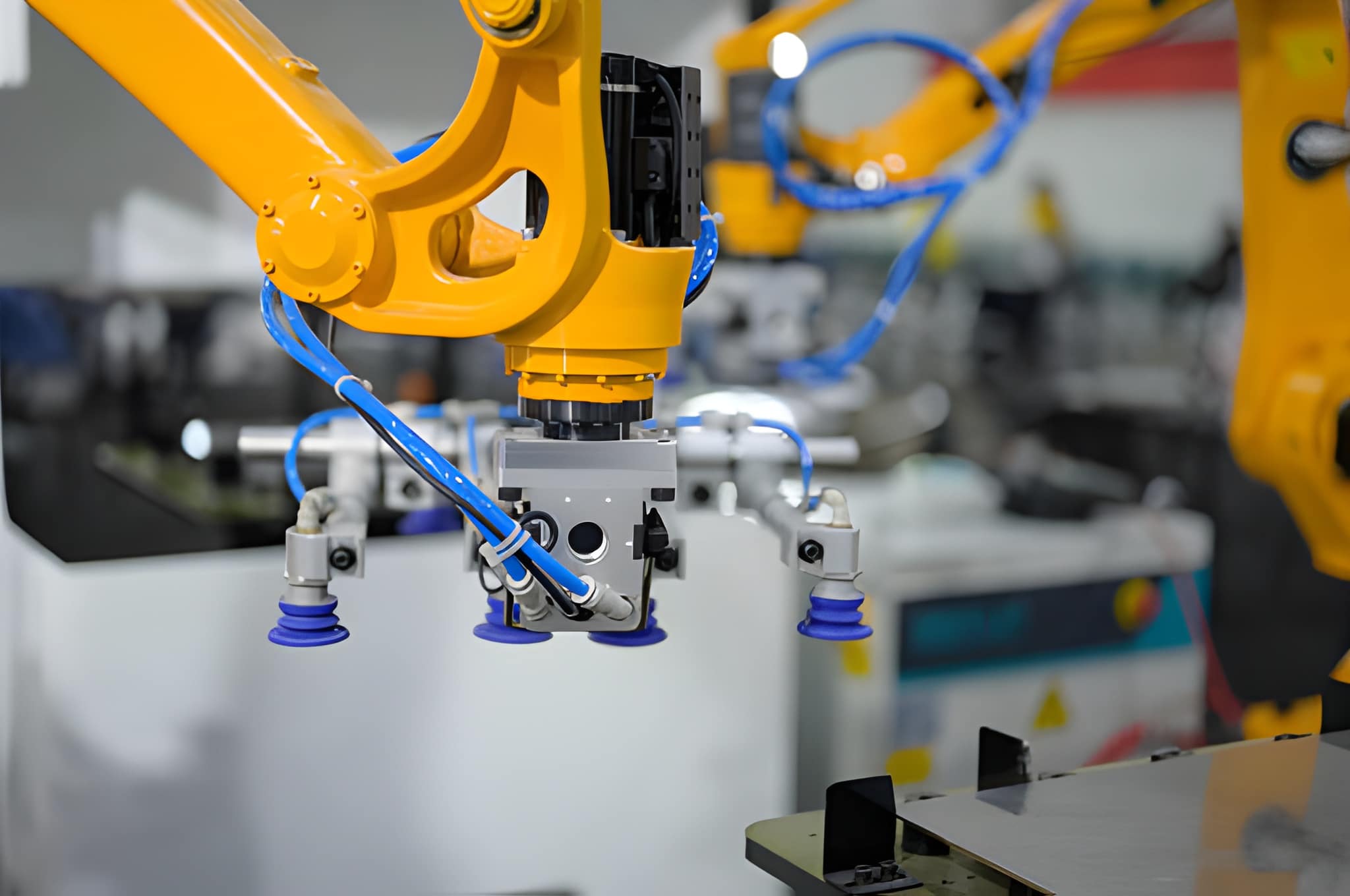
Walk into any modern manufacturing floor today and you’ll see robots doing everything from lifting sheets of metal to stacking parts with unbelievable speed and accuracy. But behind all that smooth movement, there’s one component doing the real gripping work, the magnet gripper. It doesn’t matter how advanced the robot is… if it can’t pick anything up reliably, it’s just an expensive machine waving in the air.
That’s where magnetic gripping technology has stepped in and completely changed the way industries handle ferromagnetic materials. Whether it’s thin metal sheets, rough castings, small precision components, or heavy industrial parts, magnetic grippers offer a level of simplicity, reliability, and holding force that mechanical grippers often struggle to match.
So, what exactly is a magnetic gripper, how does it work, and why are so many industries switching to these smarter gripping systems? Let’s break it down, in a simple, real-world way, to understand the rising importance of magnetic gripper in robotics and industrial automation.
A magnetic gripper is a robotic end-of-arm tool that uses magnetism to lift, hold, and move ferromagnetic materials. Unlike conventional grippers that squeeze objects using mechanical force, a magnetic gripper simply attracts the component through a magnetic field.
This makes it ideal for:
Sheet metal handling
Pick-and-place operations
Handling delicate surfaces without leaving marks
Lifting heavy or irregular objects
Automating welding, stamping, or assembly operations
The big advantage? There’s no need for clamping pressure, no need to perfectly align jaws, and no risk of damaging the part’s surface.
A magnetic robot gripper is basically a smarter “contact-free” holding solution that adapts incredibly well to modern automation needs.
At the heart of every magnetic gripper, whether it’s a permanent magnet gripper or a more advanced electro permanent magnet gripper, lies one simple principle:
Magnetic fields attract ferromagnetic materials.
But the engineering behind these devices is far more sophisticated. Here’s how they work in practice:
A magnetic field is generated by the magnet inside the gripper.
This field passes through the metal surface of the object.
The gripper attaches itself to the workpiece without mechanical pressure.
When it’s time to release the part, the magnetic field is either disabled or redirected.
That’s it. No friction pads, no gripping jaws, no elaborate closing mechanisms. Just clean, steady holding force based on magnetism.
But depending on the type of technology used, the way the magnet engages and disengages can be very different.
Industrial environments don’t use a single type of magnetic gripper. Different applications call for different technologies. Here are the most common ones:
Advantages:
Energy-free operation
Simple design
Extremely reliable
High holding force
Limitations:
Releasing the part often requires a mechanical action or magnetic shunting
Less suitable for rapid pick-and-drop cycles
Permanent magnets are great when power reliability is a concern or where energy savings matter.
The electro permanent magnet gripper is the modern evolution of magnetic gripping systems. It uses a combination of permanent magnets and controlled electric pulses.
Here’s how it works:
A short electric pulse activates or deactivates the magnetic field.
Once activated, no power is needed to maintain the hold.
Another pulse releases the part.
These grippers combine the best of both worlds, high safety and zero energy consumption during holding.
Advantages:
Extremely energy-efficient
No risk of dropping parts during power failure
Perfect for fast robotic applications
Very strong holding force
No residual magnetism problems when engineered well
Electro-permanent grippers are quickly becoming the preferred option in industries using smart automation.
Pros:
Fast switching
Adjustable holding force
Good for variable load handling
Cons:
Needs constant power
Risk of dropping parts during power loss
For safety-critical applications, industries often prefer electro-permanent versions instead.
Mechanical grippers absolutely have their place, especially for non-metallic items. But when handling sheet metals, semi-finished steel components, or stamped parts, magnetic grippers win for several reasons:
Because of their reliability and versatility, magnetic grippers have found their way into numerous industries:
In all these sectors, the magnetic gripper continues to show its strength, literally and figuratively.
A magnetic gripper in robotics is more than just a holding tool, it’s a key enabler of fast, automated workflows.
Robots love magnetic grippers because:
There’s no need for complicated sensing to determine grip success
Cycle times drop drastically
They allow robots to handle both heavy and delicate components
They integrate seamlessly with EOAT systems
They support high-speed, repetitive motions without failure
And in collaborative robotics (cobots), magnetic grippers bring an extra level of safety since there are no crushing jaws that could harm workers.
When talking about precision gripping technology, Schunk India is always part of the conversation. Known globally for their advanced automation and workholding systems, their magnetic grippers stand out because of:
High stability
Reliable performance
Long service life
Engineering precision
Safety-certified designs
Compatibility with multiple robotic systems
Schunk’s innovations in electro permanent magnet gripper technology have improved both speed and energy efficiency across automation lines.
Though magnetic grippers are incredibly useful, they’re not perfect for every scenario. Some challenges include:
They only work on ferromagnetic materials
Very rough or uneven surfaces reduce holding force
Thin metal sheets may “peel” under fast motion
Excessive heat can demagnetize some magnets
Residual magnetism can be an issue in some applications
However, most of these challenges can be managed by selecting the correct type of magnetic gripper and configuring the system properly.
To select the right magnetic robot gripper, consider:
Type of metal being handled
Thickness and surface quality
Required holding force
Robot speed and acceleration
Safety factors
Energy requirements
Whether power failure safety is critical
Integration with your existing automation
In high-speed automation lines, an electro permanent magnet gripper is usually the most reliable choice. For simpler operations, a permanent magnet gripper can work perfectly and cost less.
Magnetic gripping is moving towards:
Smarter sensing and feedback
Adjustable magnetic force
Low-residual magnetism technologies
Advanced safety switching
Lightweight modular designs
Full integration with AI-enabled robots
As automation keeps growing, the importance of magnetic grippers is only going to rise.
A magnetic gripper might look simple, but it plays a powerful role in modern automation. Whether it’s a magnetic robot gripper, a heavy-duty permanent magnet gripper, or the more advanced electro permanent magnet gripper, these systems bring unmatched stability, safety, and efficiency to industrial workflows.
From automotive plants to CNC shops and from welding robots to assembly lines, magnetic gripping technology is now a staple of the industrial automation world, and companies like Schunk India are pushing this innovation even further.
With a strong grip, zero surface damage, lower maintenance, and lightning-fast cycle times, magnetic grippers are transforming manufacturing one pick-and-place at a time.
 Supriyo Khan
 Supriyo Khan
 Supriyo Khan
 Supriyo Khan
Want to add a comment?