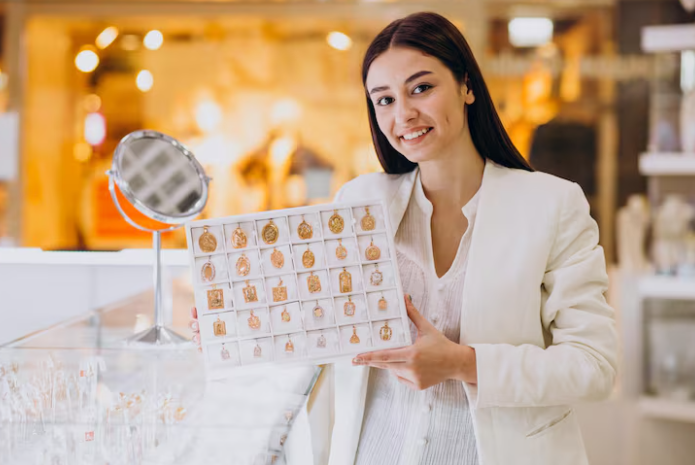
The drawer sticks. You tug harder. It finally gives, revealing a chaotic pile of chains, single earrings, and that one bracelet you swore you’d fix three years ago.
You pause.
“Is any of this actually worth something?”
Short answer: yes. Longer answer? Probably more than you think.
There’s a quiet lie we all tell ourselves: I might wear that again someday.
You won’t.
That tangled gold necklace? Retired. The broken clasp ring? Done. The lone earring waiting for its soulmate? It’s not happening.
And here’s the twist, while it’s sitting there doing absolutely nothing for you, it’s still tied to real market value. Gold doesn’t care if it’s trendy. Or broken. Or ugly. It just is valuable.
According to data from the U.S. Geological Survey (USGS), gold has remained a consistent store of value over time, especially when everything else feels unstable. Translation: your drawer clutter is quietly outperforming some investments.
Not bad for something you forgot existed.
You might love that bracelet. A buyer won’t.
They’re looking at three things:
Weight
Purity
Current market price
That’s it. No bonus points for emotional attachment or “but it was expensive when I bought it.”
Check for stamps, 10K, 14K, 18K, 24K. These tiny markings carry big meaning. Higher karat = more gold = more money.
No stamp? No problem. Most serious buyers will test it anyway.
Yes, gold prices fluctuate. Yes, you could wait for the perfect peak.
But let’s be real, are you going to track commodity charts daily? Probably not.
Here’s the smarter approach:
If prices are relatively strong (and they often are during uncertain economic periods), that’s usually “good enough.”
Waiting for perfection often means… not selling at all.
This is where things get interesting.
Pawn shops? Fast, but often lower payouts.
Local jewelers? Hit or miss.
Online gold buyers? Surprisingly competitive.
Why? Lower overhead. More specialization. Less guesswork.
If you’re planning to Sell Your Gold, working with a focused buyer can make a noticeable difference in what lands in your pocket. These platforms deal in volume and precision, they’re not trying to resell your necklace; they’re valuing the metal itself.
And that usually works in your favor.
First offer? It’s a starting point. Not the finish line.
Getting two or three quotes changes the dynamic. Suddenly, you’re not just accepting, you’re choosing.
And here’s a small but important detail:
A trustworthy buyer will explain their math. Weight × purity × market rate. Clean. Transparent. No weird dodging.
If it feels vague, it probably is.
Some buyers advertise high payouts… then quietly subtract fees.
Refining fees. Shipping fees. “Processing” fees. It adds up.
Others bake everything into one clear offer. No surprises. No deductions later.
Guess which one usually pays better in the end?
Exactly.
This is the part no one talks about.
You pick up a piece. You remember where you got it. Who gave it to you. A version of yourself you barely recognize now.
And suddenly, selling it feels… weird.
But here’s a thought: value doesn’t disappear when you let go of the object. It just changes form.
Cash is flexible. Useful. Immediate.
That necklace sitting in a drawer? Not so much.
Unused jewelry is one of the easiest “hidden wins” people overlook.
No extra work. No new investment. Just converting something idle into something useful.
So yeah, maybe it starts with a stuck drawer and a pile of forgotten pieces.
But it ends with a decision.
Keep letting it sit… or finally make it work for you.
 Supriyo Khan
 Supriyo Khan
 Supriyo Khan
 Supriyo Khan

Want to add a comment?