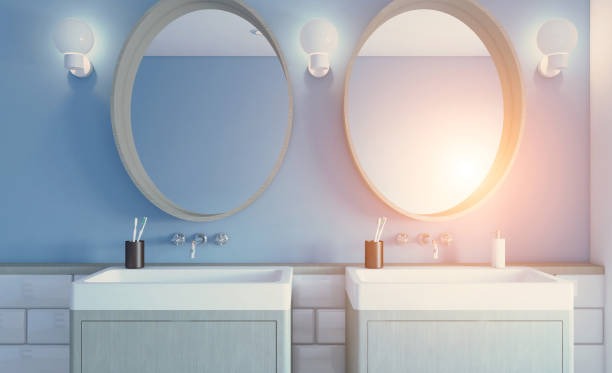
Most mornings aren’t a décor photoshoot—they’re a choreography of alarms, mirrors, and competing routines. A double sink vanity can turn that rush into a smoother flow, but only if you plan it like two coordinated workstations, not just two bowls on the same counter. Below is a practical guide built around what people actually care about: elbow room, storage that beats clutter, plumbing that doesn’t fight drawers, lighting that flatters faces at 6 a.m., and finishes that survive years of steam.
Start with behavior. Each user needs a landing area for daily items, fast-access storage at hand height, and space to move without shoulder bumps. When you design around two equal zones—rather than pushing two basins into a fixed opening—you naturally pick the right width, drawer layout, and lighting pattern.
Zone puzzle pieces to allocate for each side
A small landing patch of counter for soap, a cup, or a tray
A shallow top drawer for daily smalls (skincare, razors, flossers)
One deeper storage layer for upright bottles and heat tools
Face-height light and a clean mirror field without shadow
60 inches is a realistic starting line for two comfortable bowls with usable counter between them.
72 inches adds breathing room—and usually allows real drawer stacks on both sides.
84 inches and beyond invites a center drawer tower, a seated niche, or hampers; it also adds visual weight, which can overwhelm narrow rooms.
If you can’t hit 60 inches without squeezing the walkway, reconsider two bowls. A wide single with an offset sink and serious drawers often works better than two tiny basins that erode deck space.
Two variables define comfort: bowl size and center-to-center spacing. Aim for bowls about 17–20 inches wide and keep mid-30s inches between centers when possible. That leaves a few inches of deck on the outer sides and a neutral zone between bowls—enough space for soap without elbow conflict. Bowl depth around 11–13 inches reduces the “lean too far over the rail” effect.
What makes a shared vanity feel calm isn’t the door style—it’s storage you’ll actually use.
Shallow top drawers (one per user) are the counter’s pressure valve. If small items have a home, the deck stays quiet.
Medium/deep drawers keep bottles upright; dividers stop sliding and rattling.
Interior pull-outs behind doors rescue tall cleaners or bulk refills without wasting volume.
Full-extension, soft-close hardware lets you see the back without unloading the front, making a modest footprint feel bigger.
If heat tools are daily, consider an interior outlet with a cord pass-through so cords don’t snake across wet bowls.
A double setup adds a second trap and twice the shutoff valves—exactly where top drawers want to travel. Plan rough-ins on paper before you order cabinets.
Align each trap to its bowl and specify U-notched top drawers.
Set shutoffs slightly lower and wider than in single-bowl layouts to clear drawer paths.
Use rigid drain parts (not accordion flex) to hold slope, reduce buildup, and preserve drawer space.
Freestanding is forgiving on imperfect floors and conceals plumbing neatly. A toe-kick protects lower finishes from mop water.
Floating (wall-mounted) opens the floor visually and simplifies cleaning. It demands solid wall blocking and careful trap height so nothing peeks below the bottom plane.
Good light is part of ergonomics. Two reliable strategies work in real bathrooms:
Vertical face-height lights flanking each user’s mirror zone for shadow-free grooming.
One broad, even source over a full-width mirror when side sconces won’t fit.
A mirror just wider than the cabinet softens side boundaries and makes zones feel generous. Place GFCI outlets so cords don’t cross bowls; stash an outlet inside a drawer if heat tools live there.
Finishes That Survive Steam
Bathrooms behave like micro-saunas. Longevity depends as much on edge protection as on material labels.
Carcass (box): Furniture-grade plywood resists sag and holds fasteners when all raw edges are sealed.
Faces (doors/drawers): Solid wood brings warmth and allows touch-ups; paint-grade MDF yields crisp profiles if edges and panel rails are fully sealed.
Seal the unseen: Back panels, sink cutouts, and plumbing notches should be finished before the top goes on.
Counter interface: A thin, tidy silicone bead under the front counter lip acts like a micro drip rail, stopping water from wicking under finishes.
Ventilation habit: Run the fan during showers and 15–20 minutes after; stable humidity = smoother drawers and longer-lived coatings.
Size and Spacing Cheat Sheet (Print-Friendly)
One Numbered Plan to Get It Right the First Time
Define two zones on paper. Allocate landing areas and a top drawer per user before you shop.
Pick a width band. If 60 inches is comfortable, start there; if not, revisit whether two bowls make sense.
Choose depth. Reduce to 19 inches only if circulation is tight; otherwise keep volume at 20–21 inches.
Lock bowl sizes and spacing. Target 17–20 inch bowls with mid-30s inches center-to-center to preserve deck.
Decide symmetric vs. asymmetric. Offset a bowl if one user needs a full drawer stack.
Commit to mount style. Floating needs wall blocking and exact trap height; freestanding forgives floor irregularities.
Map rough-ins. Place traps under bowls; set shutoffs lower/wider to clear U-notched drawers.
Specify storage hardware. Full-extension slides, soft-close hinges, and dividers to prevent counter creep.
Design light + mirror + power. Face-height verticals or a wide even source; add an interior outlet where tools live.
Seal and dry-fit. Finish all unseen edges first; test drawer travel with valves open/closed before finalizing drains.
Make a Double Feel Bigger Than It Measures
A few design choices lift the whole station: long vertical pulls that are easier with damp hands and visually slim drawer stacks; continuous flooring beneath a floating cabinet to stretch the room; mirrored storage recessed between studs to add capacity without stealing deck; and organizers installed day one, not “later.”
The promise of a double sink vanity isn’t just two basins—it’s two predictable, low-friction stations. If you give each person a defined zone, keep elbows apart with smart spacing, make drawers and plumbing allies instead of enemies, and protect every unseen edge against moisture, your vanity will quietly do its job for years. The result is a calmer morning, a cleaner counter, and a bathroom that feels intentionally designed around real life.
 Supriyo Khan
 Supriyo Khan
 Supriyo Khan
 Supriyo Khan

Want to add a comment?