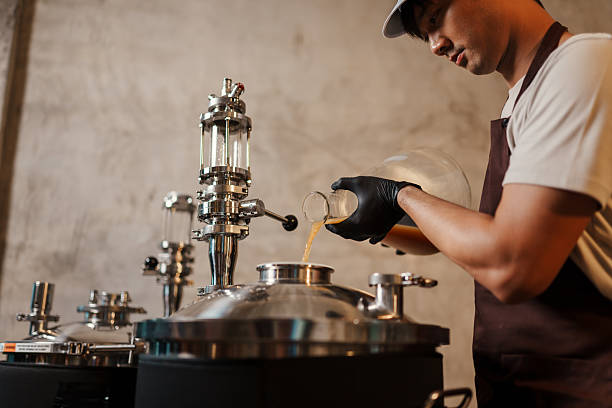
The production of alcoholic beverages is an ancient craft that has evolved into a sophisticated blend of art and engineering. For those looking to enter the industry, a common question arises: what is the actual difference between the machinery used to make beer and the machinery used to make spirits? While both processes rely on the fermentation of sugars, the paths they take to reach the final product are distinct, requiring specialized equipment designed for very different physical and chemical outcomes.
Understanding these differences is essential for anyone planning to open a "brewstillery"—a hybrid facility that produces both—or for the curious enthusiast wanting to know how their favorite drinks are made. This article explores the nuances of distillery and brewery equipment, the shared infrastructure between them, and the technical requirements that set them apart.
To understand the equipment, one must first understand the process. Brewing is essentially a biological process. It involves extracting sugars from grains (usually malted barley) to create a liquid called wort, which is then fermented by yeast to produce alcohol and carbon dioxide. The goal is to create a beverage with a relatively low alcohol content (typically 3% to 12%) where the flavor is derived from the grains, hops, and yeast.
Distilling, on the other hand, is a physical separation process. It begins where brewing (or winemaking) ends. A distiller takes a fermented liquid—often called a "wash" or "distiller's beer"—and heats it to separate the alcohol from the water and solid matter. Because alcohol has a lower boiling point than water, it vaporizes first. This vapor is then cooled and condensed back into a liquid, resulting in a much higher alcohol concentration, often ranging from 40% to over 90% alcohol by volume (ABV).
Because the goals are different—one to keep the liquid as is, the other to vaporize and re-condense it—the equipment design diverges significantly after the fermentation stage.
A professional brewery is designed to handle large volumes of liquid and solid organic matter. The equipment must facilitate the conversion of starches to sugars and the boiling of the resulting liquid with hops.
The journey begins in the brewhouse. The Mash Tun is a vessel where crushed grains are mixed with hot water. This requires precise temperature control to activate enzymes that convert grain starch into fermentable sugar. In many craft setups, the mash tun is combined with a Lauter Tun, which features a false bottom. This allows the liquid wort to be strained away from the spent grain husks.
Once the wort is collected, it moves to the Brew Kettle. Here, the liquid is brought to a vigorous boil. This stage is critical for sterilizing the wort, concentrating the sugars, and extracting bitterness and aroma from hops. Brewery kettles are often designed with "steam jackets" to provide even heating without scorching the sugars.
After boiling, the wort must be cooled rapidly before yeast can be added. This is usually done via a Plate Heat Exchanger. The cooled wort then enters Fermenters—typically stainless steel, conical-bottomed tanks. These tanks are jacketed for glycol cooling, as fermentation is an exothermic process that generates heat, which can ruin the flavor profile of the beer if not managed.
After fermentation and maturation, beer is often moved to a Bright Tank (or Brite Tank). This is where the beer is carbonated and clarified before being sent to a bottling, canning, or kegging line.
While a distillery may use a "brewhouse" to create its initial wash, the heart of the operation is the still. Distillery equipment is built to handle high heat, vapor pressure, and flammable high-proof alcohol.
The Pot Still is the traditional choice for making flavorful spirits like whiskey, rum, and brandy. It consists of a large kettle (the pot) where the wash is heated. The vapors rise into a "swan neck" and then through a "lyne arm" before reaching the condenser. Pot stills are almost always made of copper, which plays a chemical role in removing sulfur compounds from the spirit, resulting in a cleaner taste.
For high-volume production or neutral spirits like vodka and gin, a Column Still (or Continuous Still) is used. These are tall, vertical structures containing multiple "plates." As vapor rises and liquid falls through these plates, multiple mini-distillations occur simultaneously. This allows the distiller to reach extremely high purity levels in a single run.
The Condenser is where the magic of "turning vapor back to liquid" happens. This is typically a tube-and-shell heat exchanger where cold water flows around tubes carrying the hot alcohol vapor. The resulting liquid then passes through a Spirit Safe—a locked glass-walled container that allows the distiller to observe and measure the "cuts" (heads, hearts, and tails) without having physical access to the untaxed high-proof spirit.
Interestingly, there is a massive overlap in the "cold side" of production. If you are starting a distillery that uses grain (like whiskey or vodka), you essentially need a brewery to make the wash.
Grain Handling: Both require mills to crush grain and silos or augers for storage and transport.
Boilers: Both require heavy-duty steam boilers to provide heat for boiling or distilling.
Fermentation: While distillers often use open-topped fermenters, many modern craft distilleries use the same stainless steel conical fermenters found in breweries.
Cleaning Systems: Clean-In-Place (CIP) systems are universal. Sanitation is just as important in preventing "off-flavors" in a distillery wash as it is in a finished IPA.
The most visible difference between the two is the use of Copper vs. Stainless Steel. Breweries are almost exclusively 304 or 316-grade stainless steel because it is durable, easy to clean, and does not react with the acidic wort. Distilleries use a mix. While the tanks can be stainless, the stills themselves (or at least the internal components) must be copper to catalyze the removal of foul-smelling sulfur.
Safety is another major divergence. A brewery is relatively safe from a fire perspective; you are boiling sugar water. A distillery, however, is dealing with concentrated ethanol vapors. This requires:
Explosion-proof (Intrinsically Safe) motors and electronics.
Advanced ventilation to prevent the buildup of flammable fumes.
Strict fire suppression systems specifically designed for alcohol fires.
Navigating the complexities of equipment selection can be daunting, but Micet provides world-class solutions for both industries. Whether you are looking to set up a boutique craft brewery or a high-capacity industrial distillery, Micet offers custom-engineered systems that prioritize efficiency, durability, and ease of use. Their equipment is manufactured using premium stainless steel and high-grade copper, ensuring that your product meets the highest standards of quality and safety.
By choosing Micet, you gain a partner with deep technical expertise in both brewing and distilling. They provide end-to-end support—from initial design and layout planning to installation and post-purchase maintenance—making them the ideal choice for "brewstilleries" looking for a unified equipment solution.
1. Can I use my existing brewery equipment to start a distillery? Yes, much of it! You can use your grain mill, mash tun, and fermenters to create the "wash" for your spirits. However, you will need to add a still, a condenser, and specialized high-proof storage tanks. You must also ensure your facility meets the much stricter fire and safety codes required for handling flammable alcohol vapors.
2. Why is copper so important in distillery equipment but not in breweries? Copper is essential in distilling because it reacts chemically with sulfur compounds produced during fermentation. These compounds can smell like rotten eggs or burnt rubber. The copper "scrubs" these out of the vapor. In brewing, these compounds are often managed through long boils or yeast selection, and because the beer isn't concentrated through evaporation, the need for copper's catalytic properties is less critical.
3. Does distilling take longer than brewing? The actual process of distilling a batch (the "run") usually takes a few hours to a day. However, the total production time for spirits is often much longer because of aging. While a beer might be ready in 2 to 4 weeks, a high-quality whiskey or rum may sit in oak barrels for several years to develop its flavor profile and color.
 Supriyo Khan
 Supriyo Khan
 Supriyo Khan
 Supriyo Khan

Want to add a comment?