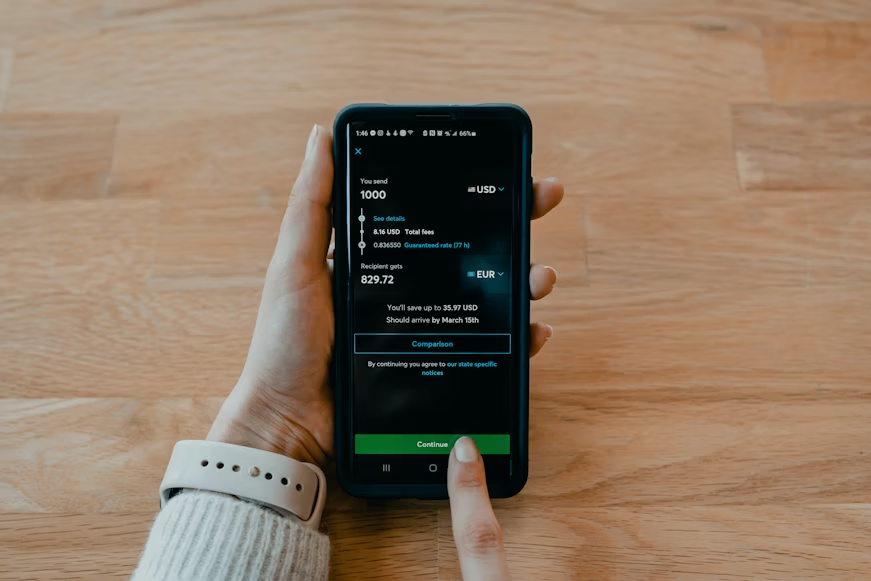
International money transfers are bigger business than most people realise.
Global remittance flows reached an estimated $905 billion in 2024. (That's up 4.6% year-on-year.)
That is more money than ever crossing borders every single year.
And yet…
Most people still use the wrong service to send it. They lose money on poor exchange rates, hidden fees, and lengthy transfer times they never even saw coming.
Whether paying an overseas supplier, supporting loved ones abroad, or trying to figure out how to send money to Mexico for the first time — choosing the right international money transfer service can save you hundreds of dollars every year.
Here's exactly how.
If you're in a rush, here are the key takeaways from this guide:
Why the right international money transfer service matters
The 5 traits of a great transfer service
Exchange rates vs fees — which matters more?
How to spot a safe & legitimate service
Common mistakes to avoid
Believe it or not, not all international money transfer services are created equal.
Some of them will charge you (a lot) more than others for the exact same transfer. And the difference is due to a handful of key factors — none of which most people consider before clicking "send."
Here's the bottom line
Sending money internationally with the wrong provider can:
Cost you more money
Cause delays
Worry loved ones who need the money
Result in all kinds of headaches you can avoid
With just a few minutes of research you can make sure none of the above happens.
Let's talk about the specifics.
Here are the five things to look for when comparing international money transfer providers:
The most important factor when comparing money transfer services is the exchange rate.
Money transfers providers make most of their money on poor exchange rates. Unless they state EXPLICITLY what exchange rate they are using and charge fees separately, they are taking a cut from your transfer — and not telling you about it.
Even if the fee is "free", you're still paying for it — with a worse exchange rate.
Always check what exchange rate is being used, and compare it to the mid-market rate. The mid-market rate is the real exchange rate you'll see if you search Google for it. If the provider isn't offering this, keep looking.
If an international money transfer service does offer the mid-market exchange rate, chances are they make their money on fees. Make sure any fees are clearly disclosed upfront — never in the fine-print.
Here's an example of what we mean:
Service A offers a mid-market rate with a $5 fee
Service B offers a 2% worse rate but doesn't charge any fees
On a $500 international transfer, Service B is actually charging you $10 extra for the worse rate. Do the math yourself next time and you'll see what we mean.
Speaking of fees…
Go with your gut on whether you prefer transparent fees (even if they cost a little more) or cheaper rates with less-than-honest fee structures.
But always calculate the total cost — fees + exchange rate combined.
Rarely is either better across all scenarios.
How long does the transfer take?
Need it to arrive today? Tomorrow? By the end of the week?
Send money between some countries with a bank wire and it could take 3–5 business days. Send it with one of the many specialist providers that exist today and you can get it there within minutes.
The transfer speed definitely matters if someone is relying on you to send money for a specific purpose.
Not every money transfer service supports every country or currency.
They are super great at sending money to Europe? Fantastic.
But what about fees and rates for Latin America? Africa? Parts of Asia?
Do your homework and double-check your country & currency is supported before committing.
If it seems too good to be true… it probably is.
If you're not sure whether an international money transfer service is safe to use, you can always double-check whether or not they are regulated by the financial authorities in their country of origin.
In the United States, that means checking they are registered with FinCEN.
In the UK, that means ensuring they are authorised by the FCA.
If they can't prove this to you — keep looking.
Here's a common mistake that trips up many people.
Most people only look at fees.
Yet as you've already seen above… most providers make the majority of their money on hidden fees buried within the exchange rate.
Here's a quick example.
Say you have $1,000 you want to send internationally.
Service A charges you a $5 fee, but adds 2% on top of the exchange rate.
Service B charges you $10, but doesn't markup the exchange rate in any way.
Service B wins here — even though the fee was actually higher.
Don't fall into this trap next time you need to send money internationally.
Research has found that digital remittances cost 5% on average globally, compared to 7% for non-digital transactions.
That doesn't sound like much right? What's 2% on a $100 transfer?
How about $200?
Regardless of what country you are in, there are certain tell-tale signs of a safe money transfer provider.
Before sending with any international money transfer service, check:
Regulatory Registration. Worldwide there are countless quasi-legitimate providers flying under the radar. Always double-check a provider is regulated by asking to see proof of registration or authorisation by the country's financial authority.
Transparent Pricing. All fees & costs should be visible BEFORE you pay. No surprises.
Strong Reputation. Look for reviews elsewhere on the internet. Not just on the provider's website. If it's only been reviewed once by some guy called Peter who doesn't have a profile photo… keep searching.
Secure Technology. Two-factor authentication. Encryption. Robust fraud monitoring. These are table stakes in 2024. If a provider doesn't offer them, find another service.
Yet despite how simple these checks are, millions of people skip them entirely. Don't be one of them.
While we're on the topic of mistakes, here are a few more to avoid when sending money abroad:
Sending money using your bank as default. Did you know that unless you live in the Eurozone, sending money using your bank is almost NEVER the best option? Swap banks for a dedicated international transfer service and you will immediately see better rates and lower fees.
Ignoring the exchange rate. Most do this. But as we showed you above, this is where providers make their money. Avoid it.
Not comparing multiple providers. Opening up XE.com (or your favourite provider) and sending right away is guaranteed to cost you more. Take the time to compare.
Transfer Speed. Expecting your money to arrive when it can't. If a provider says "3–5 business days" but you need it today… don't send. Simple.
Any one of these can cost you more money than you just saved.
Avoid them all by creating a quick process for yourself and sticking to it.
Choosing the best service for sending money internationally comes down to four key things:
The exchange rate
The total fees charged
Transfer Speed
Is the provider properly regulated?
Pretty simple stuff.
But by spending 5 minutes comparing which service is best before every transfer, you will save real money — every time.
And with billions of dollars being sent internationally every day, you have more options at your fingertips right now than ever before.
Want a quick reminder of what we covered? Here goes.
When choosing a money transfer provider:
Check the mid-market exchange rate and compare
Calculate the total cost (fee + exchange rate)
Confirm the transfer speed meets your needs
Double check the provider is regulated in their country of origin
Look for independent reviews
Now get out there and save some money!
 Supriyo Khan
 Supriyo Khan
 Supriyo Khan
 Supriyo Khan

Want to add a comment?