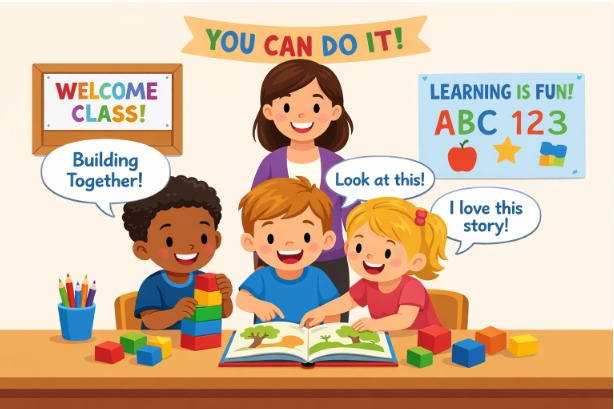
Key Takeaways:Early childhood education (ECE) is crucial for cognitive, social, and emotional development.
Quality ECE programs enhance school readiness and future academic success.
Parental involvement and structured learning environments are key components of effective ECE.
The Critical Role of Early Childhood Education
Early childhood education shapes the foundation for a child’s lifelong learning journey. Research consistently highlights that the first five years are a period of profound brain growth and development, where children experience rapid changes in their ability to think, learn, and interact. High-quality ECE programs create nurturing, stimulating environments that foster cognitive, social, and emotional skill-building. The structured nature of these programs allows young learners to practice critical skills, develop curiosity, and build the confidence they need for future academic and personal success. For families seeking options, exploring pre k schools near me can provide valuable insights into programs that align with these goals.
Children who participate in thoughtfully designed early education programs benefit from increased exposure to language and literacy, guided play, and foundational mathematics. These experiences help bridge development gaps before formal schooling begins. The impact reaches far beyond academic knowledge; it extends to social and emotional competencies that set the stage for more successful learning later on.
As the foundation for lifelong learning is established, it is vital to recognize the influence that early educational experiences have on school readiness and later achievement. Quality ECE ensures that children not only enter kindergarten prepared but are equipped with the skills required for sustained academic performance and social adaptation.
For parents and caregivers looking for additional ways to support this crucial stage, considering local pre k programs near me gives families access to environments that nurture comprehensive development.
Cognitive Development in Early Years
The early years offer a unique window of opportunity for developing essential cognitive skills. Young brains are remarkably adaptable, forming more than one million neural connections every second. Activities such as guided storytelling, hands-on exploration, and collaborative play challenge children to think creatively, develop spatial awareness, and strengthen memory. This phase lays the groundwork for abstract thinking, language acquisition, and the capacity for lifelong analytical reasoning.
Studies highlighted by Edutopia demonstrate that children exposed to quality early learning environments are more likely to excel in reading and mathematics throughout their schooling. These academic advantages stem from early exposure to numeracy concepts, pattern recognition, and the nurturing of natural curiosity.
Social and Emotional Growth
While cognitive skills are crucial, social and emotional development is equally vital in early childhood education. Classrooms and structured activities encourage young children to develop empathy, cooperate with peers, and build conflict-resolution skills. By modeling and reinforcing positive behaviors, educators lay the foundation for emotional intelligence and adaptability.
Children gain confidence by forming relationships, taking turns, and understanding the effects of their actions on others. These characteristics help children adapt to various social situations throughout their academic and adult lives. Strong social and emotional foundations correlate with greater academic motivation and fewer behavioral challenges.
Parental Involvement: A Key Component
Parents play a pivotal role in the success of early childhood education. Regularly engaging in activities such as reading books together, discussing daily events, or playing educational games creates consistent opportunities for reinforcement and exploration beyond the classroom. This support at home not only nurtures academic development but also strengthens the parent-child relationship.
When parents are involved and invested, children develop a greater enthusiasm for learning. They are more likely to approach new experiences with curiosity and resilience, and parental modeling of positive behaviors encourages similar responses in children.
Structured Learning Environments
Consistency and structure within ECE environments help children develop a sense of security. Predictable routines and clear expectations allow children to focus on learning, exploration, and self-discovery. These environments also lay the foundation for essential life skills such as discipline, time management, and responsibility.
Thoughtful classroom design, integrated play-based learning, and responsive teaching strategies cater to various learning styles and developmental needs. Children benefit from an environment where they can safely make mistakes, explore new ideas, and practice skills at their own pace.
Long-Term Benefits of Early Education
The positive impacts of quality early childhood education extend far beyond primary schooling. Evidence suggests that children who attend strong ECE programs are more likely to perform well academically, graduate high school, and pursue higher education. In addition, they demonstrate better social skills, improved coping abilities, and greater resilience throughout life.
Longitudinal studies have found that the advantages are especially significant for children from disadvantaged backgrounds. Quality ECE investments help reduce achievement gaps, promote social mobility, and create healthier, more equitable communities.
Challenges and Considerations
While the benefits of robust early childhood education are evident, access and affordability continue to present significant barriers for many families. Socioeconomic disparities and uneven distribution of quality programs mean that some children may not experience the full range of advantages offered by ECE. Addressing these gaps requires policy solutions, community investment, and ongoing advocacy.
Additionally, the professional development of early childhood educators is crucial. Well-trained teachers with access to resources and support can deliver programs that meet the highest standards, ensuring that every child’s learning potential is realized.
Conclusion
Early childhood education forms the bedrock of lifelong learning. By focusing on cognitive, social, and emotional readiness, high-quality ECE programs help children thrive now and in the future. Expanding access and maintaining rigorous standards in early education benefits not only individual children but society at large, creating a ripple effect of positive outcomes for generations to come.
 Supriyo Khan
 Supriyo Khan
 Supriyo Khan
 Supriyo Khan

Want to add a comment?