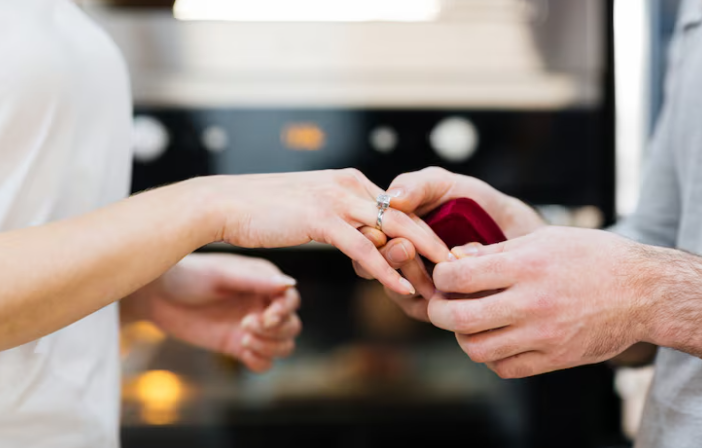
Engagement rings have long been associated with tradition, but the way people approach that tradition has shifted. Today, many couples are less interested in following a prescribed path and more focused on choosing something that reflects how they live and what they value. The engagement ring, once defined by a narrow set of expectations, has become a space for interpretation.
Within this change, alternative diamond engagement rings
have taken on a clearer role. Their appeal is not about rejecting diamonds, but
about rethinking how they are used. These rings retain the familiarity and
permanence diamonds represent, while exploring new proportions, settings and
design language that feel aligned with modern life.
This balance between continuity and change is what makes them resonate.
For many years, diamond engagement rings followed a fairly consistent visual
formula. Certain shapes, setting heights and proportions were repeated because
they were widely recognised as correct.
Alternative designs begin by questioning that assumption. Rather than asking
how closely a ring matches tradition, the focus shifts to how naturally it fits
the wearer. Comfort, lifestyle and personal taste take priority over
convention.
In this sense, alternative does not mean unconventional for its own sake. It
simply means intentional.
One of the strongest drivers behind alternative engagement ring styles is
practicality. Engagement rings are worn daily, often without pause, and design
choices increasingly reflect that reality.
Lower profiles, refined bands and thoughtful settings are common features.
These elements allow the ring to sit comfortably on the hand, integrate easily
with other jewellery and feel unobtrusive during everyday activities.
Alternative diamond engagement rings often feel easier to live with, not
because they are simpler, but because they are designed with real life in mind.
Diamonds remain central to engagement jewellery, but alternative designs
often treat them differently. Rather than focusing solely on size or dominance,
diamonds are integrated into the ring as part of a balanced whole.
Proportion becomes more important than scale. The relationship between stone
and setting is considered carefully, allowing the diamond to feel connected to
the design rather than placed on top of it.
This approach often results in rings that feel cohesive rather than
dramatic.
Alternative diamond engagement rings frequently rely on restraint rather
than embellishment. Clean lines, subtle detailing and thoughtful spacing
replace ornate decoration.
This quieter visual language does not diminish impact. Instead, it shifts
attention to balance and form. Small changes in proportion or structure can
significantly alter how a ring feels without making it visually loud.
Over time, this subtlety often feels more enduring than overt design
statements.
Many people choosing alternative engagement rings are consciously stepping
away from trend driven decisions. Rather than selecting a style because it
feels current, they are looking for something that will continue to feel right
years down the line.
Alternative designs tend to support this mindset. By avoiding obvious trend
markers, they remain adaptable as tastes evolve. The ring’s relevance is not
tied to a particular moment.
Longevity becomes part of the appeal rather than an afterthought.
Modern engagement rings are increasingly viewed as personal objects rather
than public statements. The ring is worn daily, often noticed more by the
wearer than by others.
Alternative diamond engagement rings reflect this shift. They allow for
individuality without requiring visual excess. Expression is achieved through
thoughtful design rather than scale or ornament.
This approach often feels more authentic, especially for those who value
subtlety.
The growing use of lab grown diamonds has naturally influenced alternative
engagement ring design. Their consistency and clarity support precision led
styles where balance and proportion matter.
In alternative designs, lab diamonds are often chosen for how well they
integrate into refined settings. The focus remains on cohesion rather than
hierarchy, allowing the diamond to support the design rather than dominate it.
This alignment between material and design philosophy reinforces the appeal
of alternative styles.
Because engagement rings are worn every day, they inevitably become part of
personal identity. They sit alongside clothing, routines and other jewellery,
blending into daily life.
Alternative diamond engagement rings are often chosen with this in mind.
They are designed to feel familiar rather than formal, allowing the ring to
become an extension of the wearer rather than a separate symbol.
This sense of belonging often matters more than visual impact.
Modern relationships do not follow a single narrative, and engagement rings
no longer need to follow a single visual language. Alternative diamond
engagement rings reflect this diversity.
Some designs feel minimal, others architectural. Some reinterpret classic
elements, others explore new proportions. What connects them is intention
rather than appearance.
They represent commitment without insisting on a specific aesthetic.
The increasing interest in alternative diamond engagement rings reflects a
broader cultural shift. People are choosing jewellery that aligns with how they
live now, not how they are expected to live.
By prioritising comfort, balance and relevance, these rings offer something
quietly compelling. They honour the symbolism of diamonds while allowing room
for individuality and modern values.
In a jewellery landscape shaped increasingly by intention rather than
expectation, alternative diamond engagement rings feel less like a niche and
more like a natural evolution. Rings designed not to stand apart, but to fit
seamlessly into everyday life, carrying their meaning forward with ease.
 Supriyo Khan
 Supriyo Khan
 Supriyo Khan
 Supriyo Khan
Want to add a comment?