Home /Technology /secure-access-service-edge-sase-a-comprehensive-guide
Feb 26, 2026
Secure Access Service Edge (SASE): A Comprehensive Guide
Supriyo Khan
21 views
Key Takeaways
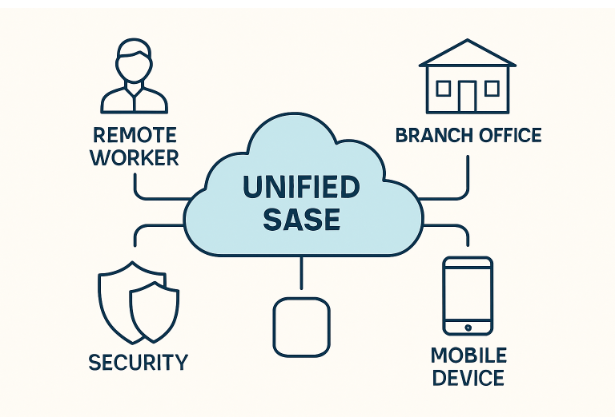
Unified Security and Networking: SASE consolidates core networking and security functions into a single cloud-delivered framework, eliminating siloed tools and fragmented management.
Built for Cloud and Remote Work: It is specifically designed to secure distributed users, devices, and applications in hybrid and multi-cloud environments.
Zero Trust at the Core: Continuous identity verification and contextual access controls significantly reduce the risk of unauthorized access.
Improved Performance and Agility: Integrated SD-WAN and intelligent routing enhance application performance while supporting business scalability.
Simplified Operations: Centralized visibility and policy management reduce administrative overhead and accelerate threat response.
Future-Ready Architecture: AI-driven automation and adaptive security controls position SASE as a long-term solution for evolving digital ecosystems.
Introduction to SASE
As organizations accelerate their adoption of cloud applications and support larger remote workforces, traditional security paradigms are proving insufficient. This shift in operations has paved the way for Secure Access Service Edge (SASE), an integrated framework that unifies networking and security under a single model. SASE is designed to secure cloud-enabled businesses, streamline operations, and simplify network management across distributed environments. Early adoption of SASE Solutions is gaining momentum as companies recognize the need for efficient, secure access to critical assets, regardless of user location.
By combining networking and comprehensive security services into a cloud-delivered solution, SASE ensures organizations have robust protection and optimized connectivity. Security functions such as Zero Trust Network Access (ZTNA) and Secure Web Gateway (SWG) are integrated with modern networking practices, reducing the challenges of managing disjointed infrastructure. Forward-thinking businesses are turning to SASE to bridge the gap between legacy abilities and cloud-first demands.
Key Components of SASE
A SASE architecture is built on several technology pillars, each of which addresses specific challenges arising from cloud adoption and remote access:
Zero Trust Network Access (ZTNA): This approach rigorously verifies user identities and device health before granting access to applications or data. By verifying every session, ZTNA minimizes the attack surface and reduces risks associated with compromised credentials.
Secure Web Gateway (SWG): SWG functions as a filter for all internet-bound traffic, blocking malicious sites, restricting access to risky or non-compliant content, and enforcing organizational security policies.
Cloud Access Security Broker (CASB): CASB enforces visibility, compliance, and data security for cloud-based resources, giving IT departments controls over data movement and access across sanctioned and unsanctioned applications.
Software-Defined Wide Area Network (SD-WAN): SD-WAN provides intelligent routing of network traffic over multiple connections, optimizing application performance and ensuring reliable connectivity for remote users and branch offices.
These core functions are unified under a cloud-centric administration layer, delivering both efficiency and resilience to evolving threats and networking requirements.
Large, decentralized networks relying on hybrid deployment strategies require robust performance and precise control, both of which are cornerstones of a strong SASE implementation. As remote work, IoT, and digital transformation initiatives continue to expand, organizations are moving toward integrated frameworks like SASE to adapt quickly and securely. According to TechTarget, enterprises increasingly recognize SASE as a must-have component of modern IT strategy.
Benefits of Implementing SASE
Embracing a SASE approach brings several operational and security advantages:
Enhanced Security: SASE consolidates multiple security capabilities (such as access controls, threat intelligence, and threat prevention) to defend against modern attack vectors, even as work environments become increasingly distributed.
Improved Performance: Integrated SD-WAN capabilities enable dynamic, optimized routing, resulting in reduced latency and improved user experience.
Scalability: As SASE is cloud-native, resources and security services can scale in accordance with business demands, supporting new users, sites, and workloads without major physical infrastructure changes.
Simplified Management: Unified control panels provide visibility into all network and security events, reducing IT team overhead and improving incident response times.
The cloud-first approach inherent in SASE solutions ensures agility, which is now essential for organizations operating globally or with significant mobile workforces.
Market Trends and Adoption
Driven by the explosive growth of smart devices, cloud adoption, and a permanent shift to flexible workplace models, the SASE market is on a steep upward trajectory. Adoption is especially pronounced among sectors that manage large-scale remote access or complex regulatory requirements, including healthcare, finance, and education. Industry leaders now view SASE as critical to future-proofing their security and connectivity strategies as business perimeters evolve and diversify.
Challenges in SASE Implementation
Despite its benefits, there are significant hurdles to implementing SASE:
Integration Complexity: Merging SASE frameworks with existing security stacks, legacy applications, and network infrastructure can require time and careful planning.
Skill Gaps: Adoption of SASE may necessitate new skills or training for IT and security staff as organizations transition to cloud-managed models.
Vendor Selection: The breadth of the SASE market means solutions can vary substantially in features, integration capabilities, and support, making vendor selection a complex decision.
Addressing these challenges effectively involves a combination of clear organizational strategy, comprehensive training programs, and choosing vendors with proven track records and flexible offerings.
Real-World Applications of SASE
Across industries, SASE is being used to unify and modernize network security strategies. NETGEAR, for example, recently unveiled a solution specifically designed for the needs of small-to-mid-sized businesses and managed service providers. Their SASE stack brings together AI-powered ZTNA, SWG, firewall, and SD-WAN in a single, user-friendly cloud platform tailored for organizations with limited in-house resources. More details are available in industry news sources such as AV Network.
Other organizations cite reduced breach risks, increased business agility, and simplified compliance management as key outcomes from SASE adoption. The consolidation of network monitoring, threat prevention, and data access control into a single platform helps businesses meet regulatory requirements and better support digital transformation.
Future Outlook of SASE
Looking ahead, advancements in AI and machine learning are set to make SASE even more responsive and adaptive. Automated threat detection, self-healing network capabilities, and more granular control policies are all on the horizon as SASE continues to evolve in response to shifting digital demands. As zero trust security principles and secure remote access become nonnegotiable for businesses, SASE’s role in the enterprise IT stack will only expand.
With organizations increasingly prioritizing cloud-first initiatives, governments and large enterprises alike are advancing their networking and security through SASE. As IDC reports, ongoing investment and innovation in this space underscore its significance for global digital transformation.
Final Thoughts
The Secure Access Service Edge framework embodies a holistic approach to network security and optimization for dynamic, cloud-centric organizations. By integrating core networking practices with advanced security technologies, SASE delivers scalable, efficient, and comprehensive protection against emerging threats. In an era where remote work and digital transformation are defining business strategies, embracing SASE positions organizations with the agility and security required to thrive.