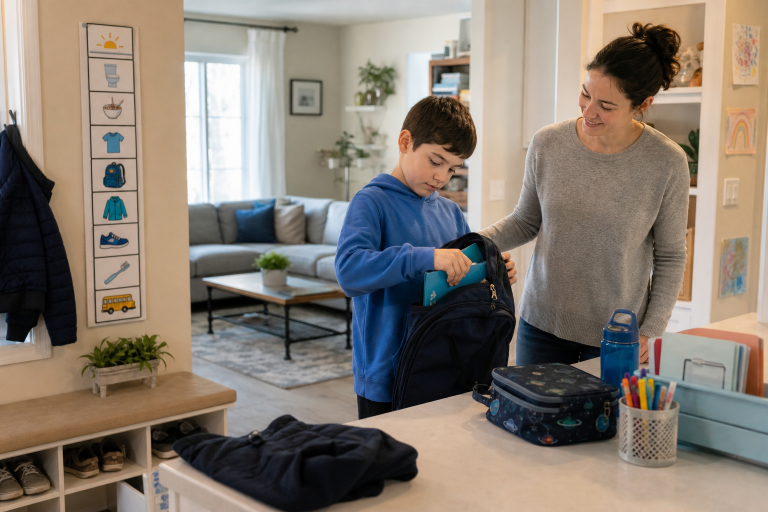
School readiness includes communication, self-care, routines, play, and regulation, not only academics. Children do not need to master every skill before their first day. Visual supports and short practice sessions can reduce uncertainty. Families and school teams should share clear, practical information. Readiness is best measured through comfort, participation, and growing independence.Key Takeaways
Starting school is a major transition, and readiness looks different for every autistic child. Rather than aiming for perfect behavior or mastery of every early academic skill, families can focus on practical abilities that make daily participation more comfortable. Families seeking individualized support may explore ABA therapy in Raleigh, NC as one option for building communication, independence, and routine-based skills. Small, repeated practice can make unfamiliar school expectations feel more predictable. A child may be ready to enjoy classroom activities while still needing support with transitions, toileting, sensory regulation, or asking for help. Progress matters more than a checklist.
School readiness is a collection of useful skills, not a pass-or-fail test. It includes being able to communicate needs in some form, to take part in a routine, to tolerate brief changes, and to receive support from adults. One child may independently carry a backpack but needs a picture cue for bathroom steps. Another may communicate clearly with a device while needing extra time to join group activities. Both can be ready to begin school with appropriate supports.
Consider the everyday demands a child may face and match them with simple home practice:
Following directions: Give one-step requests during play, such as "Put the car in the box."
Transitions: Use a timer or picture cue before changing activities.
Personal belongings: Practice opening a backpack, hanging a coat, and carrying a lunchbox.
Group participation: Try short turn-taking games with a sibling or adult.
Asking for help: Model a word, gesture, picture, sign, or device message.
Functional communication helps a child express what they need before frustration grows. Useful goals include requesting a break, asking for water, answering simple questions, declining an activity, getting adult help, and sharing discomfort. Spoken language is only one option. Gestures, signs, pictures, written words, and augmentative communication devices are all valid ways to participate.
Pause briefly during a preferred activity and wait for the child to request more.
Offer two clear choices, such as crackers or apple slices.
Use short, direct phrases and allow extra processing time.
Respond positively to communication attempts, even when they are not perfect.
Daily living skills can build confidence and reduce the need for adult support during a busy school day. Practice washing and drying hands, using the restroom, opening food containers, putting on outerwear, cleaning up materials, and finding an adult when help is needed. Teach these skills in small steps. First, break the task into manageable actions. Next, show the child what to do. Then provide only the support needed, such as a gesture, verbal reminder, or hand-over-hand assistance when appropriate. Finally, reduce support gradually as the child becomes more confident.
Predictable routines help children understand what happens now and what happens next. Visual supports can be simple photos, drawings, icons, or written words. A morning sequence might show getting dressed, eating breakfast, putting on shoes, and leaving home. A first-then board can say, "First shoes, then playground," making a less-preferred step easier to understand. Helpful supports may include bathroom sequence cards, break cards, countdown timers, a picture of the classroom door, or a short arrival checklist. Keep visuals clear, use them consistently, and update them when routines change.
Social readiness is about participation and connection, not about forced eye contact or a single "correct" way to interact. A child may practice playing near peers, taking turns, responding to a teacher, waiting briefly, joining a shared activity, and leaving play when it ends. Low-pressure activities such as rolling a ball, building a block tower together, matching cards, or reading repetitive books can build these skills naturally.
Classrooms can involve bright lights, crowded spaces, loud voices, unfamiliar smells, and frequent movement. Families can identify potential stressors and discuss support options before the first day. A child may benefit from a quieter break area, noise-reducing headphones when appropriate, movement between tasks, advance notice before loud events, comfortable seating, or fewer visual distractions during challenging work.
Sensory tools should help a child communicate, regulate, and participate. They should never be used to punish, isolate, or prevent access to meaningful classroom experiences.
Begin with small, concrete steps. Learn the arrival, meal, recess, transportation, and dismissal routines. Visit the building when it is quiet, practice the route, and create a short picture story about the school day. An autism inclusion discussion can also give families and educators ideas for preparing staff and building collaborative classroom support. Share a one-page profile with the school team before the first day. Include how the child communicates, signs of overload, calming strategies, food or health concerns, strong interests, preferred prompts, and how the child likes to join activities. This practical handoff gives teachers a stronger starting point than general labels alone.
Track progress to understand what helps, not to judge the child. Notice how often a routine is completed, how much assistance is needed, how the child communicates during a challenge, how long they participate in a group activity, and which supports improve transitions. Caregiver involvement, consistent communication supports, visual routines, and inclusive classroom practices can make learning more accessible when they are individualized and used consistently. School teams can adjust expectations as they learn more about the child. Families looking for examples of inclusive school communication may find useful ideas in this school accessibility and transition resource that highlights the value of connected school communities.
No. A child can be ready while using gestures, signs, pictures, written words, or a communication device. The priority is having a reliable way to express needs and participate.
Many children need movement and shorter activities. Start with brief tasks, include movement breaks, and gradually build tolerance when it supports the child's comfort.
Letters, numbers, and early literacy can be introduced through play, but communication, self-care, transitions, and regulation deserve equal attention because they support the entire school day.
Early challenges do not mean the transition has failed. Review the routine, identify stressful moments, and adjust supports with the school team. School readiness grows through many small successes over time.
School readiness is not about reaching a perfect checklist before the first day. It is about helping a child communicate, participate, manage daily routines, and feel supported in an unfamiliar environment. With realistic practice, visual supports, individualized strategies, and open communication between families and school staff, children can gradually build confidence and independence. The goal is not to eliminate every challenge but to make the school experience more predictable, accessible, and comfortable. Small steps, such as practicing transitions, asking for help, managing belongings, or joining short group activities, can create meaningful progress over time.
 Supriyo Khan
 Supriyo Khan
 Supriyo Khan
 Supriyo Khan

Want to add a comment?