Home /Lifestyle /how-to-bring-indian-craft-into-a-modern-home-without-overdoing-it
Aug 20, 2026
How to Bring Indian Craft Into a Modern Home Without Overdoing It
Supriyo Khan
12 views
Key Takeaways
Indian craft can bring depth and warmth to clean, modern rooms without making them feel crowded.
A few well-chosen handmade pieces usually have more impact than a large decorative collection.
Material, scale, care needs, construction, and maker information matter as much as appearance.
Color and texture work best when repeated thoughtfully rather than matched exactly.
Learning about a piece's origin supports more respectful, informed buying.
Modern interiors do not need to be cold, plain, or stripped of personality. Handmade textiles, pottery, brassware, woodwork, and woven accessories can introduce visual warmth while preserving the clean lines that make contemporary rooms feel calm. For shoppers seeking indian fashion brands that ship internationally to the USA, the same eye for material, color, and craft can also help create a more connected home style.
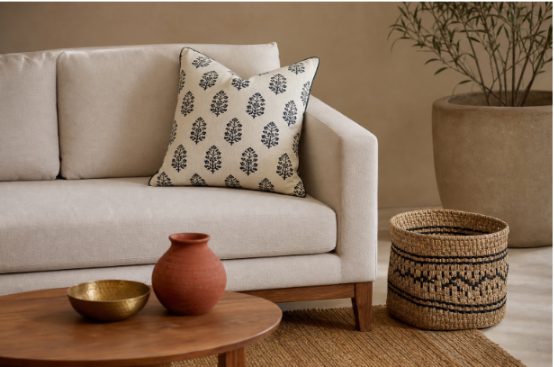
The goal is not to turn every room into a theme. Instead, use Indian-made craft as a meaningful layer within the home. A block-printed cushion on a neutral sofa, a terracotta vessel on a simple shelf, or a woven basket beside a modern chair can make a space feel personal and complete.
Why Indian Craft Works In Modern Interiors
Handmade objects add the small variations that mass-produced rooms often lack. Visible stitching, irregular glaze, carved grain, and handwoven texture create contrast against smooth stone, painted walls, glass, and metal. These details make a room feel lived in without sacrificing a refined look.
India's craft landscape includes a wide range of regional techniques from across India, from weaving and embroidery to terracotta and metalwork. Exploring these craft traditions can help buyers recognize that a handmade object carries regional skill, material knowledge, and a process worth understanding.
Start With The Room, Not The Product
Before shopping, consider what the room needs. Is it a place for rest, entertaining, dining, work, or daily family life? Look for gaps in color, texture, storage, lighting, or visual interest, then measure available surfaces and floor space before choosing rugs, artwork, lamps, or large objects.
Choose one loose design direction, such as earthy, colorful, coastal, refined, or minimalist. In a small apartment, one woven basket for blankets, one patterned textile accent, and one ceramic object may be enough to make the room feel considered without taking over valuable space.
Choose A Strong Material Mix
Cotton and linen: Ideal for cushions, throws, runners, and relaxed window treatments.
Silk: Best used in smaller doses, such as a framed textile, cushion cover, or decorative panel.
Clay and terracotta: Add an earthy, grounded quality to kitchens, consoles, shelves, and entryways.
Brass and other metals: Bring warmth through trays, lamps, bowls, and sculptural accents.
Wood: Softens rooms dominated by glass, stone, painted finishes, or steel.
Natural fibers: Work well in baskets, mats, lampshades, and useful storage.
Use Color Without Making The Room Feel Busy
Start with colors already present in the room. Repeat one shade in two or three places, such as indigo in a pillow, artwork, and small vase, to create a connected result. Strong colors like saffron, rust, green, deep pink, and blue are often most effective as accents against warm neutrals, pale walls, wood, or natural fibers.
A coordinated room is not the same as a perfectly matching room. Combine related colors and textures, but avoid buying identical patterns for every surface. In a compact room, let one patterned textile be the main feature and keep nearby upholstery, rugs, and walls quieter.
Match Traditional Techniques With Modern Shapes
Traditional methods often look especially current when placed beside simple forms. Pair block-printed fabric with a clean-lined sofa, set a handwoven basket beside a contemporary armchair, or display a brass bowl on an uncluttered console. A traditional painting can become a strong focal point when it sits in a simple frame with open wall space around it.
Embroidered cushions work well with solid-color seating, while a ceramic vessel can stand alone on a shelf rather than competing with multiple decorative objects. The contrast between old techniques and modern silhouettes is what keeps the room balanced.
How To Judge Quality When Shopping Online
Read material and construction details instead of relying on styled photographs.
Look for the named craft, region, maker group, or process where possible.
Check dimensions carefully, especially for rugs, wall art, lamps, and furniture.
Review close-up images for stitching, texture, glaze, grain, and finishing quality.
Read care instructions before ordering delicate textiles, porous pottery, or untreated wood.
Confirm delivery, return, and damage policies for fragile handmade pieces.
Questions Worth Asking About Handmade Pieces
Who made it, and where was it made?
Which parts of the item were completed by hand?
What materials, dyes, finishes, or treatments were used?
Are differences in color, shape, stitching, or pattern expected?
How should the piece be cleaned, stored, and handled?
Minor variation is often a normal part of handmade work. However, variation should not excuse weak seams, rough finishing, unclear materials, or missing care information.
Build A Room In Layers
Begin with function: Add useful seating, storage, lighting, tableware, or textiles first.
Add texture: Introduce woven, carved, embroidered, matte, or hand-painted surfaces.
Create one focal point: Use a larger textile, artwork, mirror, or statement object.
Repeat a detail: Echo a color, metal finish, shape, or material elsewhere in the room.
Leave breathing room: Open space lets each handmade piece remain visible and appreciated.
Simple Ideas For Each Room
Living Room
Add printed cushions or a handwoven throw to neutral seating. A brass tray, ceramic vase, or carved wood bowl can give a coffee table character, while one large textile or artwork can do more than a wall full of small items.
Dining Room
Choose handmade serving pieces that will actually be used, then soften a glass, stone, or wood table with a textile runner. Keep centerpieces low so guests can speak comfortably across the table.
Bedroom
Layer one patterned cushion or throw over plain bedding, and use a woven basket for blankets or extra pillows. Calm colors and soft natural textures support a more restful atmosphere.
Entryway
A small handmade bowl for keys, one framed artwork above a narrow console, and a warm metal or ceramic accent can make an entryway feel welcoming without creating clutter.
Buy With Cultural Respect And Better Information
Look beyond broad labels such as "ethnic" or "tribal." Learn the technique's name, its regional roots, and whether a design has sacred, ceremonial, or community-specific meaning. Better information helps buyers value a piece as more than decoration and encourages sellers to describe materials and making practices clearly.
Care Tips And Common Mistakes To Avoid
Keep textiles out of strong direct sunlight when fading is a concern.
Dust wood, brass, and woven pieces with a soft, dry cloth.
Use coasters beneath porous pottery and unsealed surfaces.
Avoid harsh cleaners unless the maker specifically recommends them.
Do not fill every surface with pattern, color, or decorative objects.
Never buy oversized items without checking measurements and placement first.
Final Checklist Before Buying
Ask whether the piece has a clear place in the room, whether it will be useful or meaningful, and whether its scale suits the available space. Confirm that the material fits your household routine, that care requirements are realistic, and that the maker and process details are clear. When color, function, quality, and story all feel right, even one thoughtfully chosen handmade piece can transform a modern home.