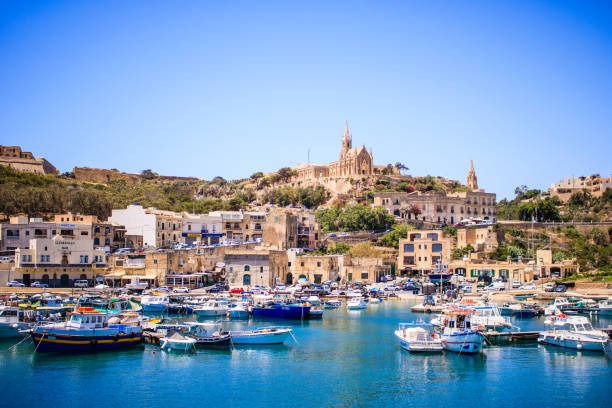
Most people who visit Malta end up doing some version of the same thing. They hit the Blue Lagoon on Comino, they wander around Valletta for a few hours, maybe they go to Mdina if they have time, and then they spend the rest of their trip on Golden Bay or one of the other sandy stretches. Which is fine, beaches are great. But if you’re more interested in ancient stone and dramatic cliffs than beach clubs, Malta and Gozo have a lot more going on than the standard itinerary suggests.
A lot of the “must-see” lists treat everything the same. They’ll put Popeye Village (a film set turned theme park) on the same level as prehistoric temples that are older than the pyramids. They’ll tell you to visit every single bay and cove. If your time is limited and you’re not here for the beaches, some of that stuff just doesn’t matter as much. Here’s what actually delivers if you care about landscapes, history, and getting to parts of the islands that feel less packaged.
The Temples Are Not Optional
Malta has temples that predate Stonehenge and the Egyptian pyramids. That’s not tourism marketing, that’s just true. The Ġgantija Temples on Gozo go back to around 3600 BCE, the complex at Ħaġar Qim and Mnajdra on Malta is almost as old. These aren’t reconstructions or ruins you squint at and imagine what used to be there. The stonework is intact, massive, genuinely impressive.
Ġgantija is easier if you’re short on time. It’s on Gozo near Xagħra, there’s a small museum with context, the whole thing takes maybe an hour. The name comes from the Maltese word for “giant” because locals used to think only giants could have moved stones that size. Makes sense when you see them.
Ħaġar Qim and Mnajdra are on Malta’s southwest coast, perched on cliffs above the sea. The setting is better, you get the temples plus views, but it’s more out of the way. If you’re doing the Blue Grotto you can combine them since they’re close.
There’s also the underground Ħal Saflieni Hypogeum near Valletta, though it requires advance booking because they limit visitor numbers. It’s a subterranean burial site carved out of rock around 4000 BCE, three levels of chambers and passages. Very atmospheric, slightly eerie. Book ahead or you won’t get in.
Gozo’s Cliffs and Coastline Beat Most of the Beaches
Gozo is quieter and greener than Malta, but the real reason to go is the coastline. The cliffs at Ta’ Ċenċ and Sanap are dramatic in a way that makes beaches feel dull. You’re standing on 150-meter limestone drops with views to Comino and Malta, the sea is that absurd blue-green, and there’s usually almost no one around.
Dwejra Bay is where the Azure Window used to be before it collapsed in 2017, still one of the best spots on Gozo though. You’ve got the Inland Sea (a lagoon connected to the open ocean by a tunnel through the rock), the Blue Hole for divers, Fungus Rock offshore. The whole area has this lunar, otherworldly look. You can take a boat trip through the tunnel if the weather’s calm, or just walk around.
The salt pans at Xwejni are another thing worth seeing. They’ve been worked by the same families for centuries, in summer you can still see people harvesting salt the old way. It’s one of those details that makes Gozo feel less like a resort island.
Ramla Bay gets mentioned because of the reddish sand and it’s a nice beach if you want to swim, but if beaches aren’t your thing it’s not essential. The cliffs matter more.
Valletta and Mdina: Yes, But Keep It Brief
Valletta is the capital, UNESCO site, beautiful architecture, all that narrow-street limestone-building baroque-cathedral stuff. St. John’s Co-Cathedral is genuinely stunning inside, the floor is a giant mosaic of Knights’ tombs and the ceiling is covered in frescoes. The Upper Barrakka Gardens give you views over the Grand Harbour. Worth a few hours.
Mdina is the old walled city in the center of Malta, very quiet, nicknamed the “Silent City.” It’s atmospheric, the views from the bastions are good, pleasant to wander for an hour or two. But it’s small and there’s not much to do beyond walking the streets and maybe visiting the cathedral. Between Valletta and Mdina, Valletta has more substance.
The Three Cities (Vittoriosa, Senglea, Cospicua) across the harbor from Valletta are less touristy, more lived-in. The Malta at War Museum in Vittoriosa is excellent if you’re interested in WWII history, the whole complex of underground air raid shelters is still there. You can take a traditional dghajsa boat across the harbor from Valletta.
Dingli Cliffs and the West Coast
Dingli Cliffs are the highest point in Malta at about 250 meters. Views are impressive, the coastal path along the cliffs is good for walking, there’s a small chapel (Chapel of St. Mary Magdalene) right on the edge that’s been there since the 15th century. Peaceful, scenic, doesn’t get overwhelmed with tourists.
The west coast in general is quieter than the east. If you’re driving or doing a tour, the stretch between Dingli and Għar Lapsi (a little swimming cove with boathouses, very local vibe) is worth it.
The Blue Grotto: Maybe, Depending on Weather
The Blue Grotto is sea caves on the south coast where the water turns intense blue when the sun hits it right. You take a short boat trip from Wied iż-Żurrieq. It’s pretty, if the weather’s good and boats are running it’s worth the €8. But it’s very weather-dependent. If the sea is rough or it’s cloudy, the whole thing is underwhelming. Don’t build your day around it.
What You Can Probably Skip
Popeye Village is the film set from the 1980 Robin Williams movie, now a theme park with mini golf and water trampolines. If you have kids, fine. If you don’t, it’s skippable unless you’re really into kitschy attractions. The setting at Anchor Bay is nice but you can see it from the road without paying.
The Blue Lagoon on Comino is beautiful in photos but in reality it’s packed with day-trippers and boat tours, especially summer. Not a relaxing experience. If you want to swim in clear water, Gozo has quieter options like Mġarr ix-Xini or Xlendi Bay.
St. Julian’s and Paceville are the nightlife zones, hotels and bars and clubs aimed at tourists. If you’re here for partying, great. Otherwise no real reason to go.
Marsaxlokk is a fishing village with colorful boats and a Sunday market. Pleasant, the fish restaurants are good, but not essential unless you’re nearby or really into markets. One of those places that’s nice if you have extra time.
How a Jeep Safari Actually Helps
If you don’t have a car and you’re trying to hit the cliffs, the back roads through the valleys, the salt pans, the temples, the coastal paths, buses will only get you so far. They cover main towns and a few tourist sites but they don’t go to the best viewpoints or quieter stretches of coast.
A Gozo jeep safari with a local guide solves that without the hassle of renting a car or figuring out parking. Yippee Malta’s jeep tours cover the stuff that’s hard to reach on your own: the western cliffs, inland villages, farm roads through Gozo’s valleys, spots where you can see the whole island. The guides know the areas, they’ll stop where the views are good, you’re not stuck on a coach with 40 other people. Particularly useful on Gozo where a lot of the best parts are off the main roads.
Tours usually include lunch at a local spot, not a tourist trap, just wherever the guides actually eat. On Gozo they throw in a boat trip back via Comino, which is better than joining the scrum on the beach.
Practical Notes
Getting to Gozo: Ferry from Ċirkewwa (northern Malta) to Mġarr (Gozo) takes 25 minutes, runs frequently. You pay on the return leg, around €5 per person. There’s also a faster foot-passenger ferry from Valletta to Gozo, takes 45 minutes if you don’t want to deal with the bus up to Ċirkewwa.
How long in Gozo: Most people do a day trip. If you have time, staying a night or two is better. Gozo is small enough to cover main sites in a day but it rewards slowing down. The boutique hotels are nicer than Malta’s resorts, the island feels calmer once day-trippers leave.
Weather: Malta is sunny most of the year but spring (April-May) and autumn (September-October) are best if you’re here for walking and sightseeing rather than beaches. Summer is hot and crowded. Winter is mild but some boat trips don’t run.
Driving: If you’re comfortable driving on the left (Malta was British until 1964), renting a car gives you flexibility. Roads are decent, signage is okay, you can get anywhere in under an hour. If you’re not confident driving, buses plus a guided tour for harder-to-reach bits works fine.
Malta and Gozo are small but they pack a lot in. Ancient temples, fortified cities, dramatic coastline, layers of history from the Phoenicians to the Knights to the British. Skip the standard beach-resort routine and focus on the stone and the cliffs and the parts that still feel a bit wild, it’s a better trip.
 Supriyo Khan
 Supriyo Khan
 Supriyo Khan
 Supriyo Khan

Want to add a comment?