As cities around the world continue to move toward sustainability, transportation has become a central and unavoidable issue. Traffic congestion, air pollution, and inefficient commuting are draining both urban resources and personal energy. How to achieve greener and more efficient daily mobility—without adding new burdens—has become a shared challenge for city planners and residents alike.
Against this backdrop, people have begun to reassess the real value that Ebikes for Sale can offer. More and more urban riders are realizing that lightweight Electric bikes may be the option that best aligns with the practical realities of city life.
Compared with traditional electric transportation tools, the most obvious characteristic of lightweight Electric bikes is exactly what the name suggests: reduced weight. While this may seem like a simple change, it creates a chain reaction in urban commuting.
A lighter frame means lower energy consumption and higher energy efficiency. With the same battery capacity, riders can often achieve a longer real-world riding range. When browsing different Ebikes for Sale, many urban commuters are discovering that instead of blindly pursuing larger batteries or higher power output, lightweight design has a much greater impact on everyday usability. This shift is quietly reshaping consumer decision-making.
• Lower energy consumption, higher efficiency
Because lightweight Electric bikes require less power to move, they can achieve more efficient energy conversion with the same battery size. Over time, this means reduced electricity consumption per trip and lower overall carbon emissions for urban transportation.
• Better real-world usability encourages long-term adoption
Compared with heavier models, lightweight bikes are easier to maneuver, push, turn, and ride uphill. This low-effort experience significantly increases how often people choose to ride. Green transportation stops being an occasional experiment and becomes a daily habit.
• Reduced mechanical stress and longer lifespan
A lighter bike puts less strain on key components such as the motor, battery, and drivetrain. This helps extend the lifespan of major parts and improves sustainability from a full lifecycle perspective.
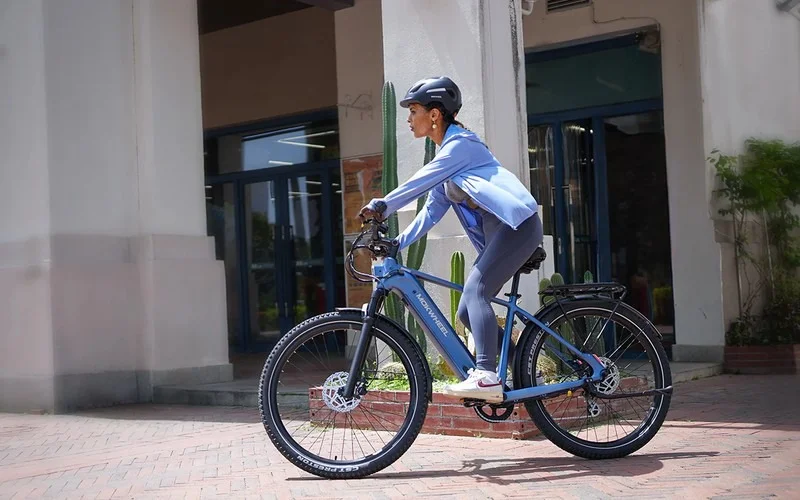
In real-world applications, some lightweight Electric bikes designed specifically for urban commuting already reflect this trend. A good example is the Mokwheel FLINT ST Ebike, which weighs only about 40 pounds while still featuring a 350W motor (with a peak output of up to 550W). With its lightweight frame, this power setup is more than sufficient for city starts, acceleration, and everyday hills, while maintaining excellent energy efficiency and a real-world range of up to 50 miles.
This balanced approach—optimizing both performance and weight—is becoming an increasingly valued direction among Ebikes for Sale.
Many environmentally friendly transportation solutions fail to gain long-term adoption not because the ideas are wrong, but because the barriers to use are too high. Truly sustainable mobility must first be something people are willing to use every day.
Lightweight Electric bikes strike a practical balance between efficiency and comfort. Their agile frames allow riders to avoid peak-hour congestion and reduce commute times. Moderate electric assistance lowers physical effort, making daily riding far less exhausting. More importantly, lightweight Electric bikes integrate naturally with public transportation, such as buses and subways, supporting a more flexible and low-carbon multimodal commuting system.
• Easier integration into urban traffic systems
With compact size and responsive handling, lightweight Electric bikes are better suited for bike lanes, neighborhood streets, and urban roads. Compared with many other Ebikes for Sale, they are less likely to create traffic conflicts.
• Higher commuting efficiency with predictable travel times
During rush hours, lightweight models can navigate around congestion more easily, reducing delays and making commute times more reliable. This predictability is a major reason urban riders prefer lightweight options.
• Ideal for multimodal, low-carbon commuting
Thanks to reduced weight, lightweight Electric bikes are much easier to push, carry short distances, or combine with public transportation. This flexibility helps users build a more adaptable and environmentally friendly commuting routine.
The Mesa Lite Ebike is a representative example of this philosophy. Equipped with a 350W motor (peaking at 600W), it provides sufficient power reserves for city riding while maintaining a strong focus on energy efficiency. With a maximum range of approximately 50 miles, it can cover several days of commuting on a single charge, reducing charging frequency. This “efficient but not aggressive” design approach is a key reason lightweight models are standing out among Ebikes for Sale.
From an urban planning perspective, lightweight Electric bikes offer clear advantages. Compared with cars and high-power electric vehicles, they require far less road space and place less strain on infrastructure. They are also easier to integrate into bike lanes and slow-traffic systems.
When cities aim to reduce car dependency and promote greener transportation, lighter and lower-risk mobility options are much easier to scale. This is why lightweight Electric bikes are gaining increasing attention from both urban users and policymakers among the growing range of Ebikes for Sale.
Sustainability is not only about energy use—it also involves long-term ownership costs. Lightweight Electric bikes often feature simpler structural designs, fewer complex components, and lower maintenance demands. Reduced weight means less wear on parts, longer maintenance intervals, and a more worry-free ownership experience.
For busy urban residents, ease of use often plays a decisive role when choosing among Ebikes for Sale. This advantage makes lightweight models more likely to become long-term commuting tools rather than short-lived experiments.
Lightweight Electric bikes are evolving beyond simple transportation tools into a lifestyle choice that better fits modern urban rhythms. They expand personal mobility without increasing environmental impact. They improve freedom of movement while remaining compatible with city systems.
In this model, low-carbon living is no longer a compromise—it becomes a more efficient and relaxed upgrade in daily life.
As cities continue their push toward sustainability and individuals place greater value on time efficiency and environmental responsibility, lightweight Electric bikes are becoming an important link between personal choice and the future of urban mobility. Compared with other Ebikes for Sale, they shape tomorrow’s transportation structure in a more realistic and sustainable way.
Yes, absolutely. Lightweight Electric bikes are typically designed for short- to mid-range urban trips of about 3–12 miles. They offer greater flexibility during peak hours compared with cars or public transit, while reducing physical effort compared with traditional bicycles.
The key differences are weight, energy efficiency, and intended use. Lightweight Electric bikes prioritize urban adaptability and ease of handling, while standard Electric bikes are often heavier and designed for longer distances or higher loads. Understanding your commuting needs is essential when comparing Ebikes for Sale.
For most city riders, yes. Many mainstream lightweight models offer real-world ranges of 40–50 miles, enough for multiple days of commuting. Their lower energy consumption also reduces charging frequency.
No. Lightweight does not mean fragile. High-quality lightweight Electric bikes use strong aluminum alloy frames and optimized geometry to ensure stability and control, often making them easier to handle in urban traffic.
Very much so. Reduced weight and smooth power delivery make them easier to start, turn, push, and ride uphill. This is why lightweight models are increasingly popular among female riders and first-time users browsing Ebikes for Sale.
In many cities, yes. Their lighter weight makes them easier to maneuver and carry short distances. Local regulations vary, so riders should always check transit policies.
Generally, no. Simpler structures and reduced mechanical stress result in lower wear and longer service intervals. Routine maintenance usually focuses on tires, brakes, and battery health.
Key considerations include:
Your daily commuting distance and terrain
Overall bike weight and handling
Real-world range (not just advertised numbers)
Storage and portability
Long-term maintenance costs
Ultimately, how well an Electric bike fits daily use matters more than raw specifications.
 Supriyo Khan
 Supriyo Khan
 Supriyo Khan
 Supriyo Khan

Want to add a comment?