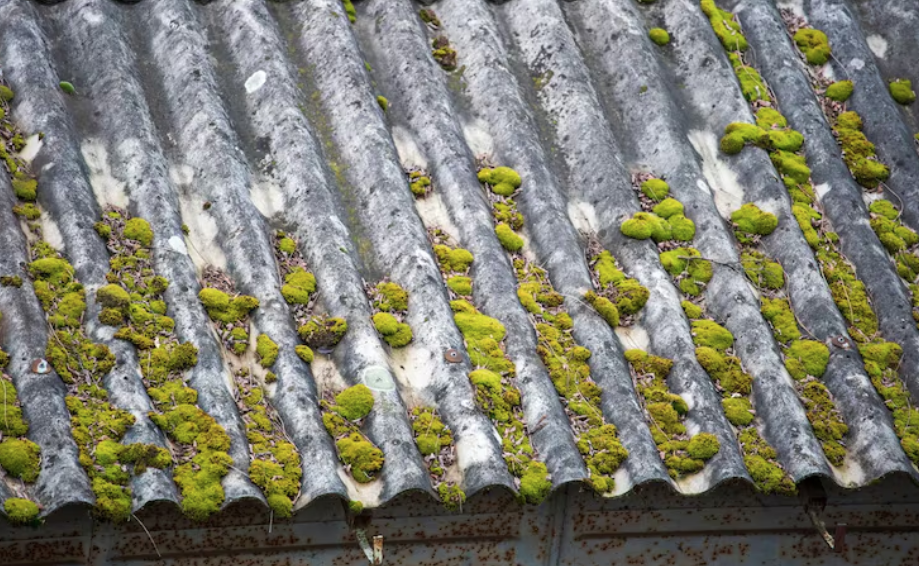
What does a cedar roof actually look like a year after somebody power washes the moss off it? Split shakes along the north slope, cupped edges catching the afternoon light, and moss growing back darker than it was before the crew ever showed up. Owners who inherit a shore house tend to learn this from three states away, which is why the roofing contractors northfield nj families call in their second year of ownership are so often cleaning up after their first. The myth is that a wood roof gets washed the way a driveway or a wall of vinyl siding gets washed. Reality is narrower and a good deal more expensive: cedar is a wearing surface with a finite thickness, and every pass of a pressure wand spends some of it.
Green fuzz on a north slope is not proof that a roof has failed. It is proof that the slope stays damp, which on a bay-side lot in Atlantic County means most of the winter. A cedar roof in year eighteen with moss on it can still have two decades left in it, provided the shakes have thickness, the keyways are clear, and the sheathing underneath is dry. An April 2026 SquareDash guide to cedar shake roofing puts a properly maintained cedar shake roof at 30 to 50 years of service, and the operative word in that sentence is maintained. Neglect shortens the number. So does aggressive cleaning, which is the part nobody writes down on a spring maintenance quote.
Cedar sheds water because of how its surface is built. The mill leaves a rough split face, the wood's own oils repel moisture, the tight bands of dense late growth do most of the shedding, and a weathered gray patina sits over all of it like a finish nobody had to buy. A pressure washer, even at settings a crew would call gentle, erodes the soft spring wood between those bands first. What is left is raised grain and shallow trenches that hold water rather than move it along. Think about a well seasoned cast iron pan for a second. Scour it back to bright metal to chase one spot of rust and you have not cleaned the pan, you have thrown out years of work that somebody else already did for you.
Cedar does not grow back. Whatever the wand takes off a shake is gone for the rest of that roof's life.
Job after job, what turns up the following spring is splitting on the shaded slope, cupping at the butt ends, and moss that returns thicker than before because the roughened surface now holds moisture better than the old one did. None of that is a reason to go up and look at it yourself. Wet moss on wood shakes is genuinely slick, a running pressure wand pushes back hard enough to knock a person off balance, and OSHA's ladder standard at 1926.1053(b)(7) bars the use of a ladder on slippery footing until the hazard is corrected or the ladder is secured against movement. Stay on the ground and hire an insured crew that works with proper fall protection.
A half mile off the back bay, salt does not stop at the siding. Airborne chloride works into the nail holes and corrodes plain steel fasteners from inside the deck outward, so a shake can be structurally sound and still slide out of course because the nail holding it has thinned down to a wire. Owners read that loose course as a wood problem, and they hire somebody to clean the wood. Stainless ring shank fasteners cost more per square, and they are the reason a coastal cedar roof keeps its courses through a February nor'easter. Ask what the original roof was nailed with before you agree to any repair, because on a 1950s two-story that has been worked on once already, the honest answer is usually that nobody knows until a few shakes come off.
Restoring a cedar roof is slow on purpose, and a contractor promising a finished roof by Friday is selling a wash. In the first week, someone walks the whole roof and sorts it into three piles on paper: shakes that are sound, shakes that are cupped but serviceable for now, and spent ones that come out. Treatment follows, meaning a soft applied moss product and hand work with a wood scraper instead of a machine, so the growth dies back over several weeks rather than disappearing in an afternoon. By week four the replacement shakes are set and still bright against the weathered field around them. Within 90 days they have begun to gray. By month six the repair is hard to pick out from the street, which is the point at which the money proves itself.
One question separates a cedar contractor from a cleaning crew: ask what they plan to remove. A wash-first outfit answers with pressure ratings and a same-day finish. Among the roofing contractors Northfield NJ owners are choosing between, the ones worth paying answer in terms of shake thickness, fastener type, and how much of the original roof they expect to keep. On a maintenance budget under $1,500 for a house that sits empty most of the year, that difference decides whether year eighteen is the middle of the roof's life or the start of its last chapter. Put the money toward someone who can read the wood, and the roof that came with the house has a fair shot at outliving the mortgage on it.
 Supriyo Khan
 Supriyo Khan
 Supriyo Khan
 Supriyo Khan

Want to add a comment?