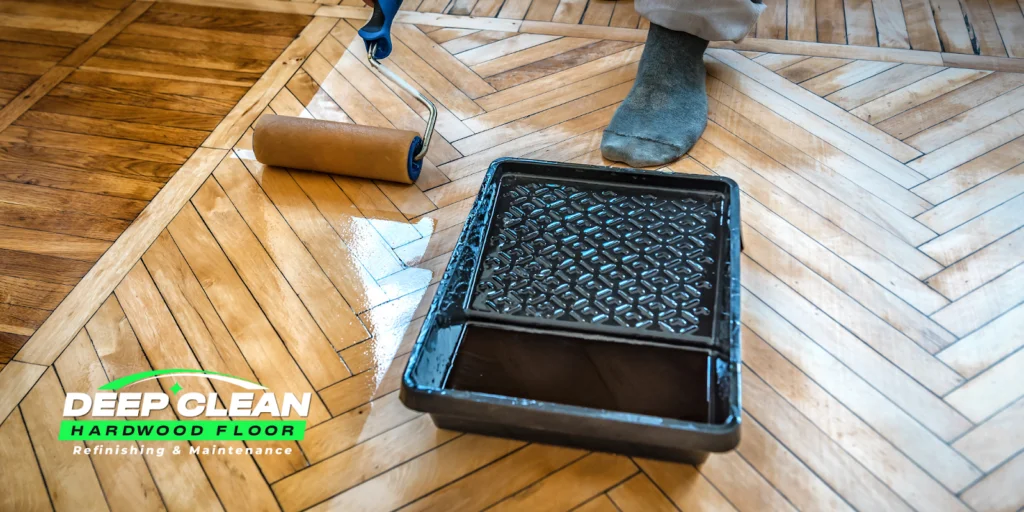
Maintaining the beauty and longevity of hardwood floors is essential for preserving the look of any home or business. One effective and cost-efficient method to achieve this is by choosing to screen and recoat hardwood floors.
This process can revitalize worn-out floors, eliminating the need for a full refinishing job. If you're looking for an affordable solution that extends the life of your hardwood floors, consider screening and recoating as your next step.
In this article, it will walk you through everything you need to know about this process and why it might be the right choice for you.
A maintenance method that can improve the look of your hardwood floors without requiring a complete refinishing is screening and recoating.
The procedure is adding a new layer of finish (recoating) after lightly sanding the wood's surface (screening) to get rid of any dirt or scratches.
This technique is ideal for floors that are still in relatively good shape but need a boost to restore their shine and protect the wood from further damage.
Unlike refinishing, which requires sanding down to the raw wood, screen and recoat hardwood floors only involves the surface layer.
This is why it's less time-consuming and significantly more affordable. It's an excellent option if your hardwood floors have lost their luster but aren’t heavily damaged.
Although screening and recoating hardwood floors is a pretty simple operation, it does take careful planning and attention to detail. Here's a detailed how-to:
Clear the Room: Start by removing all furniture, rugs, and obstacles from the room.
Clean the Floor: Sweep and vacuum the area thoroughly to remove dust and debris. Any dirt left on the surface can affect the outcome.
Screening the Floor: Use a floor buffer equipped with a sanding screen (a mesh-like abrasive) to lightly scuff the surface. This process removes the old finish and evens out minor imperfections.
Clean Again: After screening, vacuum the floor once more to remove all dust particles.
Recoat the Floor: Apply a fresh coat of polyurethane or another suitable finish. The coating will protect the wood from stains, water damage, and further wear.
Drying Time: Allow the finish to dry completely before walking on the floor or replacing furniture.
Although this procedure can be done at home, it's always advisable to engage a professional with the necessary tools and experience to guarantee a flawless finish.
Choosing to screen and recoat hardwood floors instead of refinishing has numerous advantages:
Cost-Effective: It’s much less expensive than a full refinishing, making it a great option for budget-conscious homeowners.
Less Time-Consuming: Unlike refinishing, which can take several days, the screening and recoating process can be completed within a day or two.
Preserve the Floor’s Integrity: If the wood itself is in good condition, screening and recoating will preserve its appearance without compromising its structure.
Quick Turnaround: With minimal downtime, you can restore your floors quickly and enjoy their beauty again in no time.
This is an excellent choice if you want to prolong the life of your hardwood floors without committing to a complete makeover.
Yes, it is possible to screen and recoat hardwood floors yourself. However, it requires the proper equipment, time, and technique to achieve a professional-looking result. Many homeowners prefer to hire professionals for the best outcome.
It depends on the level of traffic and your floor experience. Generally, every 3-5 years is a good guideline to follow.
Screening and recoating is safe for most hardwood floors as long as the wood is in good condition. If your floors have significant damage, it may not be the best option.
In conclusion, for homeowners wishing to restore their floors without the cost and time commitment of a complete refinishing, screening and recoating hardwood floors is a great option.
It is economical, efficient, and successful in restoring the luster and safeguarding the wood. This could be the ideal way to revitalize your hardwood floors if they are beginning to show wear.
For optimal outcomes, think about reaching out to a hardwood floor maintenance specialist. Give your hardwood floors the makeover they need by contacting Deep Clean Hardwood Floor now!
 Supriyo Khan
 Supriyo Khan
 Supriyo Khan
 Supriyo Khan

Want to add a comment?