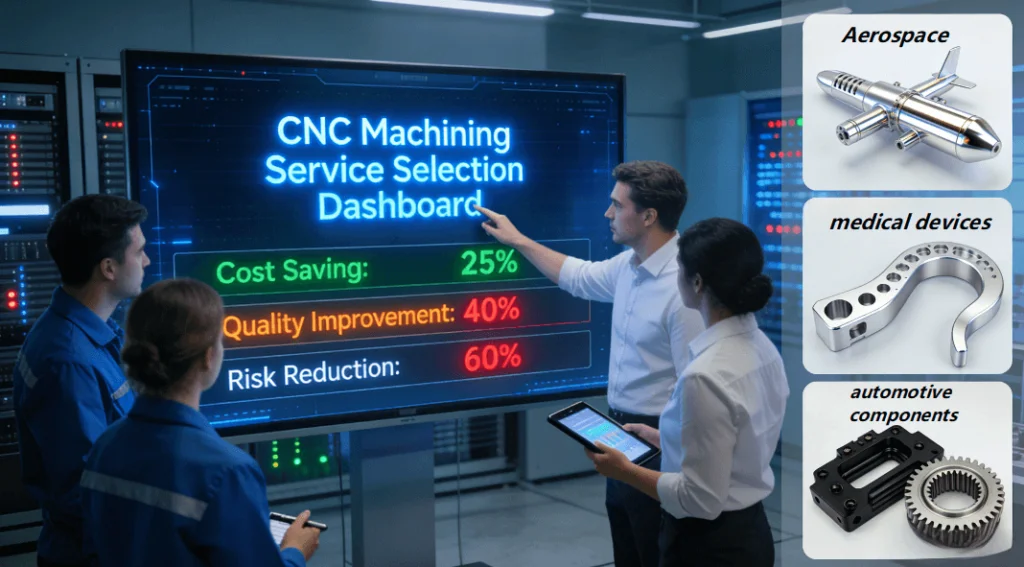
Professionals in the manufacturing sector are faced with a dilemma, which is that effective strategies in terms of cost are easily thwarted by unexpected deviations in quality and project timelines in partnering companies for CNC machining. This problem is attributed to relying on initial price comparison, which ignores critical capabilities, quality, and ultimately a partnership. This article provides a methodical approach with a six-dimensional paradigm for change in the supplier selection methodology and goes from surface-level cost considerations to the successful execution of projects. It is very common to shortlist or choose a business partner purely based on machine capability. Thorough assessment in technical capability is imperative in making sure your designs can be created through these machines. In cases involving complex geometries, as is common within the aerospace, automotive, and biomedical industries, five-axis CNC machines have become essential rather than an option. The ability to perform single setup machining means that there will be no cumulative positions, as is the case when multiple repositioning within fixtures are involved, and it is essential to have the ability to refer to a single datum during manufacturing as it relates to geometric tolerances defined within ASME Y14.5 standards. Machine precision as quoted may be acceptable, but to have it within ±0.005 mm as a standard practice is an entirely different thing altogether. It is not sufficient to have an advanced machine only. It is essential to shortlist suppliers based on metrology and process knowledge, and use resources such as machine probing and Coordinate Measuring Machines (CMMs) to perform first article and process inspections. An effective material supplier will need to be competent in handling much more than the common aluminum alloys. Examine the supplier with respect to their hands-on experience in handling a variety of materials such as high-strength titanium alloys, heat-resistant materials, and engineering plastics. In fact, the flexibility in their knowledge and expertise is what is most valuable. Are they able to customize machining parameters and methods for different materials to avoid material problems such as work hardening in stainless steels and delamination problems in composites. Certifications should be considered an affirmation of the systematic process of quality, as opposed to the trophy that sits on the wall. They represent a systematic process that directly affects the manufacturing process. An ISO 9001:2015 certified supplier has established a Quality Management System (QMS) that is grounded in continuous improvement and a customer focus. This ensures that everything from receiving the order to final inspection is documented, controlled, and audited. This means that you will receive quality that is predictable and free from variation and that we are committed to solving problems through effective and controlled processes. For high-risk sectors, generic quality management systems do not suffice. The AS9100D standard not only encompasses all ISO 9001 requirements, with stricter industry-specific requirements for the aerospace industry. Focus on risk management, traceable suppliers, and prevention of counterfeit parts is emphasized. When you choose to work with an AS9100D-certified supplier, it is an added assurance that your component will deliver to aerospace industry reliability and documentation standards. The actual strength of the certification is the quality culture that the process builds. In such a culture, all the employees are empowered and made responsible for the quality. Hence, there will be active prevention of defects instead of detection. When a possible defect is discovered, the project assures a systematic remedying of the issue to prevent its recurrence to protect your project from non-conforming products. One of the most valuable things that a CNC supplier can provide is Design for Manufacturing analysis. Design for Manufacturing analysis done ahead of time will cut costs dramatically without sacrificing part functionality. Identification and Elimination of Inefficiencies: Skilled engineers are able to identify areas of a design which lend themselves to longer machining times, greater expense, as well as added complexity. Such areas would include problematic geometry with regard to machinability. A supplier's role in such a scenario would be to indicate how certain changes could be affected to a design. Such changes might allow for a redesign of a corner radius to accommodate standard tooling. Recommendations for Strategic Materials & Finishing: DFM encompasses much more than geometric considerations. The right partner will offer advice pertaining to material choice, with recommendations based upon the functional demands of the component, along with the consideration of suggested alternatives that offer value for money. They will also offer similar advice concerning surface finish choices. These pointers ensure that value engineering performed on your components prevents the components being over-engineered. DFM as a Collaborative Partnership Tool: In fact, it is important to make sure that a DFM process is a dialogue and not a review process. As detailed in the guide to selecting CNC machining services, a comprehensive Design for Manufacturability (DFM) review can establish a relationship that combines manufacturing knowledge with the designer's intent when making decisions about CNC machining equipment. This relationship-based building process through design for optimal manufacturing is how a relationship for successful long-term partnership building is formed. High tech and quality certifications are pointless without quality project management to integrate everything. It is what is called a "soft skill" and is what determines on-time delivery. Try to find evidence of a structured communication process. This will entail a specific point of contact, updates on milestones, and a clear process of tracking order status. Active suppliers make use of project management software to plan work flows, spot bottlenecks, and allocate resources to ensure your project is completed on schedule. Despite proper planning and execution, projects will sometimes face the need for changes. A good supplier will have a proper engineering change order (ECO) procedure in place to document changes that are required and impact those changes may have on both budget and timeline; and for the changes to be approved by the customer. Quality control should not be a final process. It has to be a process integrated throughout every aspect of project management. This means that quality checks are a part of the production schedule. This is important because, through integrated quality process, any variance is detected immediately, without incurring the high cost of producing a number of faulty items, as well as incurring delays because of quality failure. A quote which may appear to be low may end up being costly because of the underlying charges. In order to carry out a comparison, one needs to calculate the total cost of ownership. Deconstructing the Quote: Identifying Hidden Costs: Analyze quotes for line items that look like hidden costs. Is a first-article inspection report and material certifications price included in the quote? Are there set-up fees for each part number? How about a policy for expedited shipping? A transparent quote would include all these information, whereas a non-transparent one might start with an attractively low price tag that after a while turns higher after hidden costs have been added. Evaluating Value-Added Services and Expertise: The lowest quote is seldom the best value. Consider the intangible value in a quote. Does it include a complete DFM analysis? Does a supplier provide program management support? Their knowledge of supply chain optimization of raw materials can prevent delays as well. These services may be captured in a slightly higher price but go a long way toward ensuring a smoother, more reliable, and therefore more cost-effective project outcome. Reliability and partnership are investments in the long term: The lowest upfront cost can be catastrophically expensive if it leads to project failure. Consider the history of the supplier in terms of reliability and consistency. A partner who has a demonstrated history of on-time delivery and high-quality output reduces project risk. This level of dependability creates internal administrative and oversight cost savings that make a slightly higher-priced, dependable partner a better fiscal choice over the course of time. The best source for a one-off prototype may not be the best choice to supply hundreds of parts over a year or two. A strategic approach involves selecting a staged partnership. In the case of prototypes, the goals are mainly two: speed of iteration and technical feedback. The optimal partner will provide fast turnarounds, often using automated quoting systems, and insightful DFM comments for honing in on the design. The ability to manage small batches and make rapid adjustments is far more important than large-volume pricing. When moving into production, the focus shifts toward scalability, cost consistency, and statistical process control. The supplier has to demonstrate robust capacity planning with an ability to support unchanged quality over thousands of parts. Their systems for production scheduling and quality consistency are paramount to a stable and reliable supply chain. In fact, many successful manufacturing companies adopt a multi-tier supply strategy. The company will source services from different supply specialists based on different requirements, for example, prototyping and mass production. This enables you to take advantage of the expertise offered by different supply specialists. Engaging with a CNC machining services requires a long-term strategy that goes well beyond the cost-per-unit. To approach a partnership in a sophisticated manner, there needs to be a balanced assessment in the areas of technical expertise, quality systems certification, DFM collaboration, project management sophistication, cost analysis complexity, and partnership methodologies suitable for the stage of the product or business. With a structured methodology in place, manufacturers are able to build partnerships for quality, timeliness, and cost. Q1: How long is a typical project lead time for CNC machining jobs? A: The lead times will depend on complexity; however, experienced suppliers will provide 1-3 days for prototype PCBs and 1-2 weeks for production quantities. Such factors as availability of materials, part complexity, and surface finishes will affect these times. Reliable suppliers with quality certifications in ISO 9001 will have effective production schedule management for guaranteeing delivery times. Q2: What kind of influence does material choice exert upon the cost and performance of CNC machined parts? A: The selection of material is a major consideration in determining both cost (which contributes 40-60% to the total cost) and performance. For instance, engineering aluminum alloys are a good medium range, whereas others like titanium are better in strength to weight ratio but are pricey. Specialized companies are available to assist in material selection. Q3: In what manner can manufacturers expect quality control from CNC service providers? A: Overall quality control entails first-article inspection, in-process inspection, and final dimensional verification on a CMM machine. This is supplemented by suppliers who possess certifications such as AS9100D, which utilizes statistical process control as well as traceable processes. This should all be reflected in the documentation, such as material certifications and inspections on critical dimensions. Q4: What is CNC machining, and what makes it essential for industries? A: Strategic design optimization reduces the cost of machining by 25-35% due to less machining time. It is crucial to avoid complex curves, reduce variability in hole diameter, and keep wall thickness to a minimum. These are generally identified through professional Design For Manufacturability analysis. Q5: What are some benefits of choosing proven CNC machining services over traditional suppliers? A: There are established online platforms and procurement portals that allow for instant quotations, project tracking, and easy communication. These allow for more visibility in terms of quotations for the time required for the Design for Manufacturing process. Such platforms are very helpful for urgent prototypes and limited production. The author of the article is a precision manufacturing expert for LS Manufacturing. The company is focused on assisting engineers as well as researchers in overcoming complex part challenges in aerospace, medical devices, as well as automotive applications. The company has the required certifications for quality. The company provides quality solutions using innovative technology and a customer-centric strategy. To know more, you can get a free consultation today with a no-obligation project review.
Introduction
What Technical Capabilities Should Manufacturers Prioritize When Evaluating CNC Suppliers?
1. The Critical Role of Multi-Axis Machining Flexibility
2. Precision and Tolerance Control in Practice
3. Material Expertise and Technological Adaptability
How Do Quality Certifications Like ISO 9001 and AS9100D Impact Manufacturing Outcomes?
1. ISO 9001: The Foundation of Process Standardization
2. Industry-Specific Mandates: The Example of AS9100D for Aerospace
3. Creating a Culture of Quality and Accountability
Why Design for Manufacturing Analysis is Important for Cost Optimization?
What Project Management Skills Make Sure Delivery Is Done Within Timed Limits?
1. Transparent Communication and Proactive Scheduling
2. Robust Change Order and Risk Mitigation Processes
3. Integrated Quality Assurance within the Project Workflow
In what ways can a comparison of CNC machining quotes be conducted accurately beyond the surface price?
What is the strategic difference between a partnership for a prototype versus a production volume?
1. Prototyping Phase: Prioritizing Speed and Flexibility
2. Production Phase: Emphasizing Scalability and Process Control
3. Building a Multi-Tiered Supplier Strategy
Conclusion
FAQs
Author Bio
 Supriyo Khan
 Supriyo Khan
 Supriyo Khan
 Supriyo Khan
Want to add a comment?