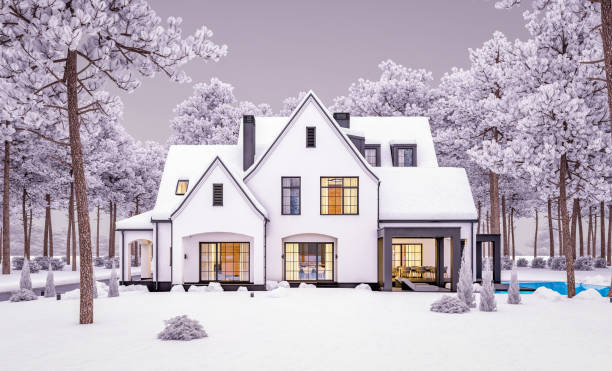
Your home is your primary shelter. It protects you from blistering summer heat, freezing winter winds, and the unpredictable storms that happen in between says Abilene Leasing & Property Management team. Yet, many houses are built with only fair weather in mind, leading to skyrocketing energy bills, uncomfortable drafts, and costly repairs down the road.
Understanding Your Local Climate
Before you pour a foundation or frame a wall, you must understand the specific environmental forces your home will face. A house designed for the arid heat of Arizona requires a completely different strategy than one built for the humid, snowy winters of Vermont.
Start by analyzing the temperature extremes. You need to know the historical highs and lows, but also the duration of these temperatures. Does the heat linger for months, or does it spike for a few days? Look at precipitation patterns as well. Heavy snowfall requires a roof structure capable of bearing significant weight, while areas prone to driving rain need specialized flashing details to prevent water intrusion.
Don't ignore the microclimate of your specific lot. The direction of the wind, the path of the sun, and the surrounding terrain all influence how your home interacts with the weather. For example, orienting your home to capture southern exposure can provide free heat in the winter, but without proper shading, that same sun could make your living room uninhabitable in July.
The skin of your home is the first line of defense. The materials you choose for the exterior need to be tough enough to withstand UV radiation, moisture, and temperature fluctuations without degrading.
Vinyl siding is popular for its low cost, but it can crack in extreme cold or melt in extreme heat (such as from a neighbor's window reflection). Fiber cement and brick offer superior resistance to wind, fire, and rot. These materials might have a higher upfront cost, but their longevity often makes them cheaper over the lifespan of the home.
Your roof takes the hardest beating of any building component. Asphalt shingles are standard, but they have a limited lifespan and can blow off in high winds. For true year-round resilience, many builders recommend metal roofing. A high-quality metal roofing in Utah sheds snow easily, reflects solar heat to keep the attic cool, and can last 50 years or more with minimal maintenance. It is also highly resistant to fire and wind, making it an excellent choice for volatile climates.
A weather-resistant home is only as good as its envelope—the barrier between the conditioned air inside and the raw weather outside. This is where insulation and ventilation work in tandem.
Insulation does more than keep you warm; it acts as a thermal break that slows the transfer of heat. In the summer, it keeps the heat out; in the winter, it keeps the heat in. Focus on achieving a high R-value (thermal resistance) in the attic and walls. Spray foam insulation is particularly effective because it insulates and air-seals simultaneously, closing off the tiny cracks where drafts enter.
A tightly sealed home is energy efficient, but it needs to breathe to prevent moisture buildup. Without proper airflow, humidity from cooking, showering, and breathing can get trapped inside, leading to mold growth and poor air quality.
incorporate a mechanical ventilation system, such as a Heat Recovery Ventilator (HRV) or Energy Recovery Ventilator (ERV). These systems swap stale indoor air for fresh outdoor air without losing the heat or cool air you’ve already paid for. They manage humidity levels year-round, ensuring your home doesn't feel like a swamp in the summer or a desert in the winter.
Windows and doors are essentially holes in your wall. If you choose poor-quality units, you are inviting the weather right into your living room.
Look for windows with double or triple-pane glass filled with inert gas like argon or krypton. These gases are denser than air and provide better insulation. Pay attention to the frame material as well. Aluminum frames transfer heat rapidly (which is bad for efficiency), while fiberglass and vinyl frames offer better thermal performance.
Low-emissivity (Low-E) coatings are another crucial feature. These microscopic layers on the glass reflect infrared light. In the winter, they reflect interior heat into the room. In the summer, they reflect solar heat away from the house.
For doors, ensure they have a solid core and high-quality weatherstripping. Even the most expensive door will fail if the seal around the perimeter allows air to leak through.
You can extend your home's weather defenses beyond its walls through strategic landscaping. The natural environment can act as a buffer against the elements.
Planting evergreen trees on the north and northwest sides of your property can create a windbreak, significantly reducing wind chill and heating costs in the winter. Conversely, planting deciduous trees (leafy trees) on the south and west sides provides shade during the blazing summer months. When these trees lose their leaves in autumn, they allow the winter sun to filter through and warm your home.
Heavy rains and melting snow need a place to go. Proper grading is essential; the ground should slope away from your foundation to prevent basement flooding. Permeable paving materials for driveways and walkways allow water to seep into the ground rather than pooling around your home or overwhelming storm drains.
Even the best-designed home requires upkeep to maintain its weather resistance. Neglect allows small issues to spiral into structural failures.
Create a seasonal maintenance checklist. In the fall, clean the gutters to prevent ice dams, which can force water under your roof shingles. Check the caulking around windows and doors annually and reseal any gaps that have opened up due to expansion and contraction.
Inspect your siding and roof after major storms. Replacing a single damaged shingle or piece of siding is a minor repair; fixing the water damage that occurs because you ignored it is a major renovation.
Designing a home that handles year-round weather is an investment in your quality of life. It requires upfront planning and careful selection of materials, but the return is substantial. You gain a home that remains a sanctuary during the fiercest storms and the hottest heatwaves. You protect your bank account from fluctuating energy prices and emergency repairs. Most importantly, you create a space that feels safe, solid, and comfortable every single day of the year.
 Supriyo Khan
 Supriyo Khan
 Supriyo Khan
 Supriyo Khan

Want to add a comment?