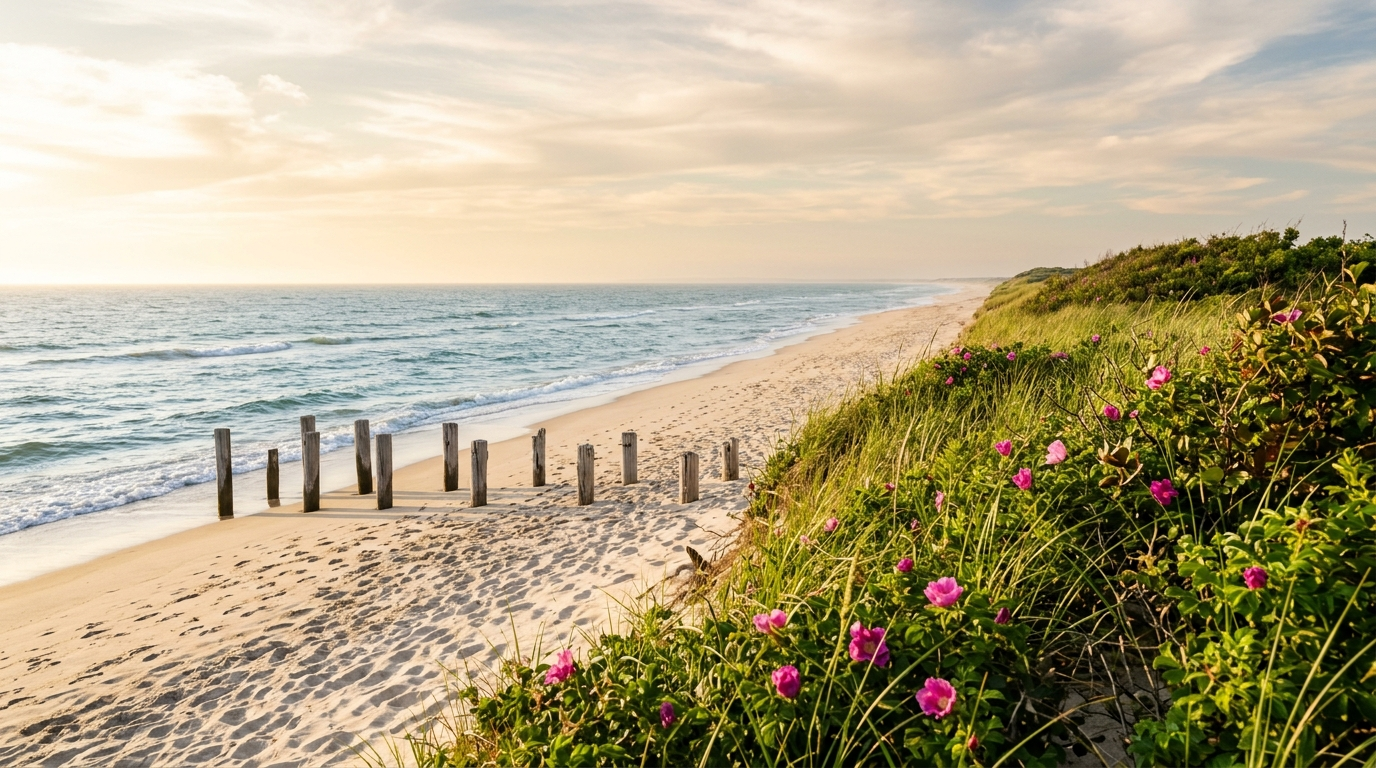
Long Island stretches 118 miles from the borders of Queens out into the Atlantic, and it narrows as it goes. By the time you reach the East End, the island splits into two long peninsulas (the South Fork, home to the Hamptons, and the North Fork, a stretch of farmland and vineyards) that taste almost like two different places.
The East End rewards travelers who prefer beaches to boardwalks, farm stands to shopping malls, and quiet evenings to loud ones. The pace here is slower than the rest of the New York metropolitan area, and that is the point.
The South Fork holds the towns most people know by name: Southampton, Bridgehampton, East Hampton, Amagansett, Montauk. The dunes here are tall, the surf is strong, and the main beaches (Main Beach in East Hampton, Ditch Plains in Montauk) are consistently ranked among the top in the country.
The North Fork, across Peconic Bay, is flatter, more agricultural, and quieter. It holds more than 60 wineries, an active farming community, and a series of small waterfront towns (Greenport, Cutchogue, Jamesport) that retain a working-class character the Hamptons long outgrew.
For travelers considering a longer stay, Long Island East End rental homes are distributed across both forks, with distinct seasons and crowd patterns worth understanding before choosing a location.
The ocean beaches of the South Fork are what most visitors come for. They are wide, groomed, and open to the public with parking fees that non-residents should plan around. June through August is peak beach season; September often holds the warmest water of the year.
The North Fork's produce scene is the real draw there. Corn, tomatoes, peaches, and sweet onions define the summer calendar, and the Saturday farmers' market in Sag Harbor (technically South Fork, but close enough) is a regional institution.
Wine tasting on the North Fork is a year-round activity. Most tasting rooms are open through fall harvest and continue in a lighter format through winter, making the area appealing as an off-season destination.
Memorial Day through Labor Day is the high season. Reservations are required nearly everywhere, traffic on Route 27 can be long, and rental rates peak in August.
The shoulder seasons (late May, September, early October) offer a milder version of the same experience. Water is still warm through mid-September, restaurants are easier to book, and the crowds thin out considerably after the first week of September.
The Long Island Rail Road runs to both forks from Penn Station, though the Hamptons Jitney bus line is often faster and more direct for weekend travelers. Once on the East End, a car is strongly recommended; distances between towns are short but transit between them is limited.
Summer traffic on the South Fork intensifies on Friday afternoons and Sunday evenings. Travelers who arrive on Thursday and leave on Monday (or vice versa) avoid the worst of it.
 Supriyo Khan
 Supriyo Khan
 Supriyo Khan
 Supriyo Khan
Want to add a comment?